
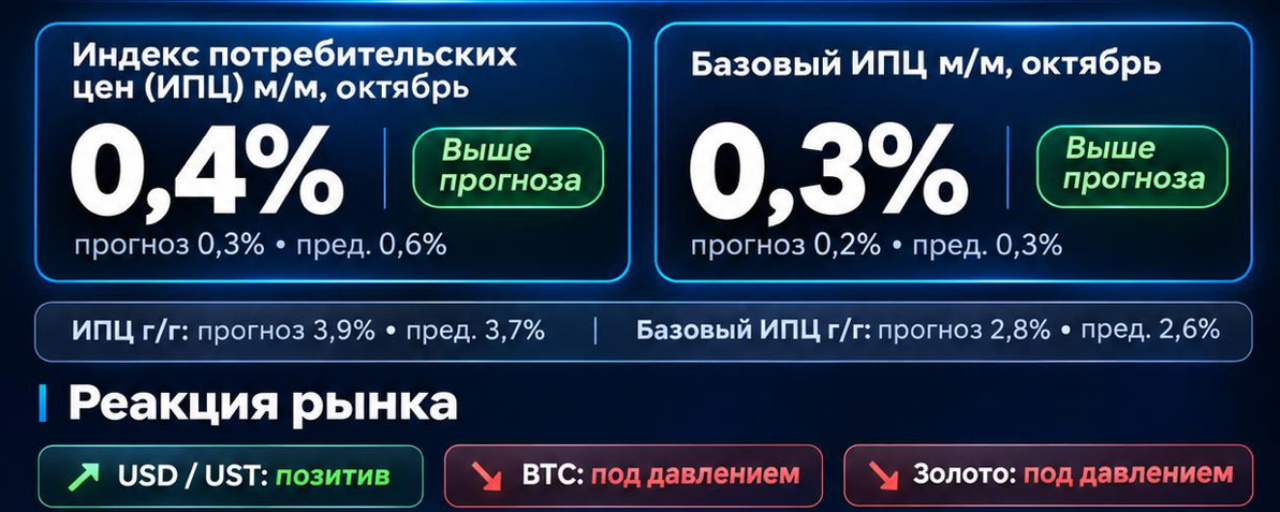


U.S. inflation exceeded forecasts, putting pressure on BTC and gold. The new data gives the Fed an argument in favor of raising interest rates in December.
The U.S. consumer price index (CPI) report released today brought an unpleasant surprise. Both headline and core inflation.
Actual results for October:
- Headline CPI: +0.4% month over month, versus a forecast of +0.3%. It was +0.6% in September.
- Core CPI, excluding food and energy: +0.3%, versus expectations of +0.2%. It was the same in September.
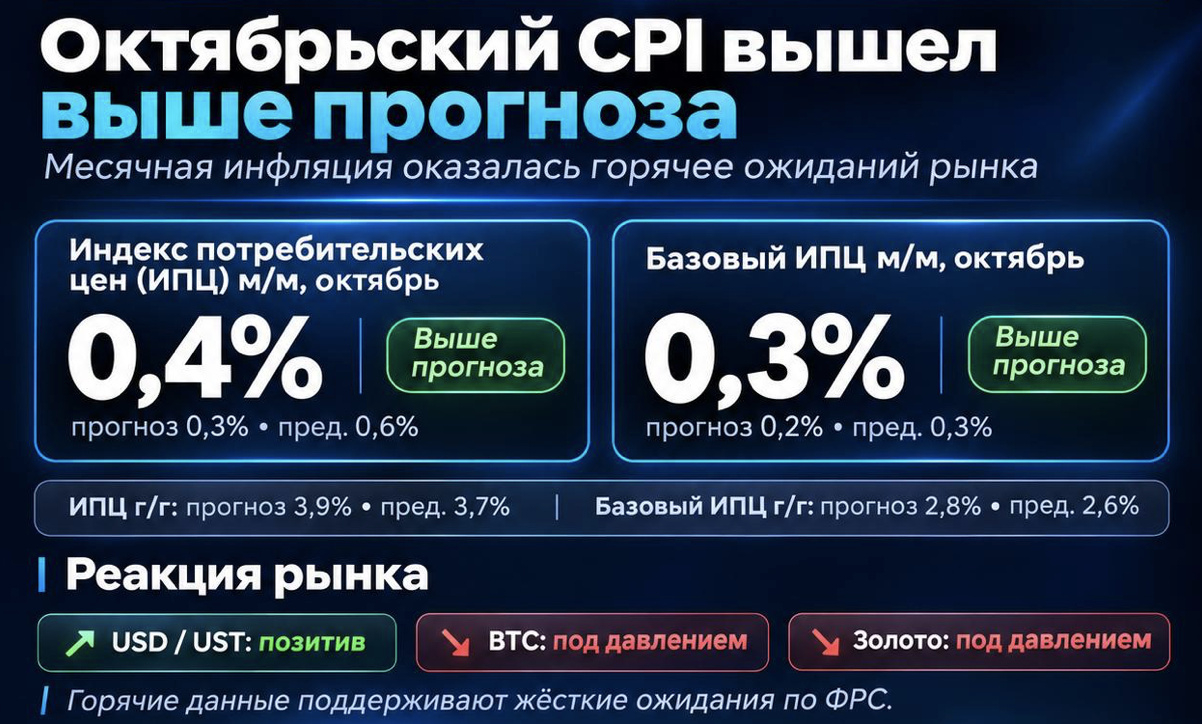
Thus, headline inflation slowed relative to September, BUT not by as much as the market expected. And core inflation showed none of the anticipated slowdown at all.
What's particularly interesting about the report's breakdown:
- Food prices rose 0.5% after no growth in September.
- Energy prices rose 0.7%, following a 5.2% jump.
- Gasoline prices rose 1%, following September's +9.1%.
- Housing costs rose 0.3%, accounting for more than 30% of the monthly increase in headline CPI.
- Transportation services rose 0.8%.
In other words, the energy shock really is easing, BUT inflationary pressure persists in food, housing, and services.
The situation is difficult for the U.S. economy: consumer prices continue to rise, limiting people's purchasing power. Meanwhile, high borrowing costs are holding back both investment and consumption.
The employment report published on November 6, we should recall, showed 165,000 jobs added versus an expected 65,000, while unemployment fell to 4.1%. So the labor market remains resilient, but inflation isn't easing fast enough. That makes the Fed's job more difficult.
Even before today's data was released, Fed Governor Christopher Waller said he would support a 0.25-percentage-point rate hike in December. What's more, he suggested considering a 0.5-percentage-point hike if monthly core inflation came in at 0.3% or higher. And now we've got exactly 0.3%. There's your "spoiler": at least one Fed official will support an immediate 0.5-percentage-point hike.
A reminder: the Fed's current target rate range is 3.75–4.00%. And even before the inflation data was released, the market put the odds of a December hike at a very high 99.1%, according to #CMEGroup.
The impact on financial markets is clear. If investors start expecting tighter Fed policy, that usually supports the dollar and U.S. bond yields. At the same time, the cost of capital rises, while the appeal of riskier assets declines.
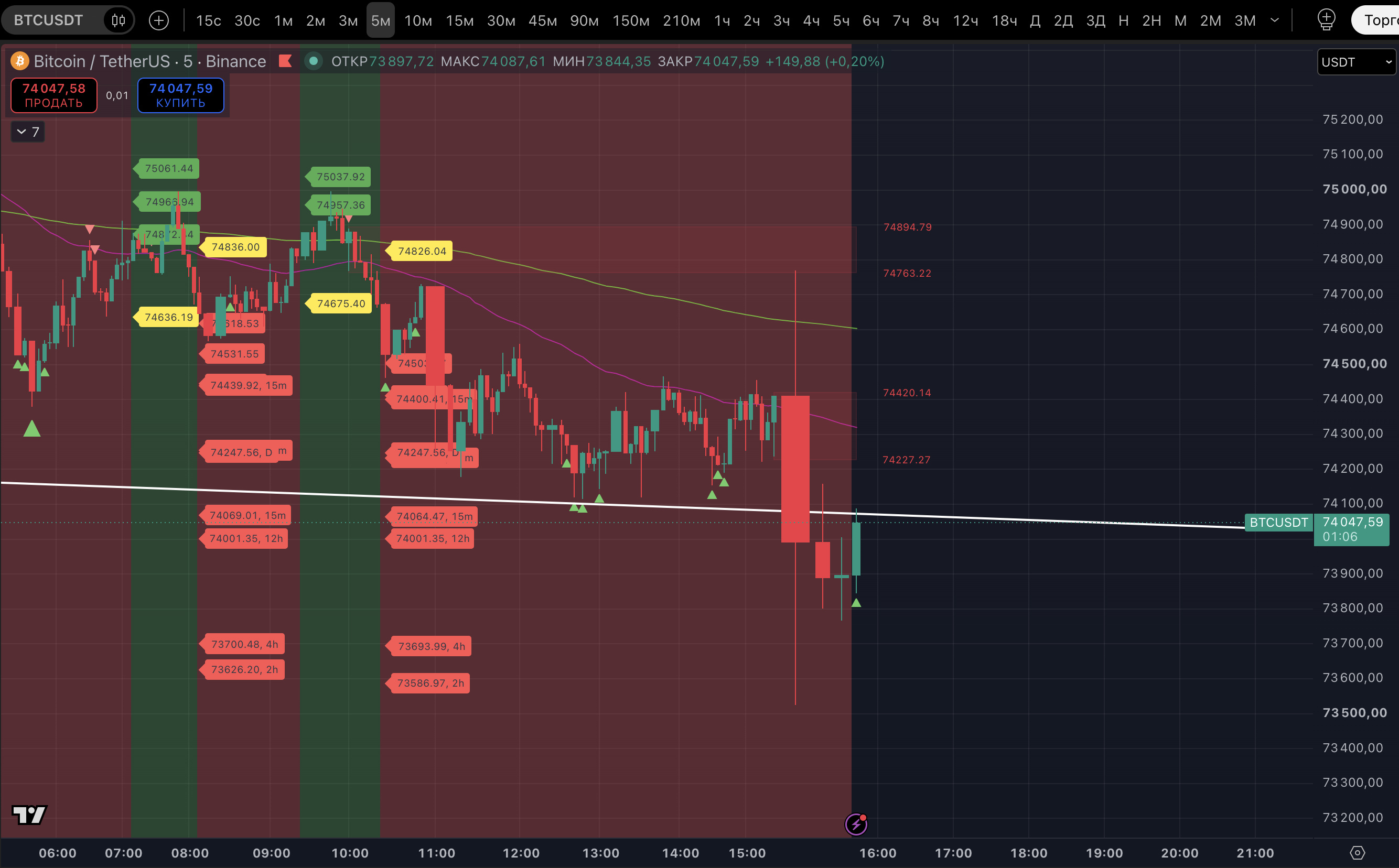
So today's report is clearly negative for #BTC, gold, and tech stocks. That's evident in bitcoin's reaction: at one point, it dipped below $74,000. A single five-minute candle saw a whipsaw from $73,524 to $74,570. The asset did not break below the November 8 low and is still holding a solid hourly uptrend. But everything is "on a knife's edge."
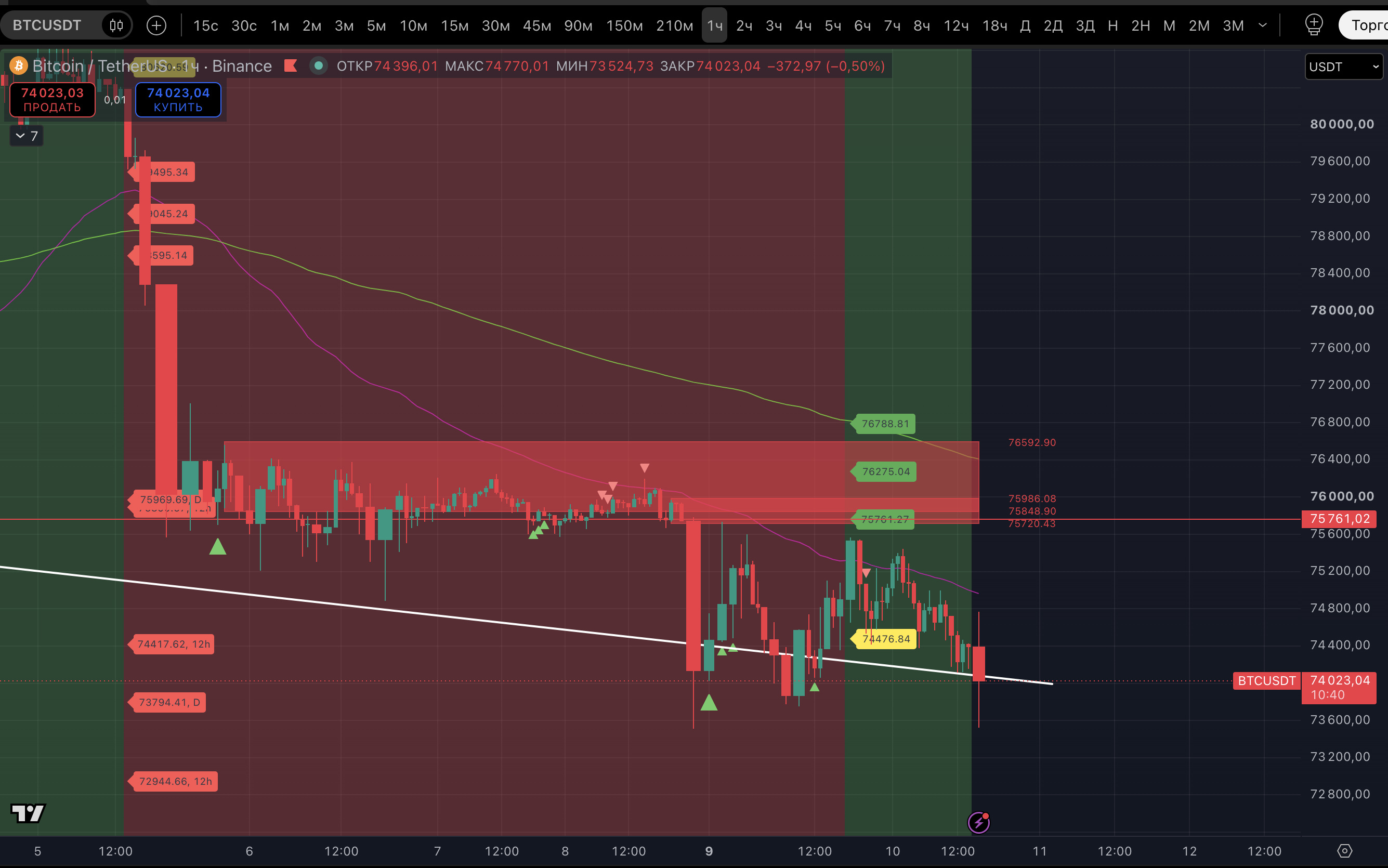
What's next for the chart outlook? We wouldn't automatically expect #BTC to keep falling just because of CPI. It may trigger a short-term move, but looking further ahead:
- First, some of the hawkish expectations for the Fed may already be priced in.
- Second, market participants' behavior will depend not only on interest rates, but also on real demand, liquidity, dollar movements, and capital inflows into spot Bitcoin ETFs. Everyone is "waiting to see which way the wind blows."
It's also worth noting that high inflation in a reasonably resilient economy is not the same as the onset of a recession. In our view, today's report worsens the macroeconomic conditions for a BTC recovery, BUT it does not rule out a technical rebound after the previous sell-offs.
In short, we still stand by our expectation of a strong rebound.
What's next on the macro data front? Now we await the Producer Price Index (PPI) on Friday, November 13 ☠️, along with further statements from Fed officials ahead of the December meeting.
As a reminder, the year-over-year figures for October CPI have not been published because October 2025 statistics were unavailable during the U.S. government shutdown.