Have you ever worked out which keeps you up at night more: taking a stop-loss or holding on to a losing position?
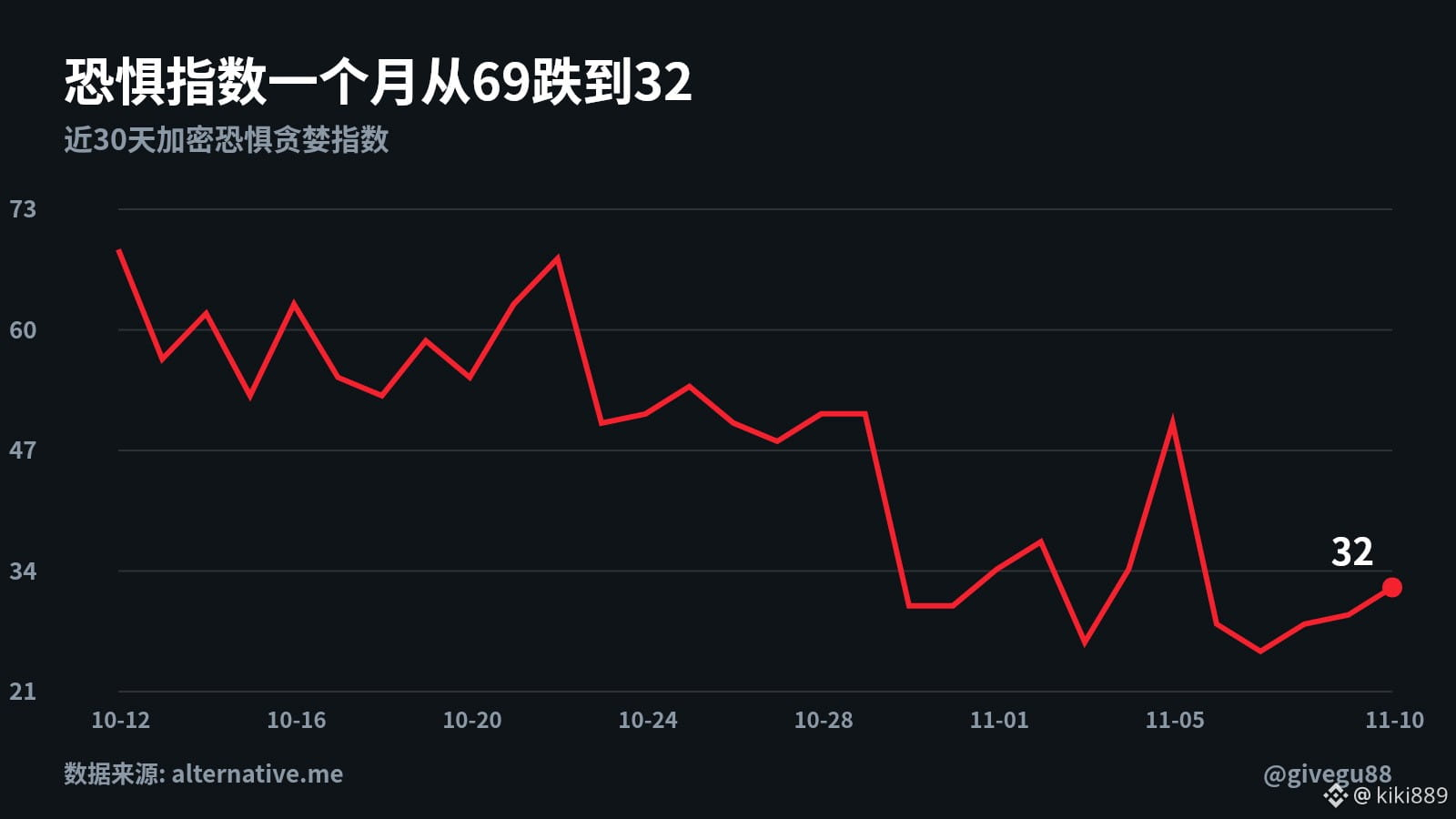
BTC is now hovering around 74,000, down from about 83,000 a month ago. The Fear & Greed Index has fallen from 69 to 32. In periods like this, the biggest danger isn’t one huge loss—it’s a string of small losses piling up into a big one.
Scene one: It’s 3 a.m. Your phone lights up with a liquidation alert. You turn over, take a look, and think, “I’ll wait a little longer—it’ll bounce back.” But when you wake up in the morning, your position is gone.
Scene two: Price plunges in a sharp wick, triggering a wave of long stop-losses, then returns to where it started ten minutes later. You didn’t get the direction wrong; you just placed your stop where everyone else did.
Why is it dangerous? The longer the market grinds, the more people want to win back what they’ve lost: adding to positions, increasing leverage, switching to shorter time frames. Ordinary traders often lose not because of the market, but because of their emotions.
My own approach is simple: First, write down what would prove this trade wrong before accepting a loss, then decide on the position size. Keep the loss on any single trade to a small amount I can afford. If I lose twice in a row, I stop trading for the day, review my trades, and come back later. If the index keeps fluctuating around 30, it may be slowly wearing down people’s patience rather than triggering a one-off liquidation. I could be wrong, but staying in the game matters more than being right.
The last time you lost money, was it because you got the direction wrong, or the position size?
Personal opinion. NFA, DYOR
$BTC $ETH