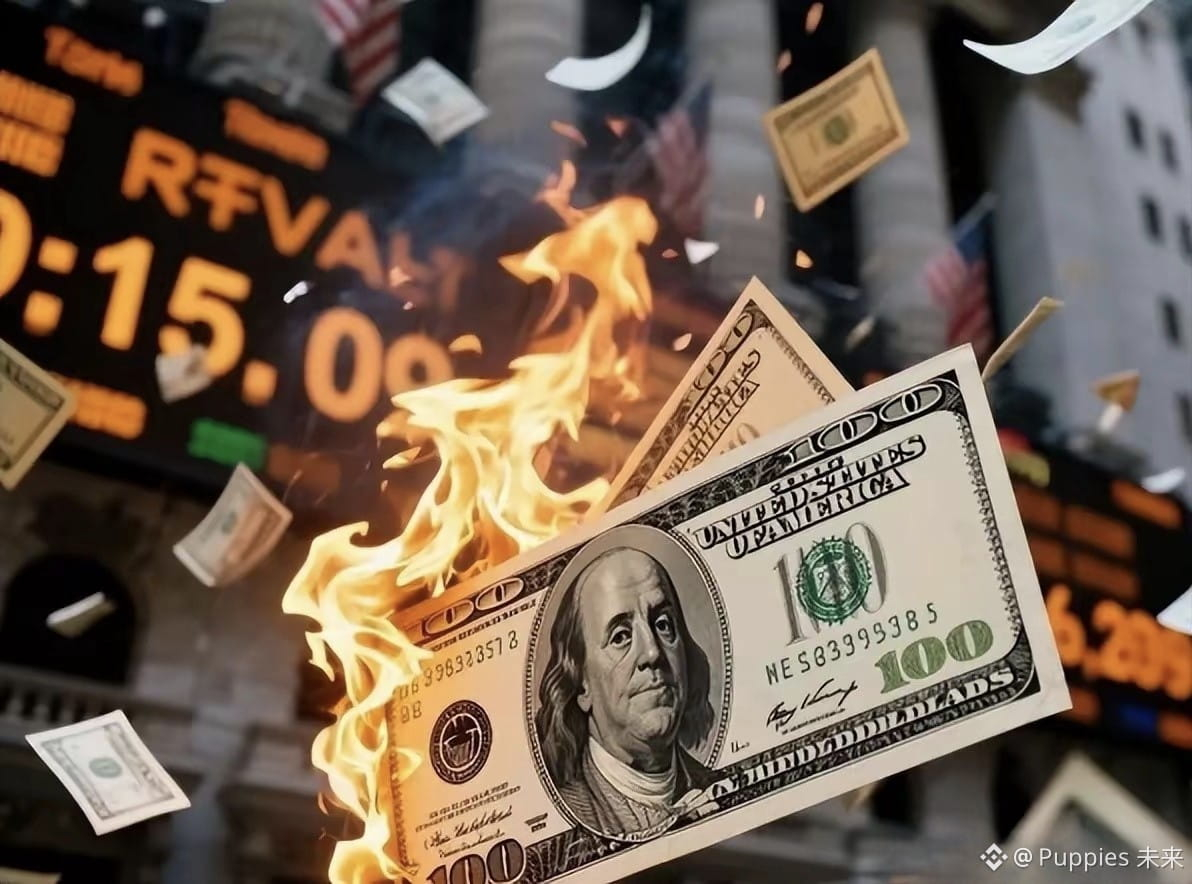
$PEPE $UP $PIEVERSE 《Countdown to a Storm? Gao Zhikai Issues Another Warning: Before 2027, Ordinary People Should Do This First》
Gao Zhikai’s warning has been making the rounds again lately: between the end of 2026 and the first half of 2027, the world could face an unprecedented financial storm. He even bluntly said its destructive power could be ten times that of the dot-com bubble in 2000. Many people hear this and call it alarmism, but remember: he was vice chairman of Morgan Stanley Asia and helped establish China International Capital Corporation. He’s not just speculating from the sidelines.
He’s focused not on any one event, but on three tensions that are already stretched to the limit. First, U.S. government debt is spiraling out of control: interest payments have overtaken the defense budget, and borrowing to repay old debt is edging toward money-printing as a backstop. Second, the AI bubble: massive capital spending is generating limited revenue, and cash flow is starting to tighten. Third, a wave of commercial real estate debt is coming due all at once: office vacancy rates are high, and pressure from bad loans at banks can no longer be hidden. These three strands are intertwined, and interest rates are at the heart of them all.
Even more concerning, Buffett is sitting on hundreds of billions of dollars in cash and has been a net seller for several consecutive quarters, while Dalio has repeatedly warned of a liquidity trap. Institutions are pulling back as retail investors chase hot trends. That mismatch is a signal in itself.
Of course, this is not a doomsday verdict; it’s a risk warning. The most important thing for ordinary people is not to panic, but to reduce leverage, speculate less, and preserve cash flow. Don’t take on debt to bet on which way the market will go. If the storm really hits, paper gains will be the least reliable thing; low debt and cash are what provide security.
Before 2027, get your balance sheet under control. Don’t wait until the shakeout forces you to make a choice.
#CPI前瞻,12月利率走向迎关键考验 #黄仁勋因婚外情致歉,英伟达启动独立调查 #Anthropic拒绝延期IPO,本周路演估值几何?