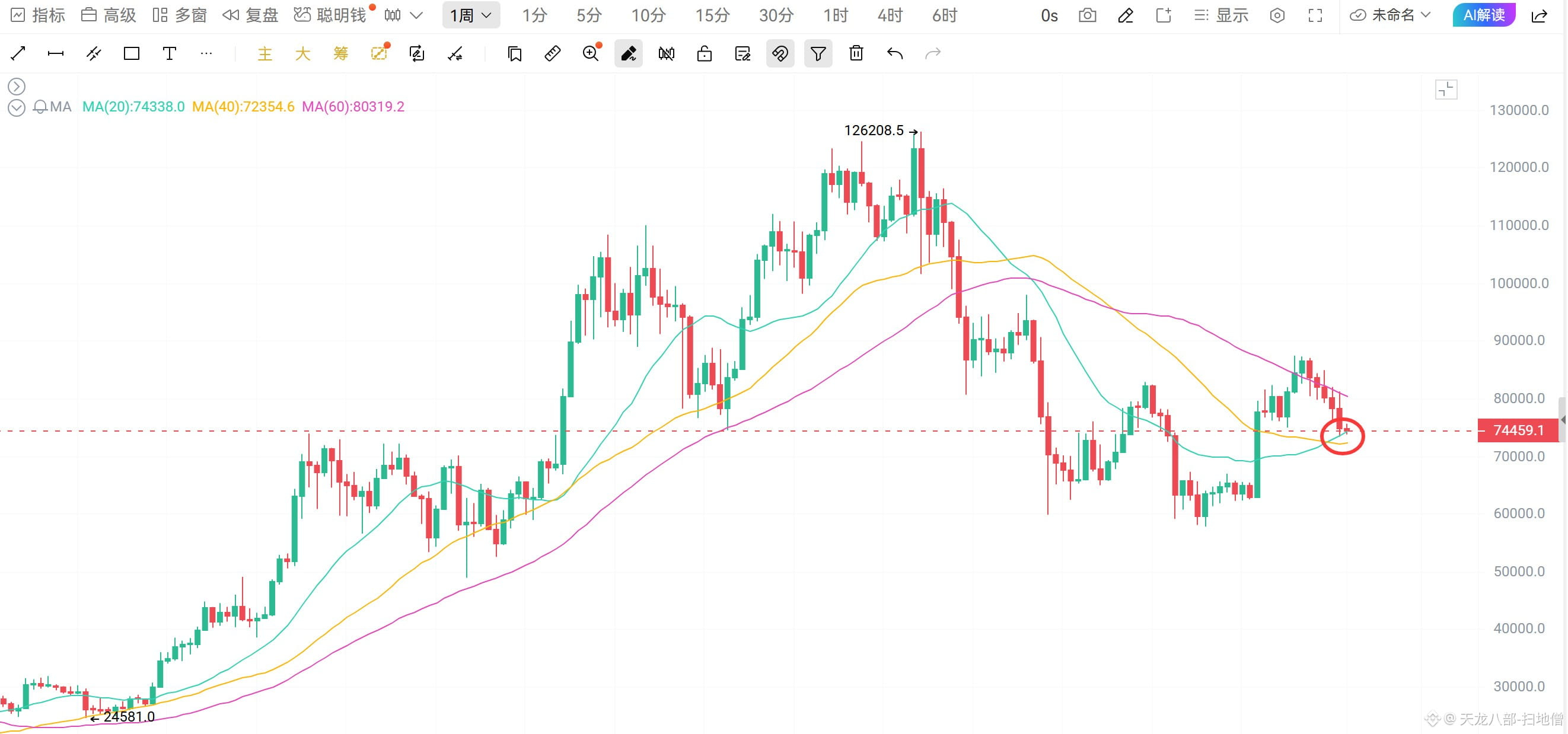
BTC fluctuated downward, eventually breaking below 75,000 and reaching 73,300. When prices rose on November 4, I said that 81,200 was still within the rules of a fluctuating downtrend: unless it broke above 82,000, prices would continue to fall. But after the market reached 75,500 last week, it fluctuated within a range below 76,400, falling as low as 74,800. After the Bollinger Bands contracted, prices moved within a narrow range. A sharp move up or down was inevitable, and this Monday the market chose to fall to 73,300.
Looking again at the weekly KDJ and MA patterns, it suddenly became clear: the market had been grinding sideways, falling irregularly, with the ultimate aim of reaching a truly extreme level in this way.
This year's market has taught me one thing: in this market, trends may exist in spot trading, but not in futures anymore. In today's market, institutions hold large amounts of BTC for the long term, so retail traders can only choose the safest approach: swing trading, using swing-trading profits to build toward long-term positions. Even if your analysis and forecast of the broader market direction are correct, you should still give up on trend-following strategies, because the grinding market can make you question everything.
One final point: this fluctuating downtrend is now nearing its end. However, recent news has been leaning bearish. That's the market for you, so it's still best to focus on swing trading: quick and steady.