$HOT $GNS $INIT
A Double Top Is Emerging in International Oil Prices: Why Are Tech Stocks and Bitcoin Still Falling, and When Will They Bottom Out?
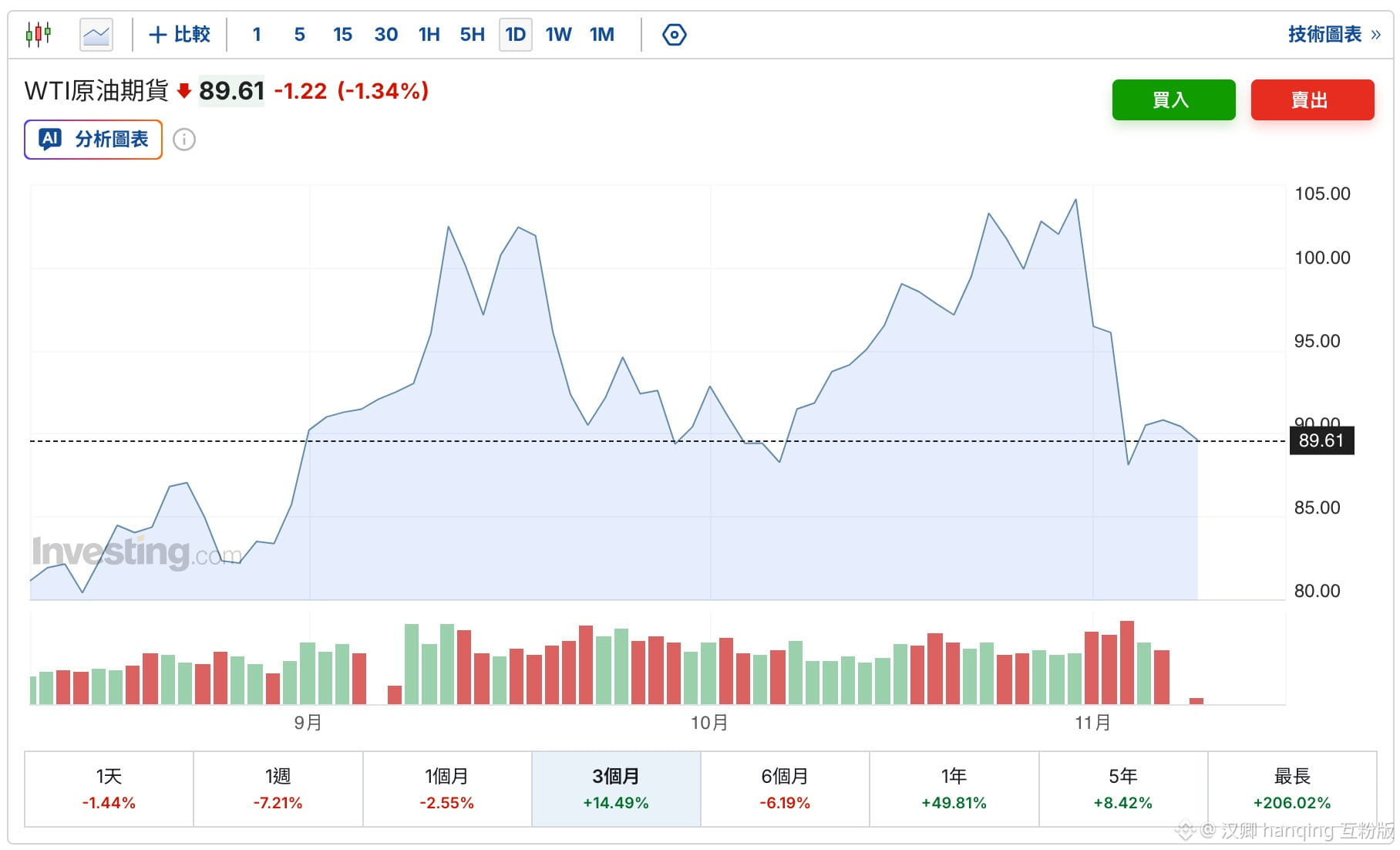
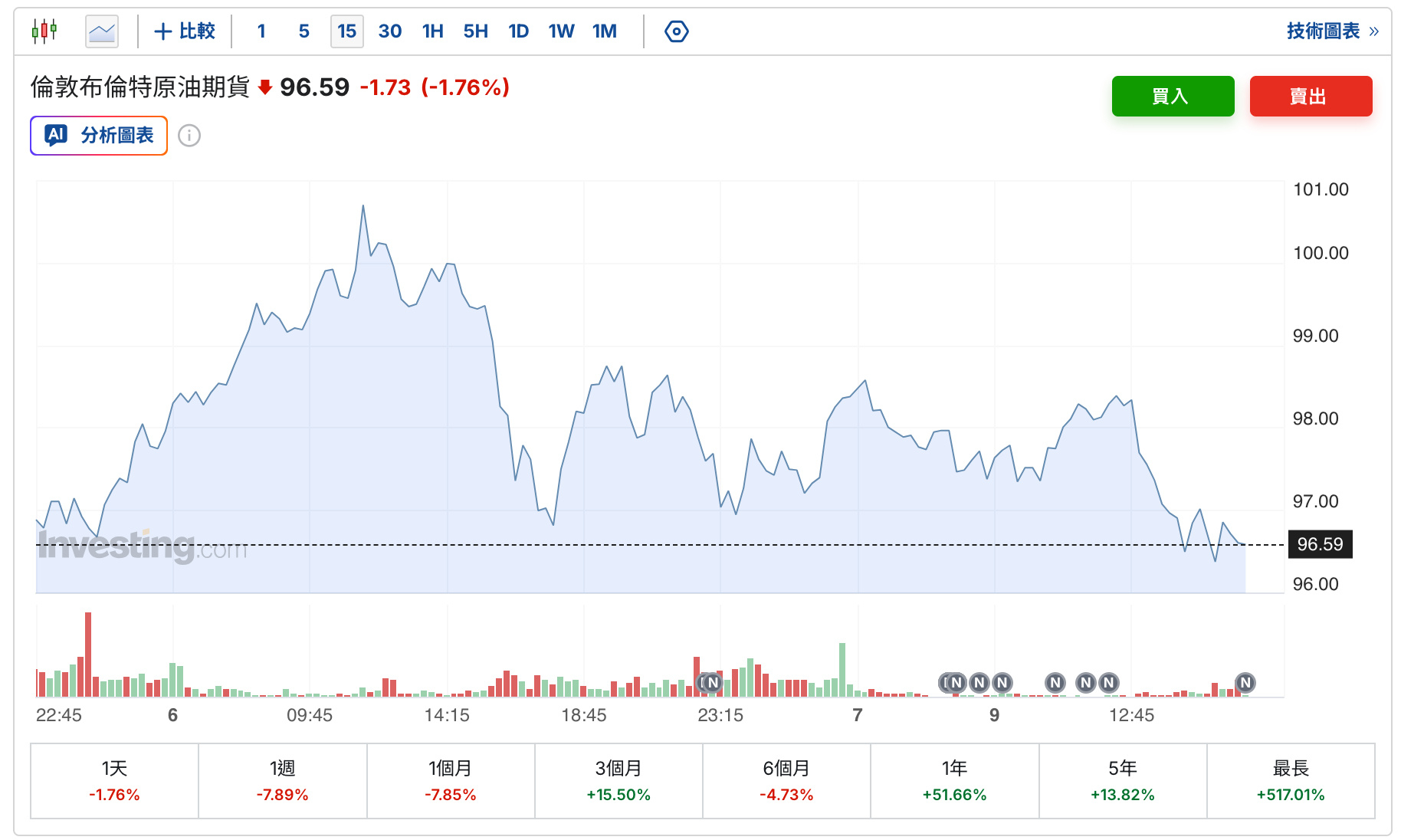
As Brent crude steadily falls below the $100 mark and forms a clear double-top resistance pattern, the main engine of global high inflation is losing momentum. From a macroeconomic perspective, easing energy costs should be a long-term tailwind for growth assets such as tech stocks. Yet financial markets have recently fallen into a strange pattern of “muted response to good news.”
I. Why Is the Good News Being “Ignored”? Three Short-Term Shocks Are Obscuring the Bigger Picture
The market hasn’t failed to see the benefits of falling oil prices; rather, the current narrative is being dominated by more urgent risks:
• Political and regulatory uncertainty: Following the U.S. midterm elections, concerns have risen significantly about tighter regulation and antitrust scrutiny of the AI, semiconductor, and cryptocurrency industries. Risk aversion has led to a broad sell-off in high-risk assets.
• A reassessment of expectations for AI computing infrastructure: Under the new political landscape, AI data centers face stricter energy-use and environmental approval requirements. The market is reassessing the growth rate of massive capital spending across related industries.
• A black swan event in crypto markets: Binance suffered a historic $6.3 billion hack, triggering more than $1.5 billion in leveraged liquidations in the short term and dealing a severe blow to digital-asset liquidity.
II. Tech Stocks and Bitcoin: Are They Nearing a Bottom?
Although sentiment has taken a hit in the short term, technical indicators and market structure suggest that downside risks for both have been partially priced in, and they are nearing the end of a choppy bottoming process:
• Nasdaq (tech stocks): The index has fallen more than 11% from its peak, officially entering correction territory. Historical patterns suggest that such corrections are usually valuation resets rather than full-blown downturns. The odds of the index stabilizing gradually around its current correction range are very high.
• Bitcoin (BTC): It is currently locked in a fierce battle around the key cost basis of $73,000–$76,000. As long as the daily close holds above the key technical support at $73,000, the bull market’s underlying structure remains intact. The current sharp drop is mainly the result of a liquidity flush caused by cascading leveraged liquidations. Once forced selling is exhausted, the market may form a bottom in the $73,000–$75,000 range.
III. When Will the Benefits of Lower Oil Prices Be “Rediscovered”?
The long-term macro support provided by oil’s double top won’t disappear. It will be rekindled when either of the following two catalysts emerges:
1. A policy shift by the Federal Reserve (Fed): As falling oil prices cool CPI/PCE inflation data significantly over the coming weeks, if the Fed acknowledges at its mid-to-late November policy meeting that “falling energy prices have eased inflation expectations,” market policy fears could quickly give way to optimism as pressure on the denominator eases.
2. Regulatory fears run their course: By early December, once Wall Street’s worst-case expectations for the new administration’s policies have been fully priced in, analysts are likely to suddenly realize that falling oil prices not only reduce inflation in the broader economy, but also substantially cut the massive electricity bills required to operate AI data centers.
In closing:
The current downturn looks more like “the darkest hour before dawn” and a mid-bull-market washout of leverage. The downward trend in crude oil prices lays the groundwork for global inflation not to flare up again easily. Once short-term market panic has run its course, the “inflation relief turning point” brought about by falling oil prices will surely become the central theme behind a year-end market rebound.
So, are you selling along with the panic, or gradually adding to your positions and buying the dip? Share your thoughts.
#TreatAFriend