
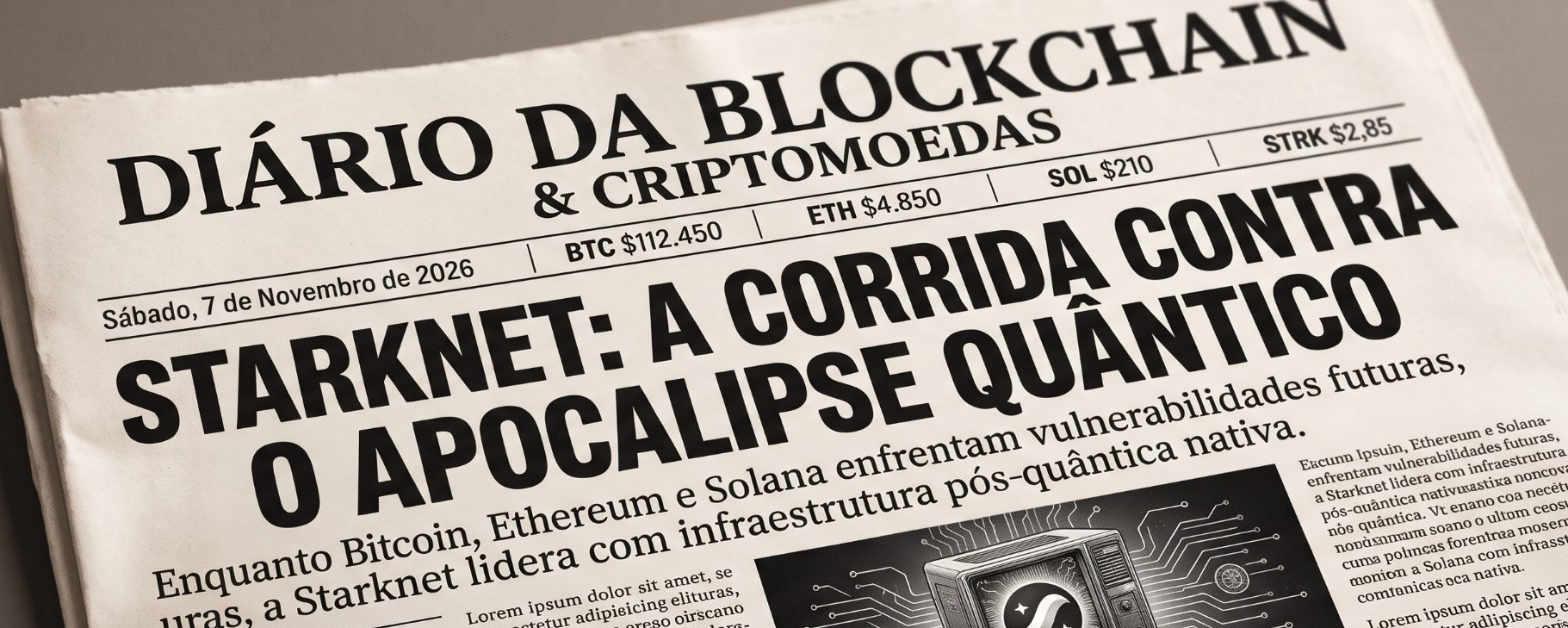

The advance of quantum computing has gone from a science-fiction scenario to a countdown: a technical time bomb is ticking—the Shor algorithm. Mature quantum computers will be able to break the elliptic-curve cryptography that underpins nearly 99% of the crypto market’s current capitalization.
In this climate of quiet urgency, Starknet $STRK stands out with a protective architecture that puts it strategically ahead of market giants like Bitcoin, Ethereum, and Solana, which still have zero native protection.
The Achilles’ Heel of High-Value Cryptocurrencies
Multibillion-dollar projects are operating on a foundation with a clear expiration date in the face of quantum technology:
* Bitcoin (BTC): Bitcoin’s backbone is ECDSA (Elliptic Curve Digital Signature Algorithm). A migration to post-quantum cryptography would require a colossal hard fork and brutal community consensus that could fragment the network. Coins stored at old addresses (such as the P2PKH format) are critically vulnerable if their public keys were exposed in previous transactions.
* Ethereum (ETH): Although contingency plans exist (such as EIP-7560) in the event of a sudden quantum breakthrough, the Layer 1 network still runs entirely on vulnerable cryptography. Full quantum resistance at Ethereum’s base layer is realistically projected only for the end of this decade, depending on extreme upgrades.
* Solana (SOL): Focused on extremely high throughput and minimal latency, Solana uses Ed25519 (another highly vulnerable elliptic-curve variant). The ecosystem’s current roadmap prioritizes scalability infrastructure (such as Firedancer), with no immediate plans or imminent integration of post-quantum defenses into the main network.
Starknet’s (STRK) Forward-Thinking Engineering
While the market’s top 10 will have to change the turbines while the plane is in free fall, STRK’s foundation was structurally protected from the outset at its core:
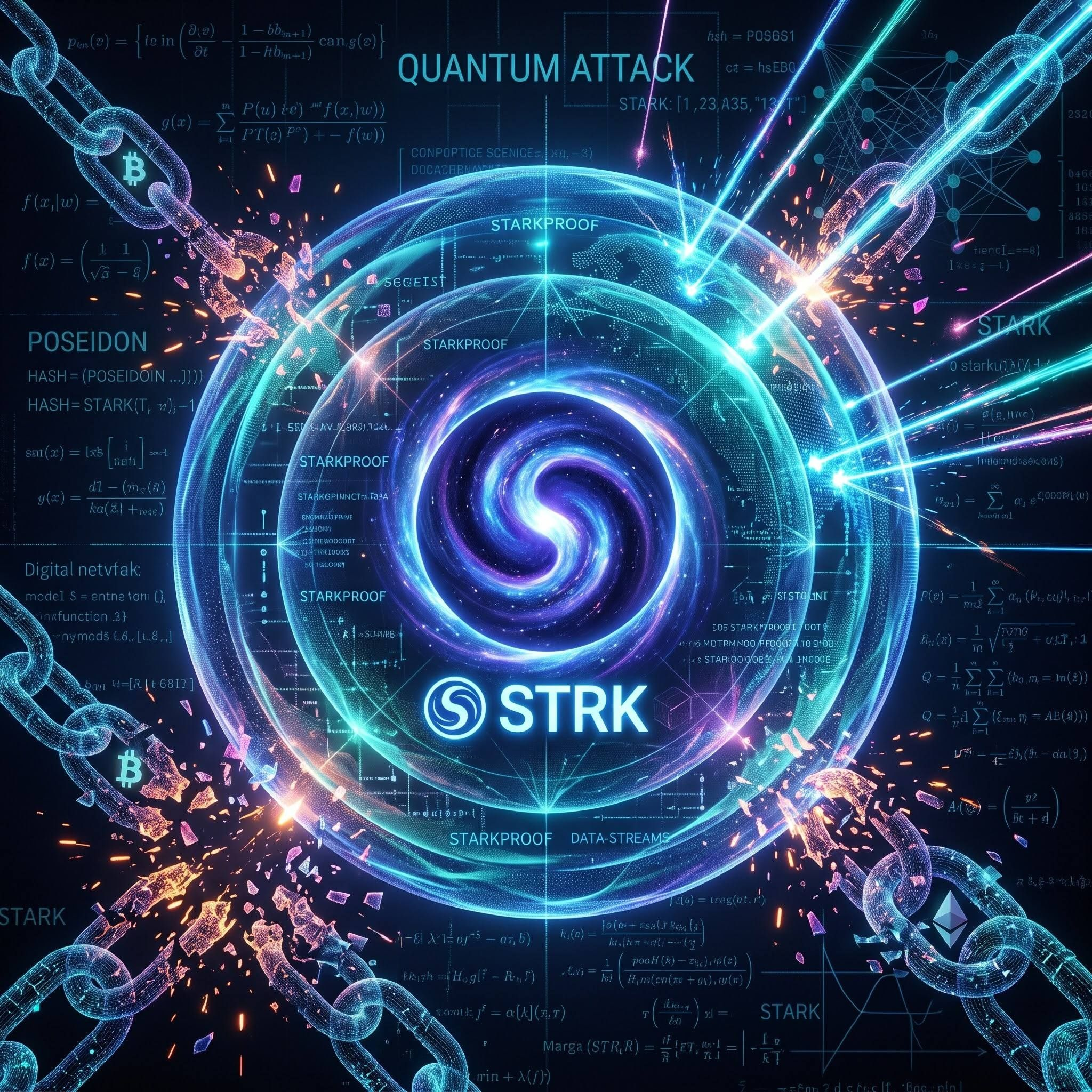
* STARK Mechanics: Unlike traditional SNARKs, STARK cryptographic proofs do not rely on the mathematical security of elliptic curves. Their proof system depends on collision-resistant hash functions. This means the mathematics that processes and validates the network is already shielded against brute-force quantum attacks.
* Native Account Abstraction: This is the network’s real “secret sauce.” On STRK, your wallet is not just a rigid pair of keys; it is a programmable smart contract. When post-quantum signature algorithms are standardized by the global industry (NIST), the signature logic of Starknet wallets can be updated through code in the wallet itself. Users will not need to create new addresses or carry out risky manual migrations to save their funds.
* Ethereum Escape: Today, STRK’s only quantum Achilles’ heel is its bridge to Ethereum’s Layer 1. However, with a roadmap taking shape to make the network independent and turn it into a full-fledged Layer 1 by 2027, the project cuts the umbilical cord. As an independent L1, STRK will be able to replace the Pedersen hash with the robust Poseidon and achieve definitive quantum immunity years ahead of all its competitors.
Analytical Verdict
In the short term, financial markets price in liquidity and speed but drastically underestimate cryptographic durability. Investing exclusively in networks focused on high TPS without a clear quantum contingency plan poses an enormous systemic risk for institutional investors. Starknet delivers operational metrics proving that maximum scalability can go hand in hand with an impeccable long-term cybersecurity infrastructure.
Do your own research (DYOR). This article is strictly for educational and technical analysis purposes and does not constitute financial or investment advice.