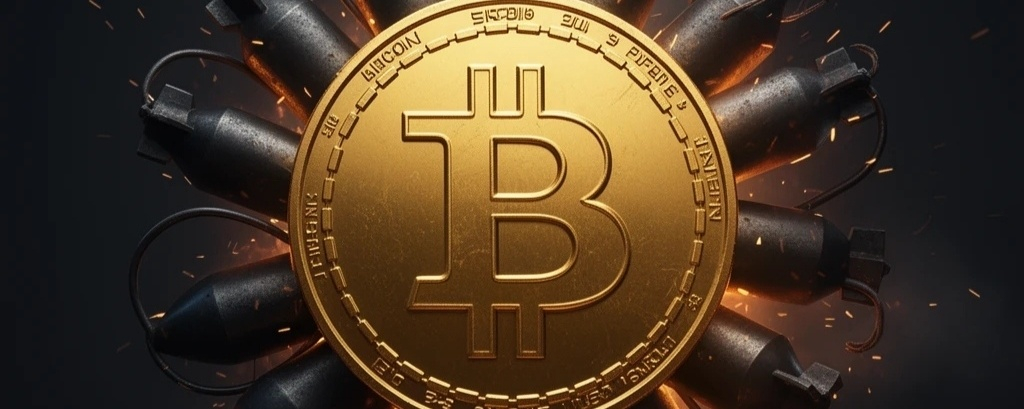

💣 How to “booby-trap” your bitcoin against quantum thieves
The problem: Someday, quantum computers will be powerful enough to figure out a wallet’s password from its “address,” which is visible to everyone. Then it will be possible to steal coins from vulnerable addresses. These include some early coins associated with Satoshi Nakamoto. There’s an ongoing debate about what to do. One option is to freeze the vulnerable coins, making them inaccessible to everyone, including their owners. Many people don’t like that.
Corey Fields’s idea: make the thief risk their own funds. Instead of banning theft, the proposal is to make it unprofitable.
🔹 Bond. To steal 1 BTC, an attacker must also put up 1 BTC from their quantum-resistant wallet. Both amounts are locked for a waiting period, for example, 30 days.
🔹 Mine. In advance, the owner can create a “mine”: a protected record with hidden proof that the coins belong to them.
🔹 Explosion. If a thief goes after the coins, the owner gets a window of time to show proof. They can then get their bitcoin back and take the thief’s bond as a penalty.
The main trick. The thief can’t know in advance which addresses have mines. Every theft becomes a lottery: they might get someone else’s coins, or they might lose both the loot and their own bond. It’s like a field where some flower beds are mined, but no one knows which ones.
What are the limitations of the idea:
It only works for people who still have their own keys. Lost bitcoins aren’t covered by the scheme.
It assumes that Bitcoin already has quantum-resistant wallets (which it doesn’t yet).
The author calls it a thought experiment. It’s not a ready-made plan or an adopted network upgrade.