


After the Binance attack (October 29-31), Bitcoin dropped by approximately 6%, and it fell by another 6% during the November 5th cryptocurrency crash. Yes, the price movements are similar, but the on-chain aspect is very different.
As we all remember the hack was a venue shock. Binance’s BTC reserve fell from about 732K to about 666K (-66K BTC, -9%) by Nov 2 and has only partly recovered to 674.6K. Total exchange reserves fell by only about 50K BTC over the same stretch. Most of what left Binance did not land on another exchange. Of course reserve data cannot separate theft, withdrawals and wallet transfers, so it only shows where the money went, not why it went there.
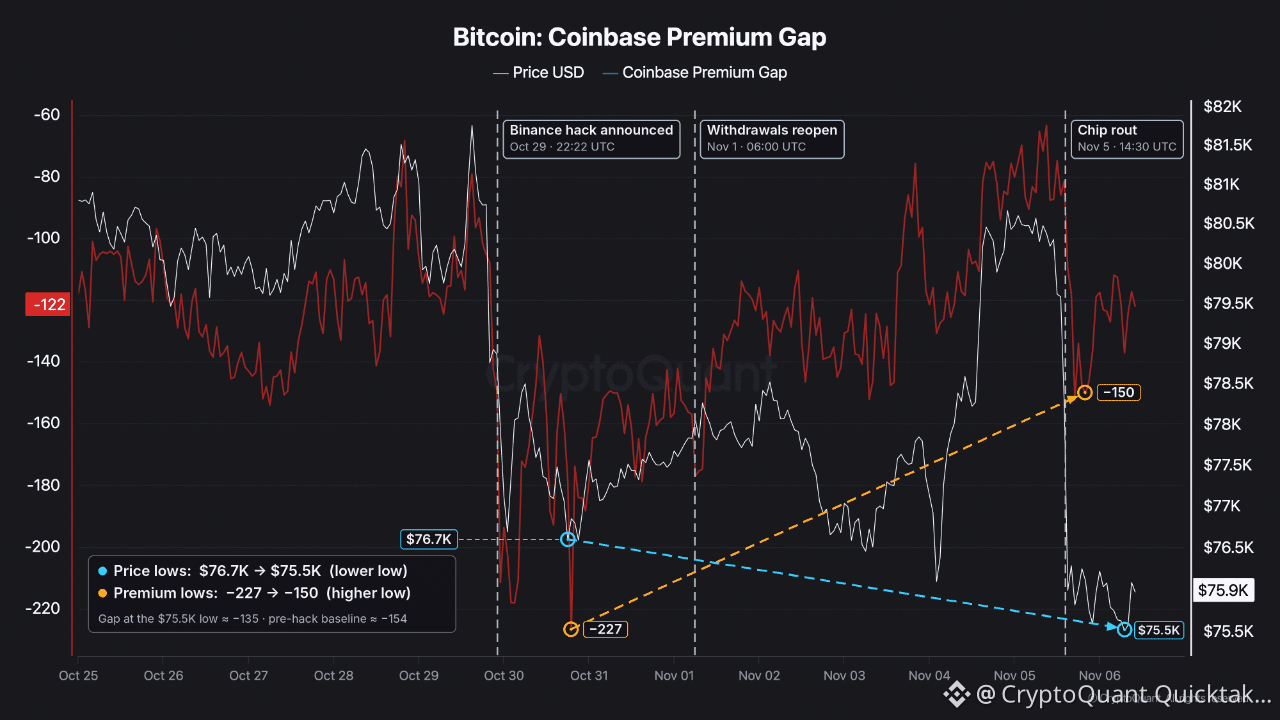
The Coinbase Premium Gap tells the more interesting story. It hit about -227 on Oct 29, its weakest reading in eight months, then recovered to about -75 on Nov 4 as BTC briefly pushed toward $80.5K. The crash then pulled it back only to about -150.
Price and premium now disagree. BTC made a lower low, while the premium made a higher low. The US bid was weaker during the hack than during the crash.
Leverage was elevated going into the crash. The Estimated Leverage Ratio is about 0.26, near its 6-month high of about 0.27 and it stayed there after $1.25B of liquidations on Nov 5, 89% of them longs. So obviously the flush didn't reset it.
The market absorbed a trading platform shock, but was pressured by a macro shock. So I think the key thing to watch in the coming days will be whether the premium continues to form higher lows while leverage remains at high levels.
Written by YavuzAkbay