


Volatility has remained fairly high over the past few days. On Tuesday, Bitcoin fell to around $76,000 at its lowest, hitting a seven-week low. At the time, people seemed most concerned about the final results of the U.S. midterm elections. On Wednesday, as the Democrats won control of both the House and the Senate, Bitcoin began to rebound from its lows. In just one day, it bounced from around $75,000 to $81,000, marking its best single-day price performance in several weeks.
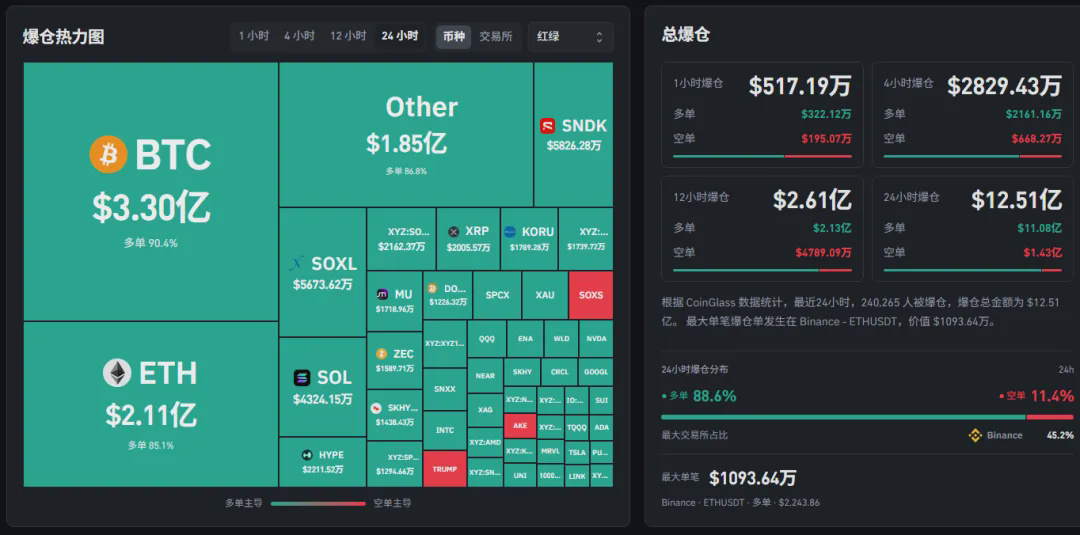
Just when people thought everything had settled down, a sharp drop returned on Thursday. The plunge in U.S. tech stocks, fresh uncertainty over crypto regulation following the Democrats’ victory in both chambers, and lingering panic over the earlier $6.3 billion Binance hack all played a part... Bitcoin fell to around $75,000 again. In the past 24 hours alone, more than 240,000 traders in the crypto market were liquidated, with total liquidations amounting to $1.25 billion: $1.108 billion in long positions and $143 million in short positions, as shown below.
Of course, compared with Bitcoin’s decline, the crypto-related stocks on the watchlist mentioned in our previous article fell even further. COIN dropped 9.69% in a single day, MSTR fell 10%, CRCL dropped 12.5%, and HOOD fell 12%. It’s no exaggeration to say that on Thursday (November 5), U.S.-listed crypto stocks saw a broad-based sell-off on heavy volume.
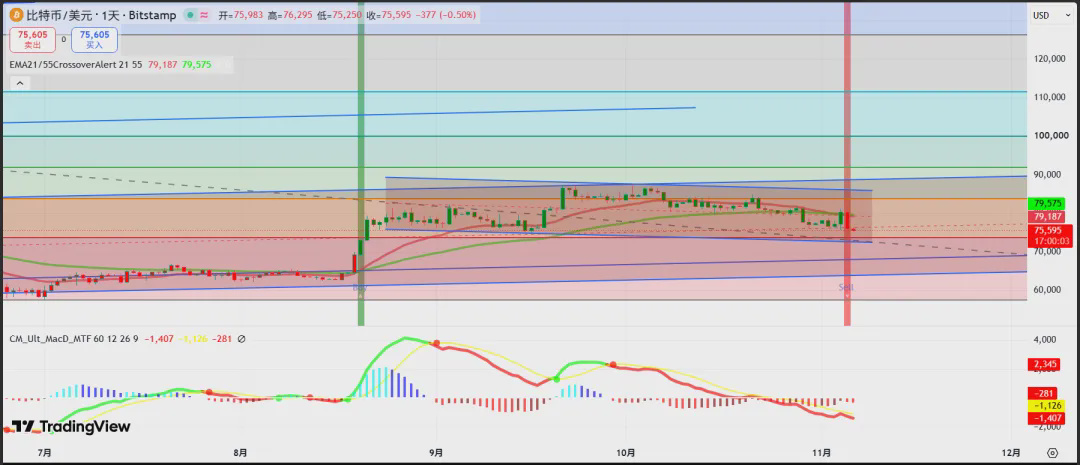
As of the time of writing (November 6), Bitcoin was trading near $75,600, as shown in the chart below. This remains a range worth watching, just as we noted in our previous article (November 2): At this stage, $75,000 to $82,000 are two short-term levels worth keeping an eye on (this range is not only a technical zone but also an important psychological one, with most current open interest concentrated within it). If the weekly closing price rises above $82,000 in the coming weeks (in November), the previous bull-market atmosphere and sentiment should, in theory, return. But if the weekly close continues to hover around $75,700, unable to break through and hold above $82,000, we may face a period of continued choppiness and consolidation.
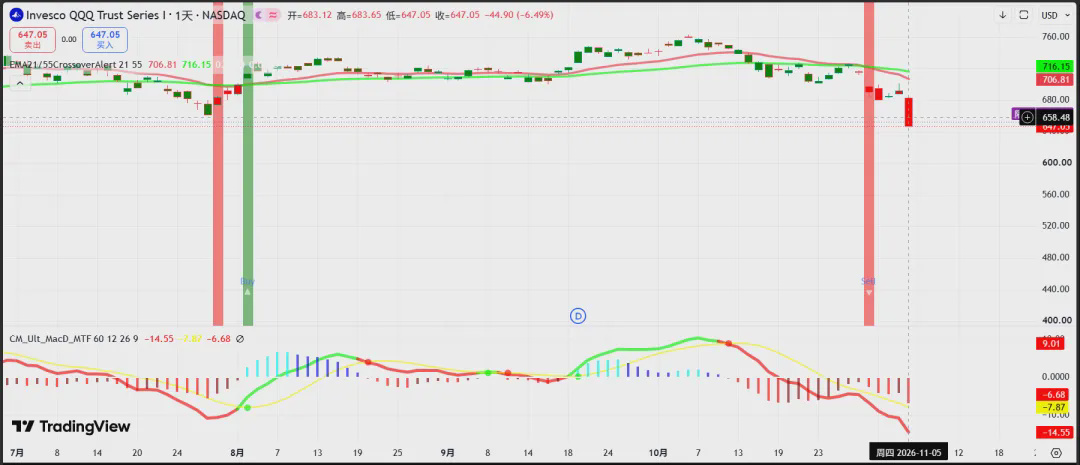
On the fundamentals, the crypto market itself doesn’t seem to have done anything wrong, and there are no obvious new negative catalysts. The sharp market swings over the past few days are more likely due to U.S. stocks and macroeconomic factors. After all, when Wall Street had its worst day in 18 months yesterday (November 5), Bitcoin at this stage (still viewed by Wall Street as a tech-oriented or risk asset) naturally couldn’t escape the fallout. Take QQQ (the Nasdaq-100 ETF), for example: It fell 6.49% in a single day yesterday, marking its steepest one-day decline since the COVID-19 market crash in March 2020. More than $2 trillion in market value was wiped out in a single day, as shown in the chart below.
In our previous article (November 2), we noted that besides the midterm elections, October’s NFP (nonfarm payrolls) report was also due today (November 6). The original expectation was that the jobs report might increase the likelihood of a Federal Reserve rate hike in December. But after yesterday’s U.S. stock market plunge, things seem to have shifted somewhat: The upcoming report is expected to show an increase in job growth, while the unemployment rate is forecast to remain unchanged.
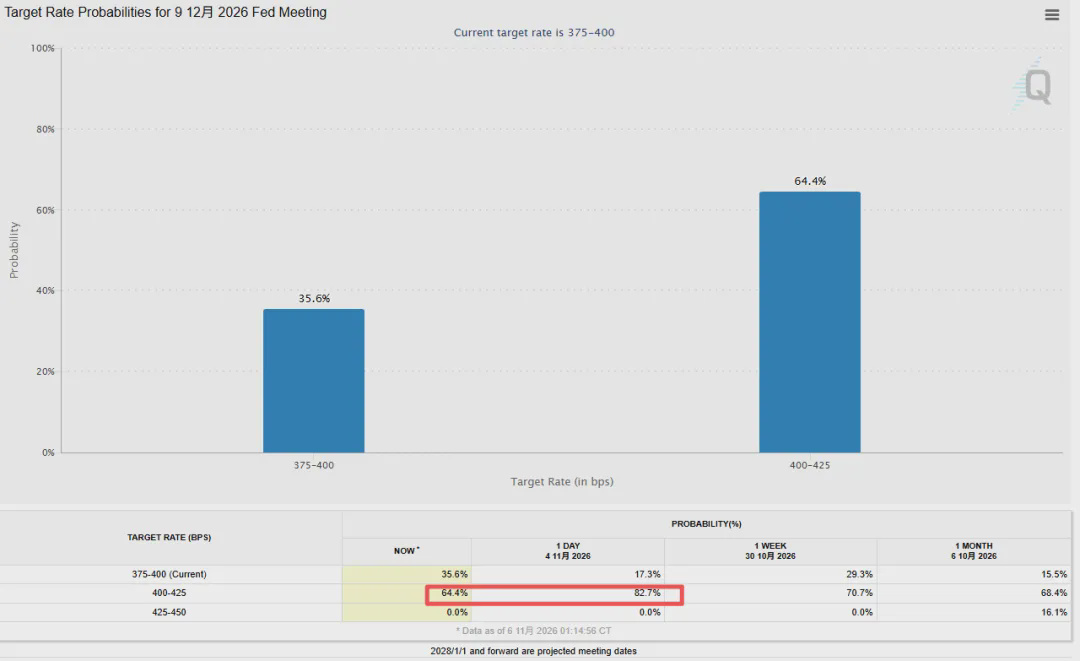
I checked the latest figures on the FedWatch tool. The market now puts the probability of a 25-basis-point Fed rate hike in December at 64%, down from 82%, as shown in the chart below. It seems the market has already formed its expectations for this NFP report.
With little suspense or chance of a surprise in this week’s NFP report, next week’s CPI inflation data on November 10, followed by the PPI data, will be the next macroeconomic tests and focal points. So, stay prepared for possible sharp short-term volatility.
Before the midterm elections, Trump’s words and actions had indeed stirred up negative sentiment among many people. He not only started a tariff war but also saw a war with Iran break out. The tariff war dragged on for a long time, and the conflict—which had initially been expected to wrap up in just two weeks—continued for more than six months because of Iran’s resistance. These events directly drove up oil prices and the cost of everyday life, so Americans voted for Democrats to oppose Trump. But then, after winning the midterm election, a Democratic member of Congress (Arizona Democratic Representative Yassamin Ansari) used social media to call for a halt to AI development, regulation of the industry, and a ban on artificial superintelligence (ASI)... This became another spark that indirectly triggered a sell-off in U.S. tech stocks. And so we see an interesting phenomenon: People think they’re voting for what seems like the better choice for themselves, but the outcome appears to be a choice between “bad” and “worse.”
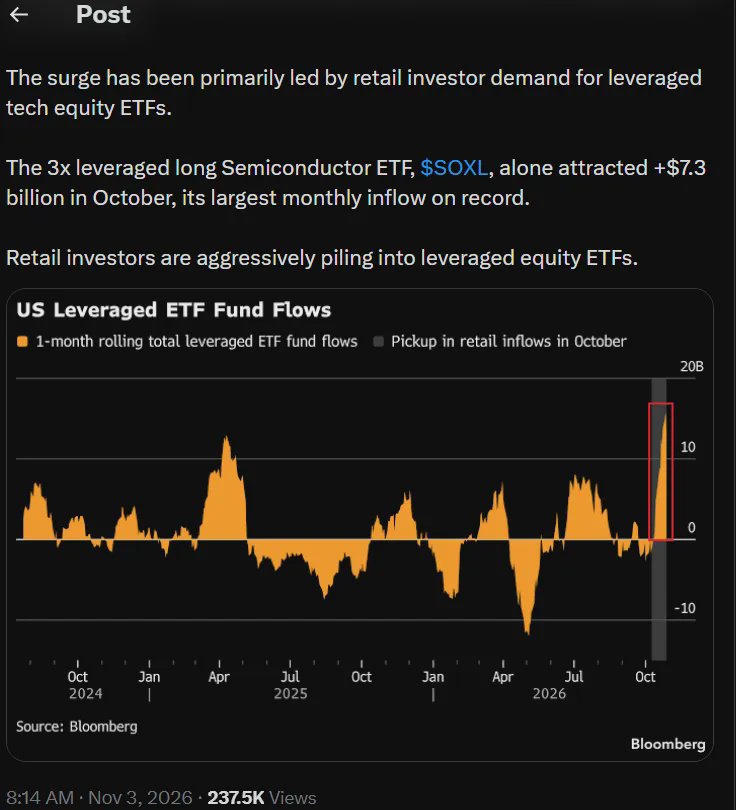
Of course, as mentioned above, the Democratic lawmaker’s remarks were only a spark. The market’s excessive fear may not be due solely to what these lawmakers said. Given the current situation, the market’s high levels of leverage may be an important cause of this U.S. stock market plunge. A few days ago, I saw a figure showing that U.S. leveraged ETFs attracted around $15 billion to $20 billion in net rolling inflows in October, the highest monthly total in two years. In other words, retail investors have been pouring into leveraged stock ETFs, as shown in the chart below. The potential escalation of the U.S.-Iran conflict may also be a factor (Trump recently said the U.S. would soon decide whether to take further military action against Iran).
Still, a short-term liquidity crunch doesn’t affect our long-term plans. Here, I’ll repeat what I said in the previous article: The market is unpredictable, especially in the short term. We study the market not to beat it or predict prices, but to respond effectively and make the necessary preparations. I personally remain optimistic over the long term. As for the crypto market, we seem to be in the early stages of a new cycle. If you also have enough patience and a long-term plan, adding to your positions during dips remains a good option.
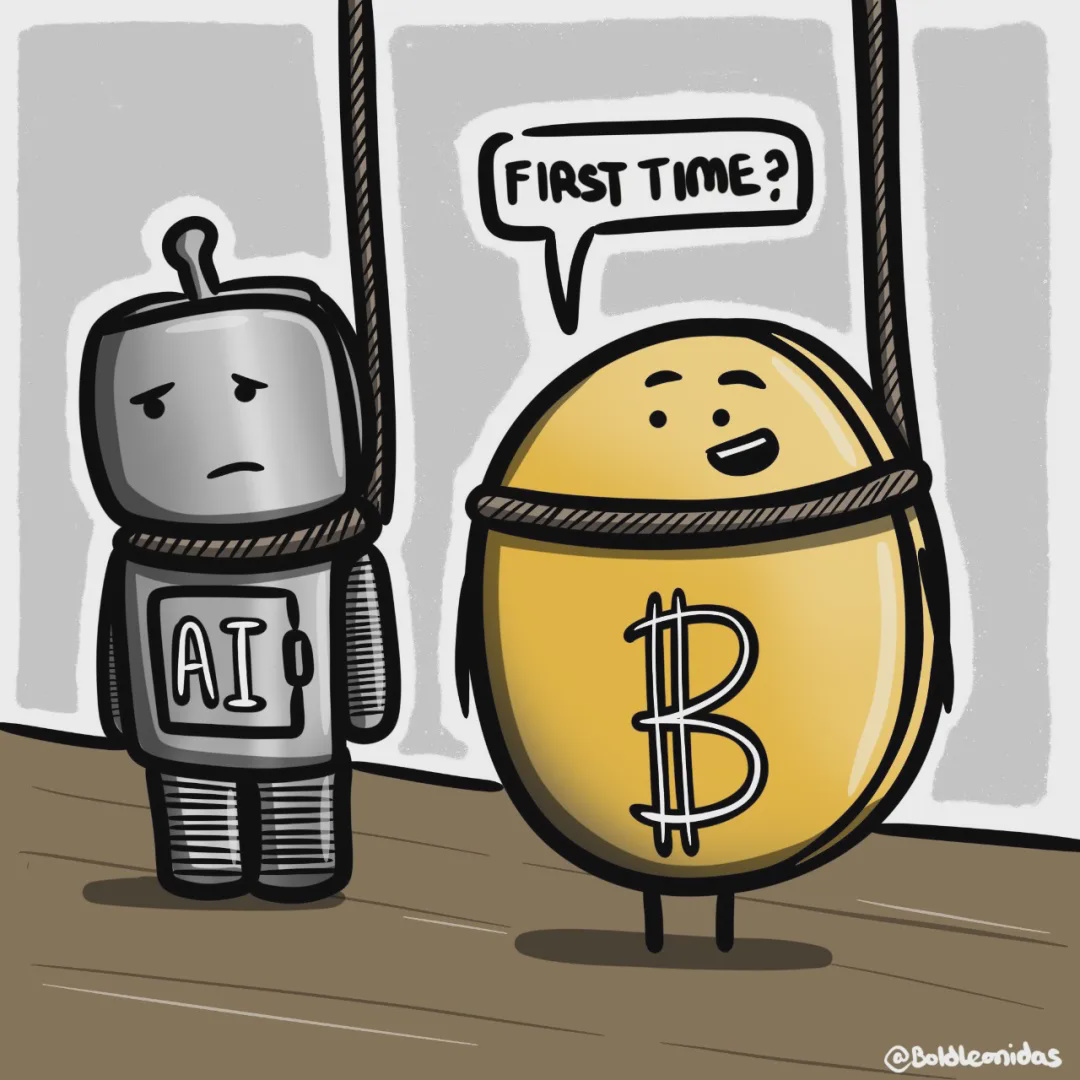
In short, whatever the market, many people seem to enjoy discussing and predicting price movements, and arguing about whether we're in a bull or bear market... But there’s really just one question worth asking ourselves: If the market experiences sharp short-term volatility like it has over the past few days, can our positions withstand it, and do we have a plan for how to respond?
That’s all for this edition (20261106). Everything above reflects my personal views and analysis and is intended only as a record of my thoughts and for discussion. It does not constitute investment advice.