
U.S. Democrats seek to push for a superintelligence ban. After Democrats regain control of both chambers of Congress in the midterm elections, Arizona Democratic Representative Yassamin Ansari publicly called for a pause on advanced AI development, stronger industry oversight, and a ban on artificial superintelligence to be made priorities for the new Congress. Her move brought the Artificial Superintelligence (ASI) Moratorium Act, introduced as early as September, into the public spotlight. The bill imposes severe penalties for violations: individuals could face up to 20 years in prison, and companies could be forcibly dissolved.
The bill was introduced in Senate and House versions by independent Senator Bernie Sanders and Democratic Representative Greg Casar on September 23 and 24, 2026, respectively. It remains at the introduced stage and has been referred to the relevant committees for consideration; it has not become law. Ansari is one of the bill’s co-sponsors.
The bill defines “artificial superintelligence” (ASI) as meeting either of the following conditions: achieving or exceeding human cognitive performance and capabilities across a broad range of fields and tasks, or being capable of doing so after minor modifications; or having the ability to plan and carry out actions that undermine human authority or even overthrow or destroy the U.S. government system. The bill calls for a comprehensive pause on all advanced AI research and development until a proposed dedicated federal regulatory agency, the Department of Artificial Intelligence, is operational and clear regulations and model review mechanisms have been established.
Individuals who violate the bill could face up to 20 years in federal prison, with sentencing standards comparable to those for the illegal development of nuclear weapons. Individuals outside decision-making roles could also be barred from the industry for up to 10 years.
Companies that violate the bill could be forcibly dissolved, and their related intellectual property and assets could be seized by the federal government. The bill would also promote international agreements and export controls, seeking to ban ASI development worldwide and pursue cooperation with allies.
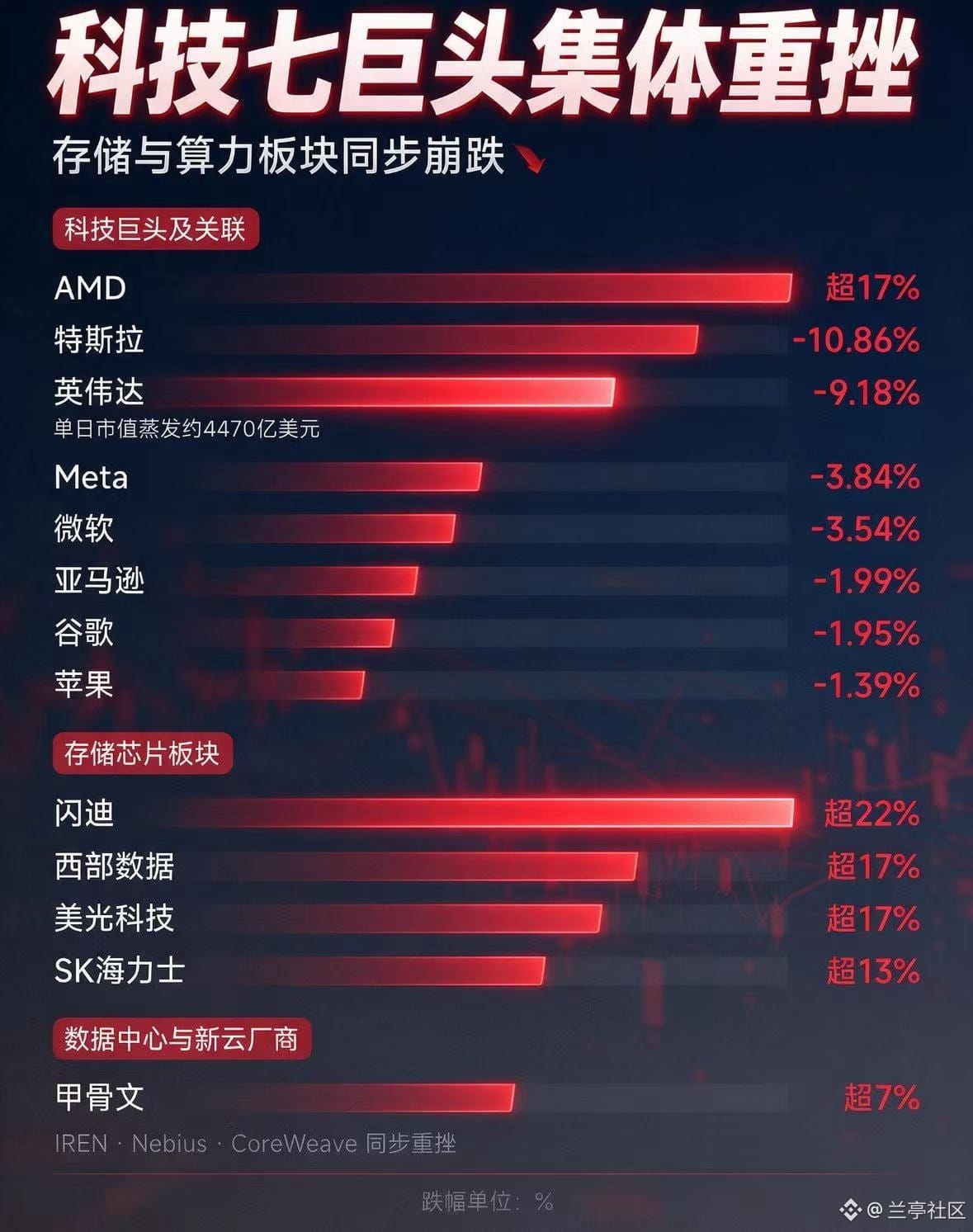
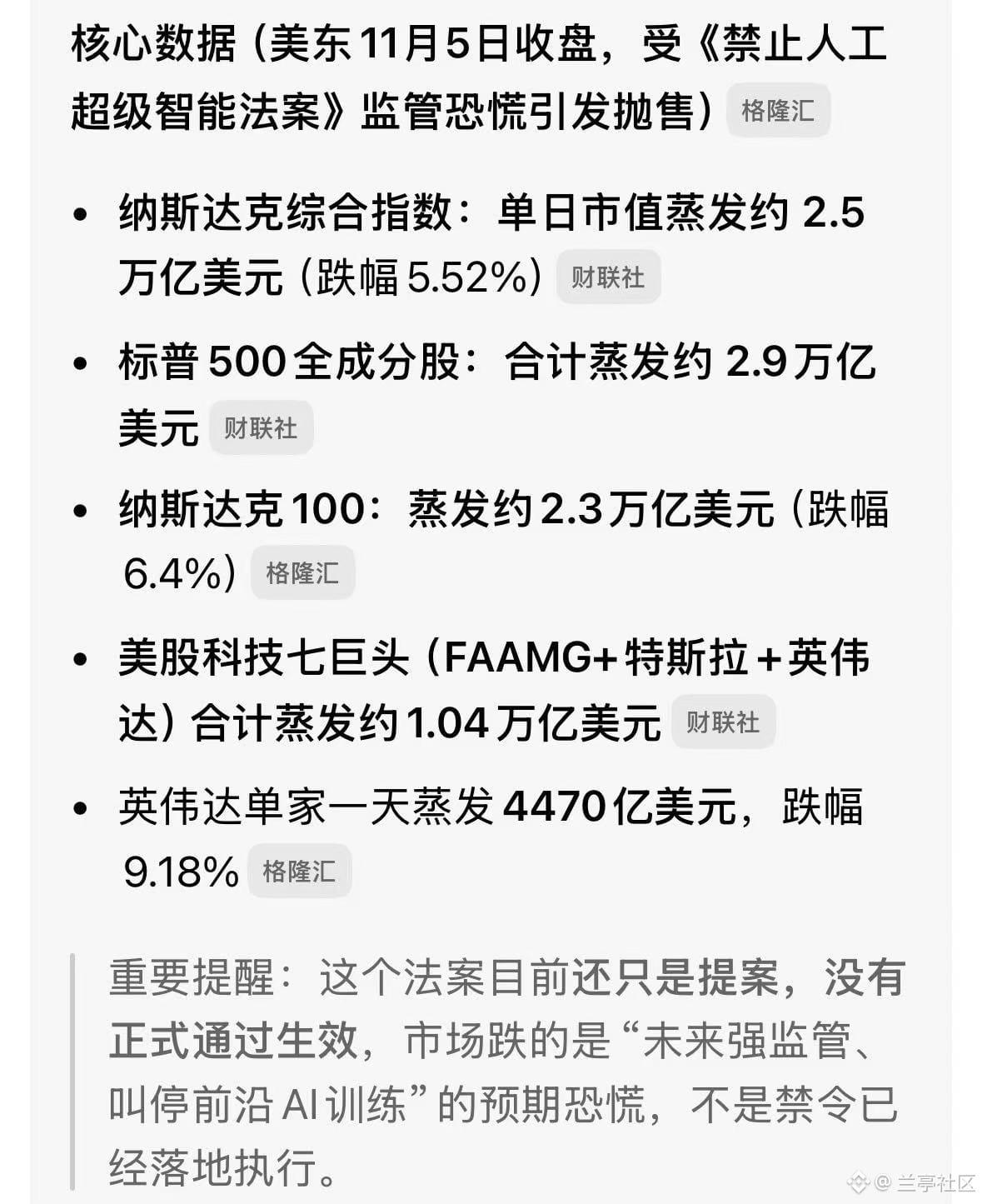
The bill lacks a quantifiable technical definition of “superintelligence,” leaving the boundaries of enforcement unclear. Markets view this as a risk premium reflecting regulatory uncertainty. U.S. technology stocks have been highly volatile amid concerns that AI regulation will tighten following the Democrats’ election victory and that data center construction will slow.
The Nasdaq plunged more than 5% intraday, while shares of AI-related companies such as Nvidia, AMD, and Micron fell sharply. Markets are concerned that future AI investment and data center construction will face strict restrictions.
#人工智能 $SNDK