【November 6 | Global Markets News and Data Analysis】
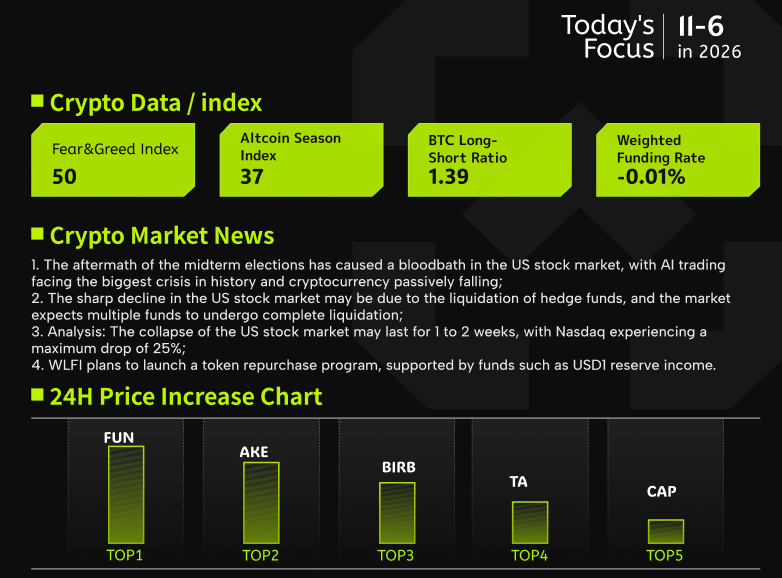
1. Aftershocks from the midterm elections battered U.S. stocks. AI trading faces its biggest crisis ever, while crypto has been dragged lower;
2. The sharp selloff in U.S. stocks may have been driven by hedge fund liquidations, with markets expecting several funds to be undergoing complete liquidation;
3. Analysis: The U.S. stock market crash could last one to two weeks, with the Nasdaq potentially falling as much as 25%;
4. WLFI plans to launch a token buyback program, funded in part by returns on USD1 reserves.
U.S. stocks suffered an unusually sharp overnight selloff, with the S&P 500 falling 4.4% and the Nasdaq 100 plunging 6.4%—its biggest one-day drop since March 2020. Chipmakers and memory stocks led the decline, while the VIX volatility index surged. Markets broadly pointed to concerns that Democrats’ win in both chambers of Congress could lead to tighter regulation of AI computing capacity and data centers. Investors fear that slower approvals could leave chip production capacity relatively oversupplied by 2028 and undermine the case for rising memory prices. However, most Wall Street observers believe the selloff was driven not by deteriorating fundamentals, but by concentrated hedge fund liquidations. Several well-known funds have reportedly faced redemptions, position unwinds, or been forced to disband internal teams.
The turmoil once again underscored the close links between U.S. stocks and crypto assets. Bitcoin fell in tandem after U.S. markets opened, briefly dropping to around $76,000 before stabilizing. Crypto-related stocks such as MSTR and COIN also retreated across the board. Panic-driven deleveraging is spreading rapidly across asset classes, with crypto—among the riskiest—bearing the brunt. If liquidation pressure in U.S. stocks persists in the near term, BTC may remain under pressure. But if expectations of tighter AI regulation intensify, that could instead draw greater investor attention to decentralized computing power and on-chain infrastructure, potentially offering support for the medium-term outlook.