

Yesterday, I reviewed how I lost money in this recent move in storage and semiconductors. Today, I'm reviewing how I lost money in last night's crypto move.
This crypto rebound had given me a little comfort amid my journey in storage and semiconductors. But last night, crypto followed the broader market lower, wiping out the nascent uptrend—and taking all my profits with it.
Entering a position is an art, setting a stop-loss is an art, and taking profits is an art too. Now I realize I haven't managed to do any of it right!
I entered trades without a plan, had no rules for stop-losses, and no plan for taking profits either. Looks like all I can do is watch others feast while I can't even get a sip.
Of course, I also saw that quite a few KOLs lost money last night. But that's just human nature—we always focus on other people's wins. Or perhaps a successful KOL only posts screenshots of profits when they're making money, while I keep losing money and making mistakes as I reflect and review.
I’ve also realized that the opportunities to make serious money go against human nature. At the same time, there are always clues to follow. Because I lack the knowledge and experience, I’ve repeatedly been much slower to act than top traders.
Based on my review of last night's market conditions and the clues that were there to follow, I've summarized the following characteristics. I hope they can help me make smarter trading decisions in the future.
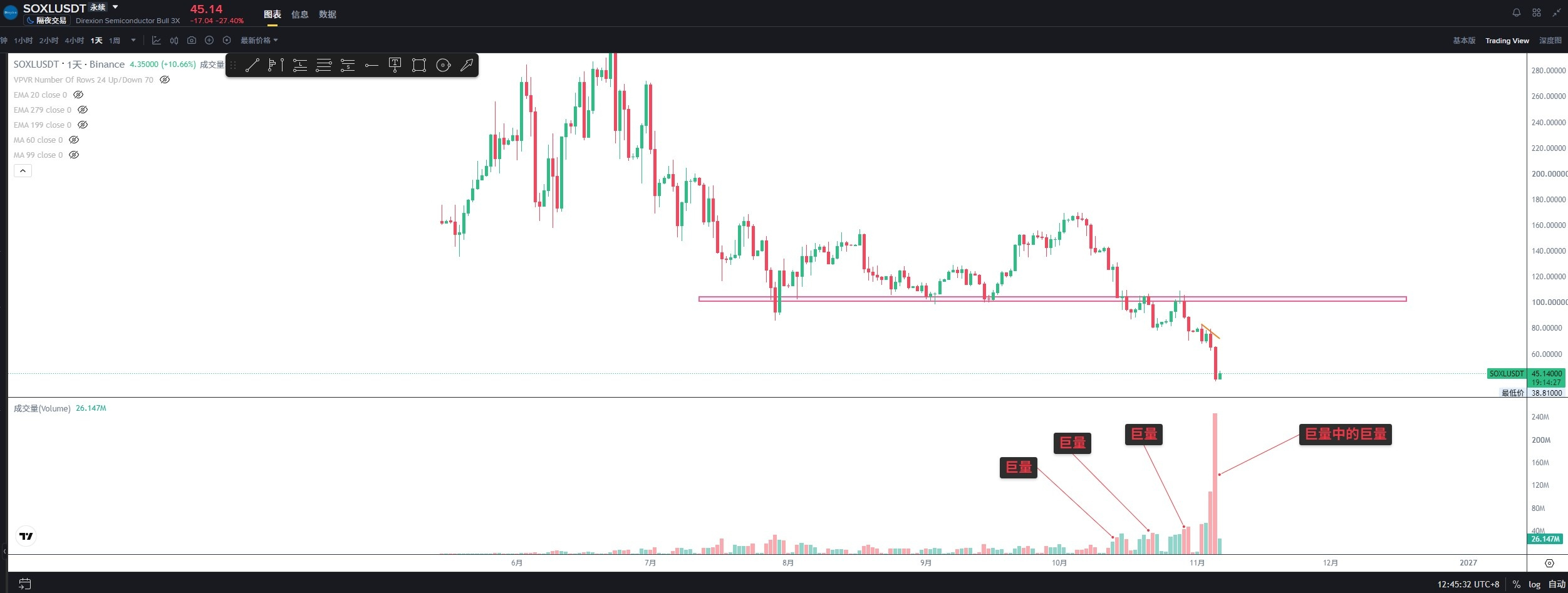
1. There’s always more volume. During the day yesterday, and even in my analysis the day before, I kept thinking that SOXL’s volume was already very high and that a rebound was due. But there was no divergence between volume and price. And last night, things really did go one step further: volume surged to an even higher level, while the price fell from 65 to 38—a drop of over 30%, just like that.
2. The smaller coins didn’t follow the rally. When something unusual happens, there’s usually a reason. After the midterm election results came in the day before, BTC and ETH rose sharply, but the smaller coins (such as BNB, BCH, SUI, LTC, XRP, and so on) didn’t follow suit. In the past, they would have already risen a lot by then. At the very least, outperforming BTC was usually par for the course.
3. The smaller coins didn’t catch up, either. After BTC had risen significantly and began moving sideways near its highs, the other smaller coins didn’t rally to catch up. Instead, they acted timidly and followed the drop rather than the rise. I watched the market almost all day yesterday. What I saw was that before BTC and ETH had fully broken down, smaller coins like BNB and SOL had already fallen a long way. Some of the others did bounce a little, but they pushed up in small green candles only to be knocked back down by small red ones. Overall, the price action was very weak.
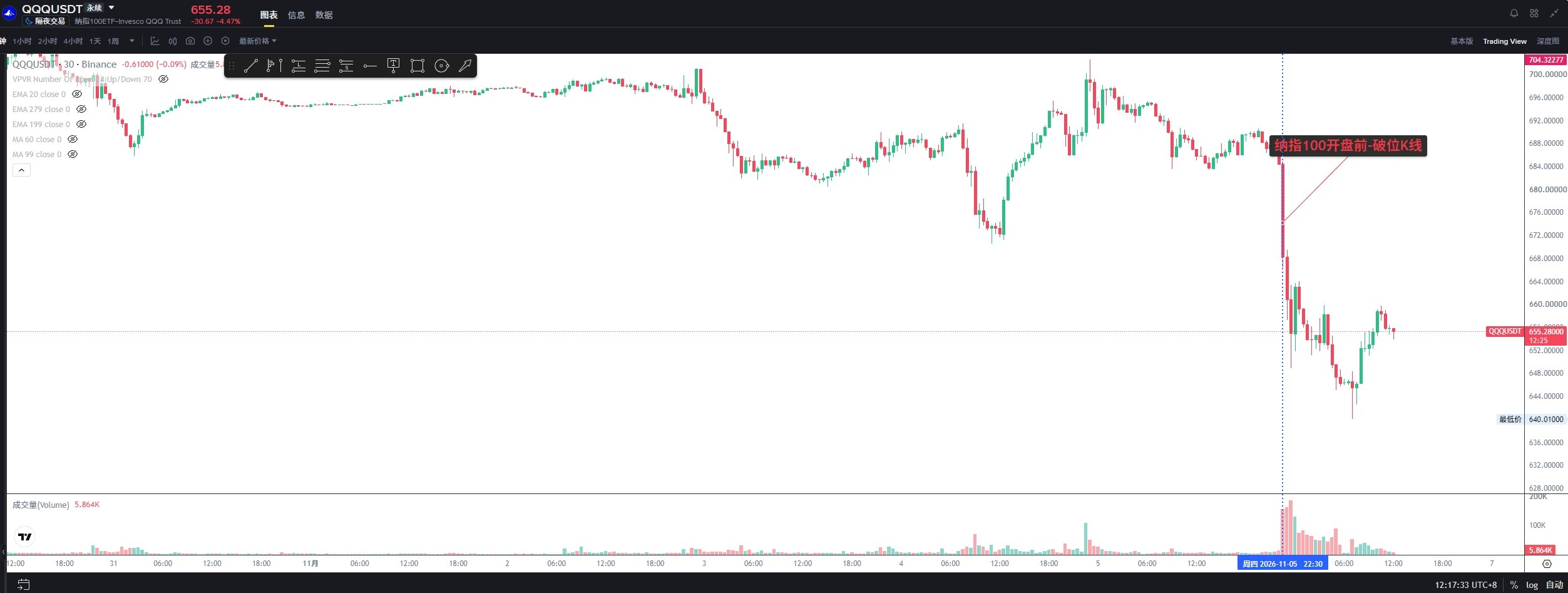
4. U.S. stocks weakened. While BTC was moving sideways near its highs, the Nasdaq 100 gradually weakened and looked at risk of breaking down at any moment. At first, I thought it was just forming a higher low. But after that higher low formed at 14:00, the candle that closed before the U.S. market opened at 22:30 on the evening of 2026.11.05 had already broken down—and it was a large bearish candle with a long body. This showed just how intense the bearish trend in U.S. stocks had become. In other words, I should have closed all my long positions immediately at that point, or even considered going short. But I was fixated on whether BTC and ETH would break down. Although both had already done so, I didn’t realize how serious the situation was and stubbornly assumed it was just a bear trap set by the market makers.
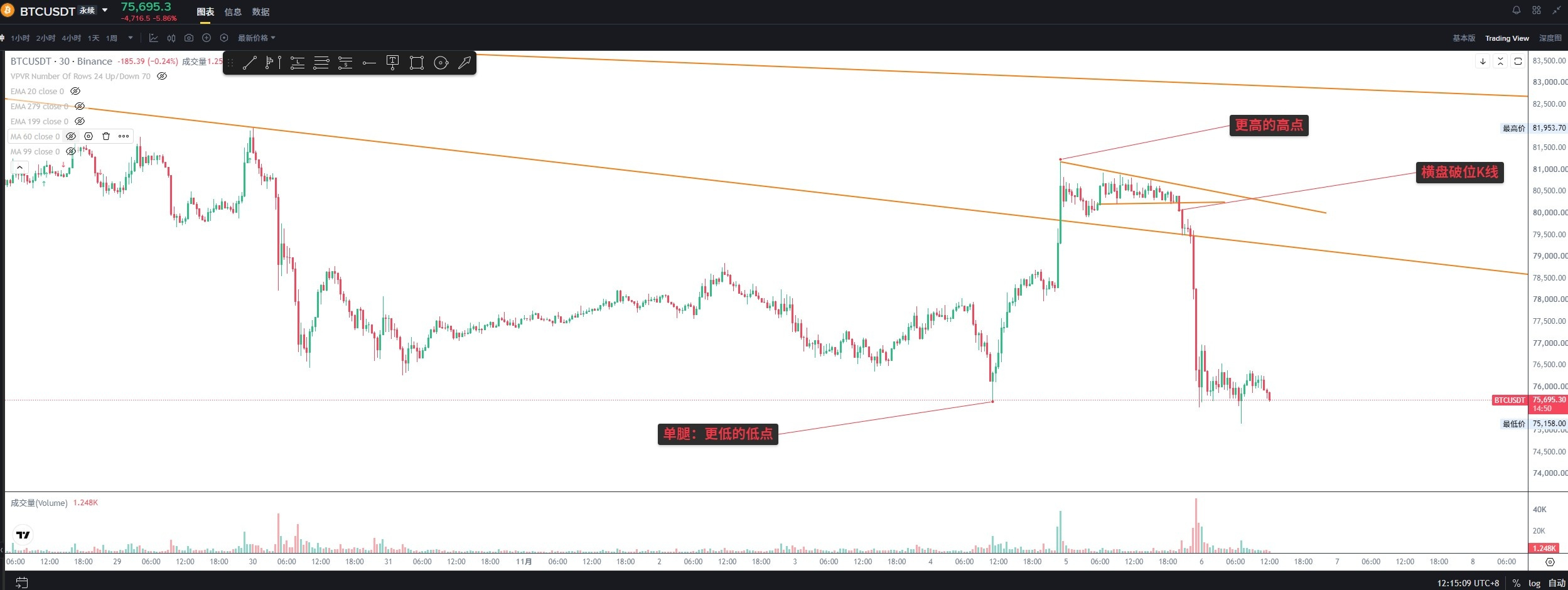
5. A single-bottom structure. On the one-hour or 30-minute chart, BTC surged up from a single low, rather than from the higher of two lows in a double bottom. In other words, a single leg is unstable; it needs another leg at the same low, or a slightly higher one, to provide support.
Now let’s talk about why I didn’t close my positions right away:
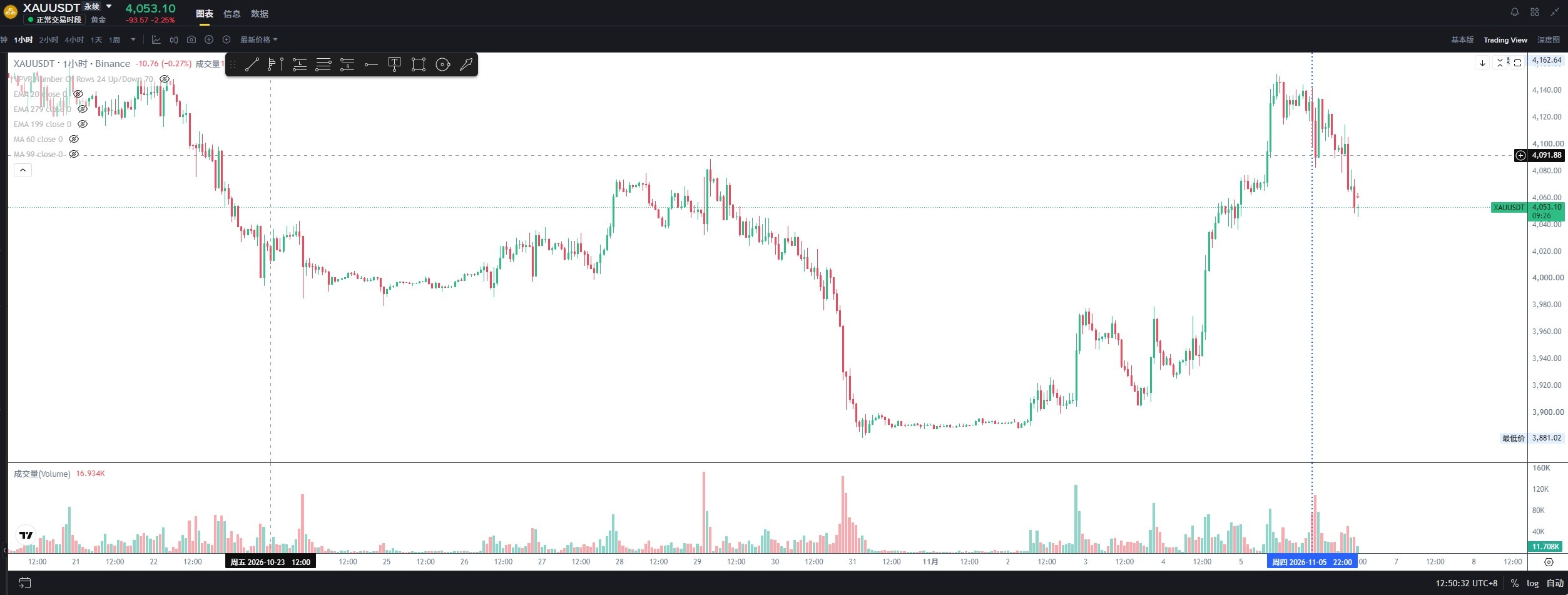
1. Gold was holding up well. A significant portion of my positions were long gold and silver. They were still doing reasonably well, and gold remained quite resilient even as Bitcoin weakened. Bitcoin has often followed gold’s movements, and sometimes it has even lagged behind. This gave me some confidence to keep holding my BTC longs.
2. I didn’t pay close enough attention to the U.S. market open. I hadn’t checked the Nasdaq’s movement at the time; I’d only glanced at it much earlier, before the market opened. I did acknowledge then that the Nasdaq 100 was looking weak and could break down, but I didn’t check on it right away when the market opened.
3. Price action logic: Based on BTC’s price action, it had indeed formed a higher high; it was only missing a lower low. That gave me some confidence to keep holding it.
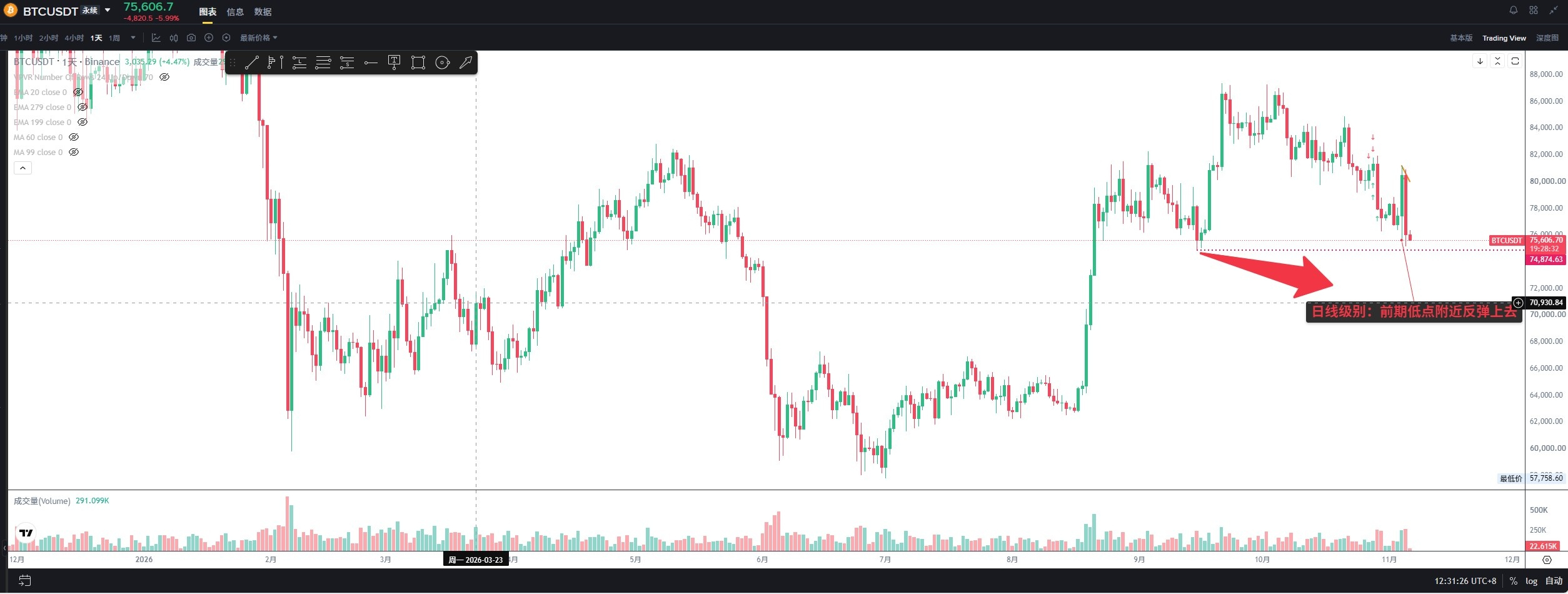
4. Volume structure logic: After the midterm election results came in, BTC made several consecutive large bullish candles, accompanied by rising volume. The low of the rebound was also near a previous major low on the daily chart (slightly higher, which made the rebound thesis more convincing).
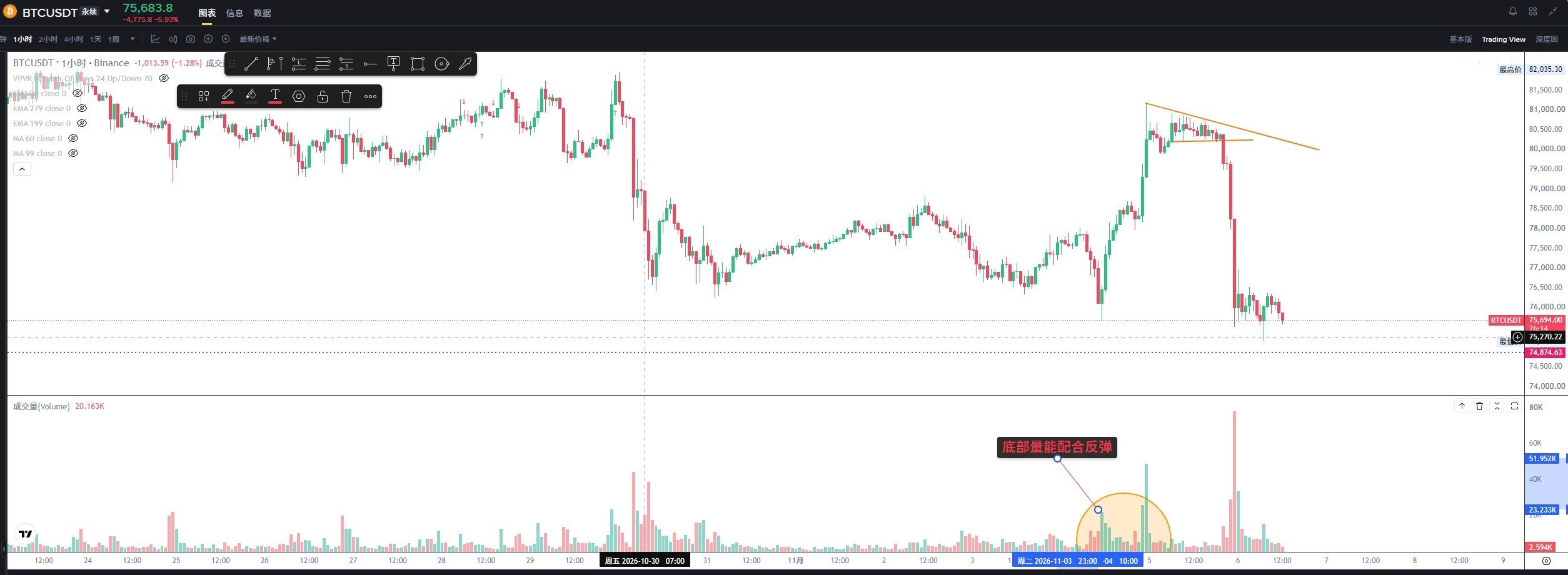
A summary of the lessons I’ve learned:
1. BTC’s sustained rebounds tend to happen—or are more likely to happen—when the broader U.S. stock market environment is favorable. When the broader environment is poor, BTC can easily fall to catch up.
2. When Bitcoin rallies sharply but almost all the smaller coins neither rally strongly nor catch up, be cautious about holding for the long term. If the price breaks down after moving sideways near its highs, exit decisively.
3. Building on my analysis from the previous two days: when you spot an opportunity to make serious money, you should also recognize that it could be an opportunity to lose serious money. Can you stay consistent in how you approach it?
If you found this useful, please like and follow. I share my own trading insights every day!

Recent articles: