
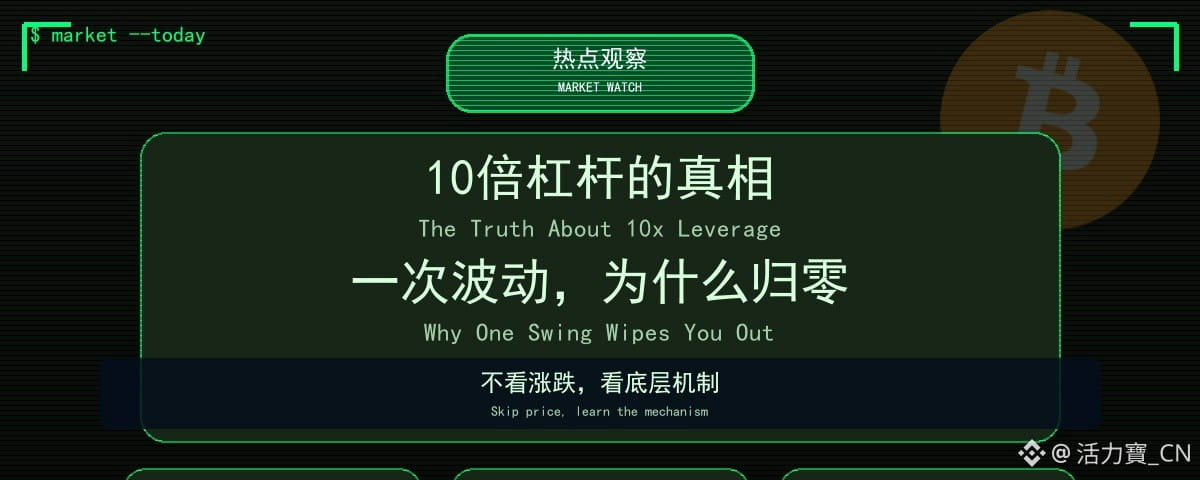

On November 6, 2026, the crypto market was in turmoil, rattled by U.S. stocks. Bitcoin bounced around the $80,000 mark, plunging 5.79% in 24 hours, while over 100,000 traders across the market were liquidated. Many people watch the red and green price movements for entertainment, but miss one key point: how exactly do liquidations happen, and why can people lose their money even when they haven’t sold? Today, we’ll set price movements aside and explain how leverage and forced liquidations work, so more beginners can understand the logic behind the charts.
1. What is leverage? Making one dollar work like several
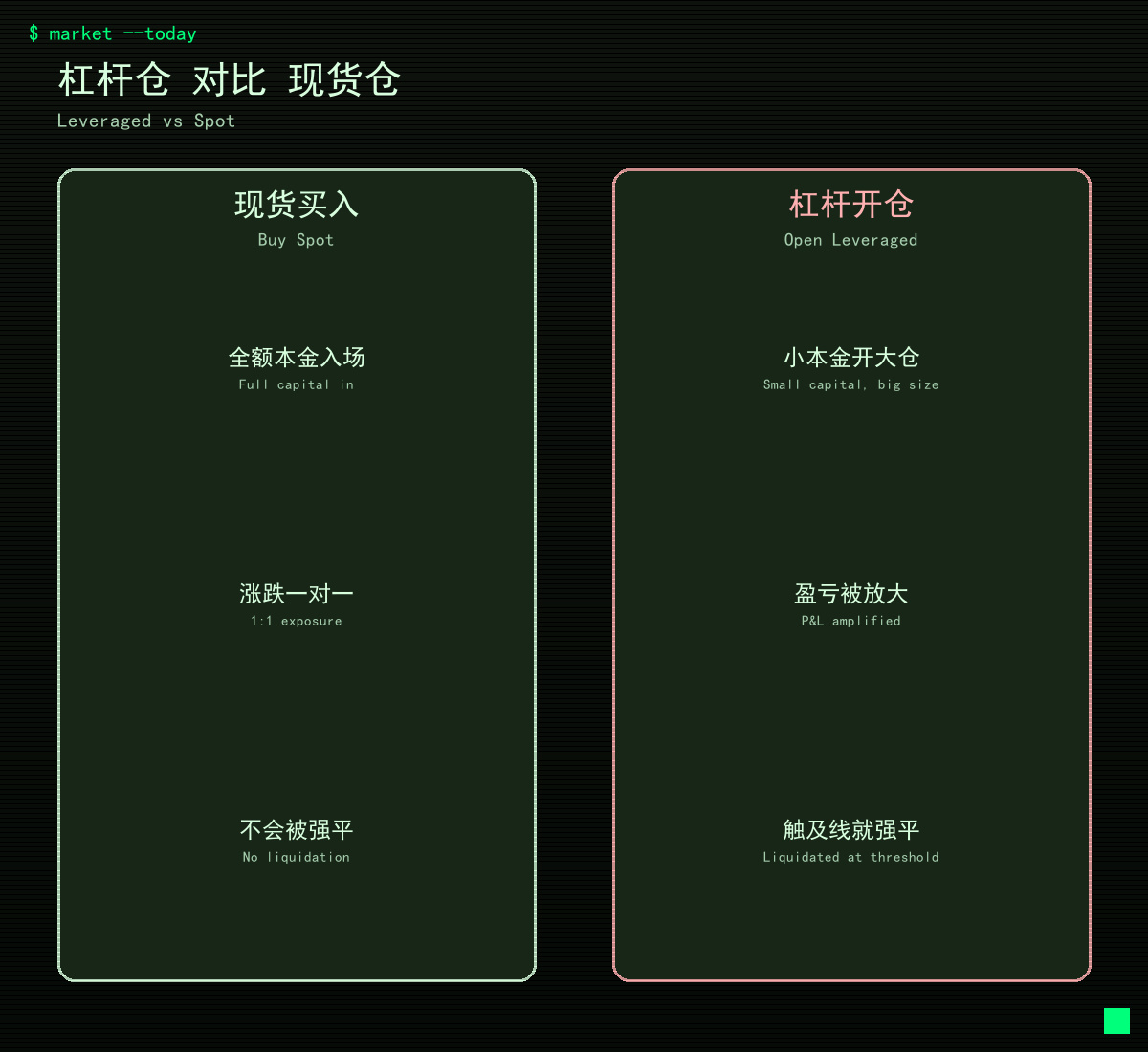
First, let’s talk about spot trading. If you use $1,000 to buy Bitcoin (BTC), any gains or losses are based on that $1,000. A 10% rise earns you $100, and a 10% drop loses you $100. The money in your account is always your own capital, and the worst that can happen is losing that entire $1,000.
Leverage changes the equation. You put up only a small amount of margin, and the platform lends you money so you can open a much larger position. Ten times leverage or even more means using $100 as if it were $1,000. The larger your position, the more every price move amplifies both your gains and losses. Put simply, leverage is a magnifying glass, not a money printer: it magnifies profits and losses alike.
II. Where is the liquidation line? It’s not that you’ve lost everything—the system kicks you out

Many people think getting liquidated means losing everything. More accurately, it means the system forcibly closes your position.
Every leveraged position has a maintenance margin level. The margin you put up is there to absorb price fluctuations. When the price moves against you and losses eat up most of your margin, your account equity falls below the maintenance level, and the platform’s risk controls automatically close your position, using the remaining funds to repay what it lent you.
So liquidation doesn’t mean your account balance is zero. It means your margin has fallen to the trigger level and your position has been forcibly closed. You might still have a little money left, but at that point you’re out of the game, and whatever happens to the price afterward no longer affects you.
III. Why big swings trigger a chain reaction of liquidations
The most brutal thing about crypto markets is how quickly and violently prices can swing. Sudden surges and plunges within minutes are especially likely to set off a chain reaction.
When one side’s position is liquidated, the system sells its coins at market price. That selling pushes prices lower, causing more highly leveraged traders to hit their liquidation levels. Then more selling, more price pressure, and more liquidations. In a short time, liquidations snowball—that’s a cascade of liquidations.
In the wave on November 6, 2026, public reports said that more than 100,000 traders were liquidated across the market. Essentially, highly leveraged positions were wiped out one after another amid extreme volatility. Once you understand this, you’ll see that what really wipes out accounts is often not getting the market’s direction wrong, but using too much leverage with too little room for error.
IV. Three tips for beginners
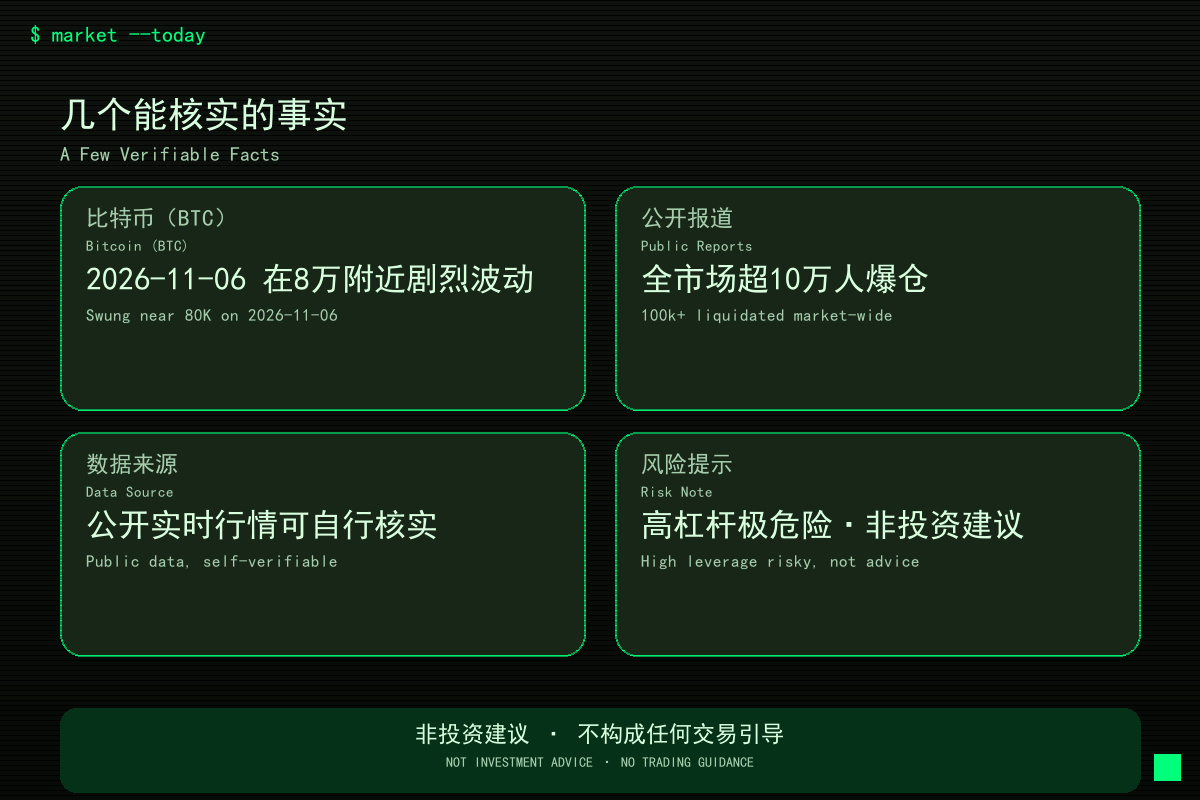
First, more leverage isn’t always better. The higher the multiplier, the closer the liquidation level is, and even an ordinary price fluctuation can wipe you out. Beginners using high leverage are basically paying the market tuition.
Second, only use money you can afford to lose. The crypto market never closes, and anyone can get it wrong. Invest only the portion you can accept losing entirely, so market swings don’t control your emotions.
Third, learn to distinguish information from trading calls. Don’t believe a word from anyone saying to buy with your eyes closed or promising guaranteed profits. You can learn how the mechanisms work, but if you’re looking to make money by copying trades, you’ll most likely just become someone else’s liquidity.#美股走弱,加密货币市场普遍承压 #币安将恢复更多资产提现 #今日行情 #BTC走势分析