No One’s in Charge: How Bitcoin Works
If no one is in charge, how can a group of computers that don’t know one another work together to process transactions? In this introductory talk from 2017, Andreas Antonopoulos starts by explaining how a program connects to other computers.
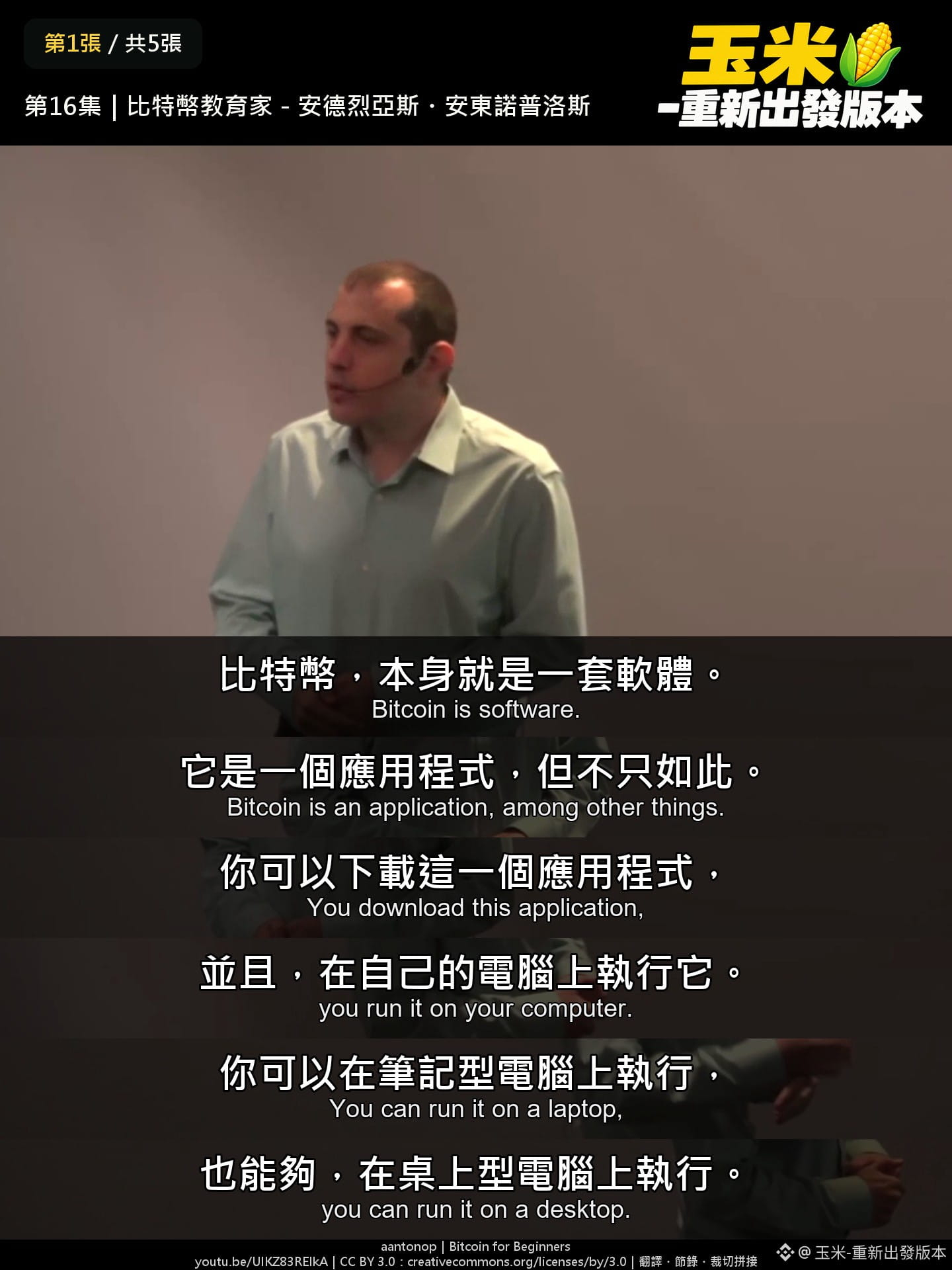
01|It starts with downloading and running a program
He says Bitcoin is also a piece of software. Users download an app and run it on a computer, whether a laptop or a desktop. This explanation is about the program that participates in the network; it doesn’t present Bitcoin as something you have to buy a whole coin of.
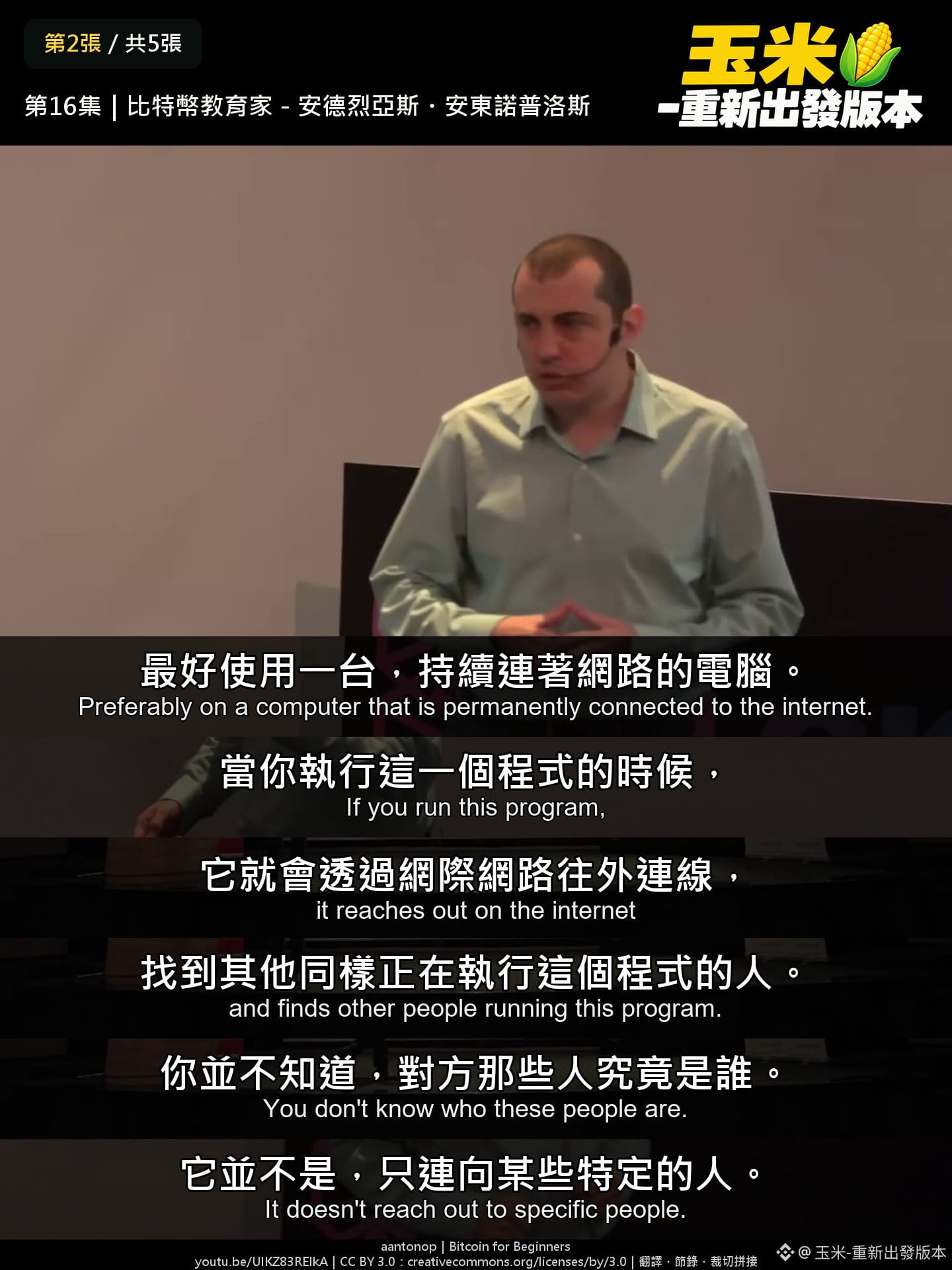
02|The program finds other participants
Once connected to the network, the program looks for other people running it. You don’t need to know who’s on the other end beforehand, and it doesn’t just look for one specific person.
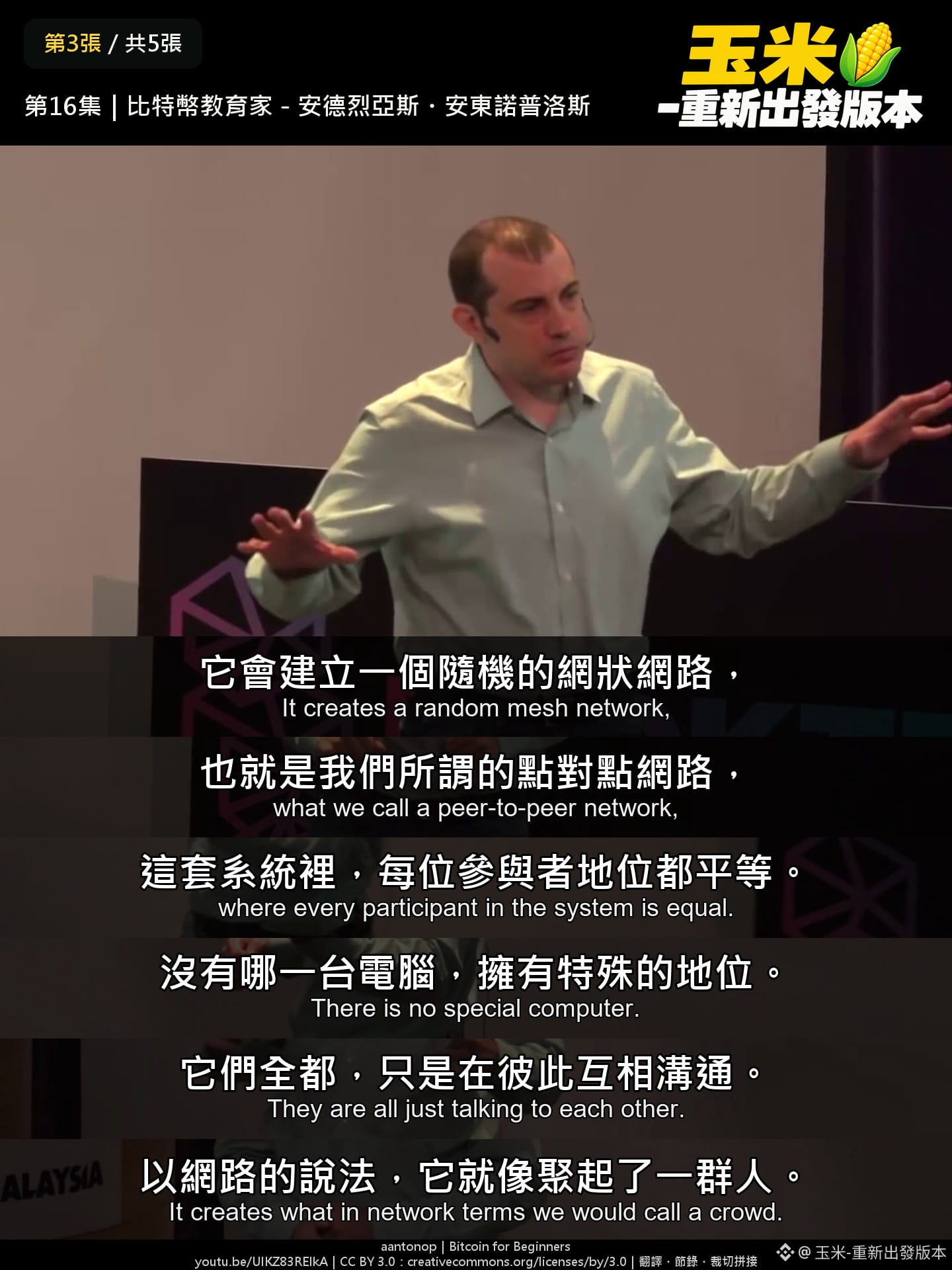
03|There’s no central office
He describes it as a random peer-to-peer network. The point here is the status of the network’s participants: the computers communicate with one another, and no computer becomes the one in charge of everyone else just because of its position.
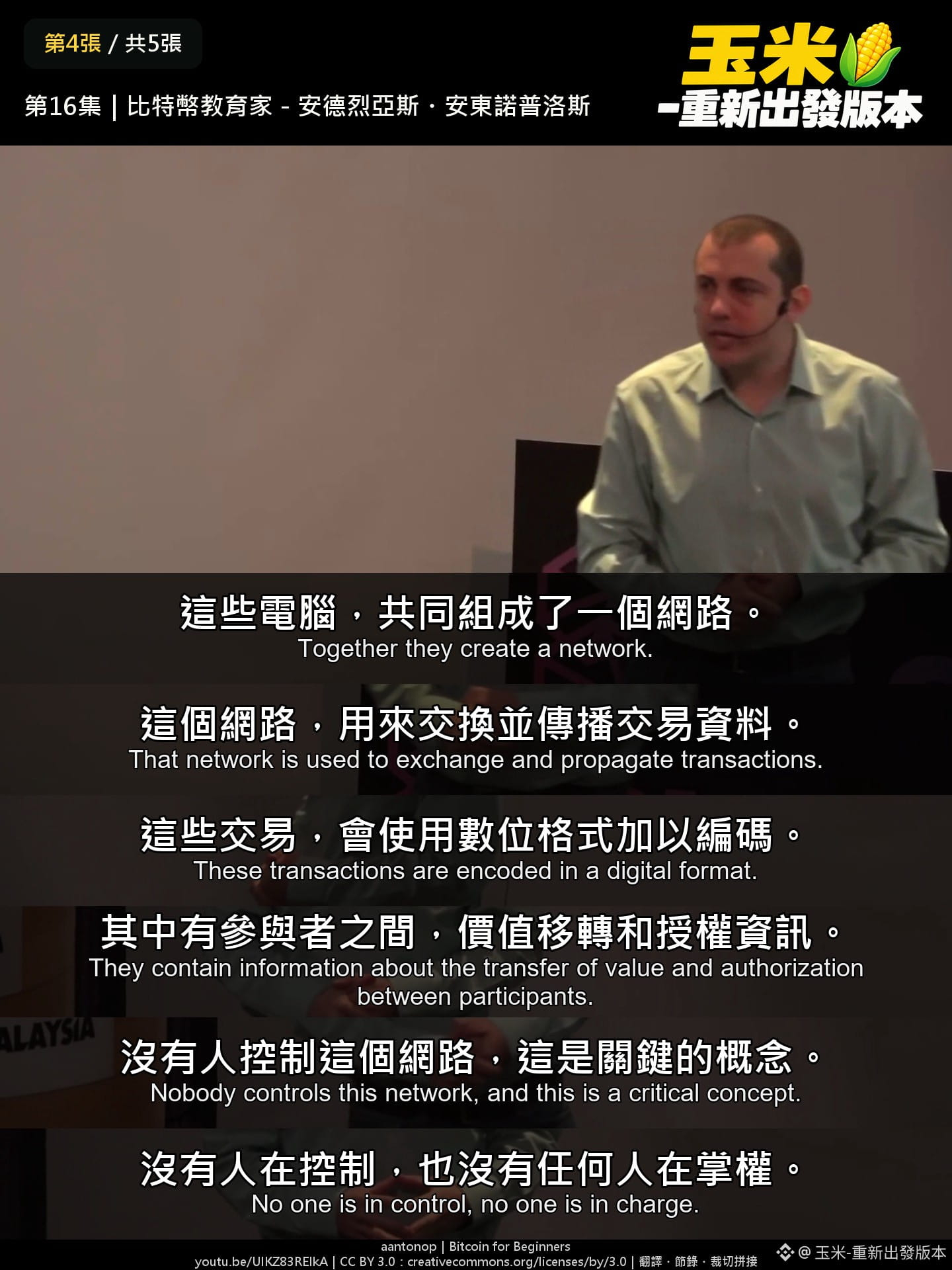
04|They connect to exchange transaction information
These computers form a network and exchange and transmit transaction data encoded in digital form. This includes information about transfers of value and authorization. What he repeatedly emphasizes is that no single person controls the entire network.
This is an introductory explanation of the network from the original video; it doesn’t cover every detail of the consensus mechanism or transaction security all at once. When you first heard “no one’s in charge,” what did you most want to ask about how it gets something done?
#比特币 #AndreasAntonopoulos #点对点网路 #理财知识 #PeopleAndTalks
This content may generate Binance creator rewards or trading commissions; rewards are not guaranteed.
AI-assisted editing and formatting. See the original image credit for the source and authorization of the speaker’s words.