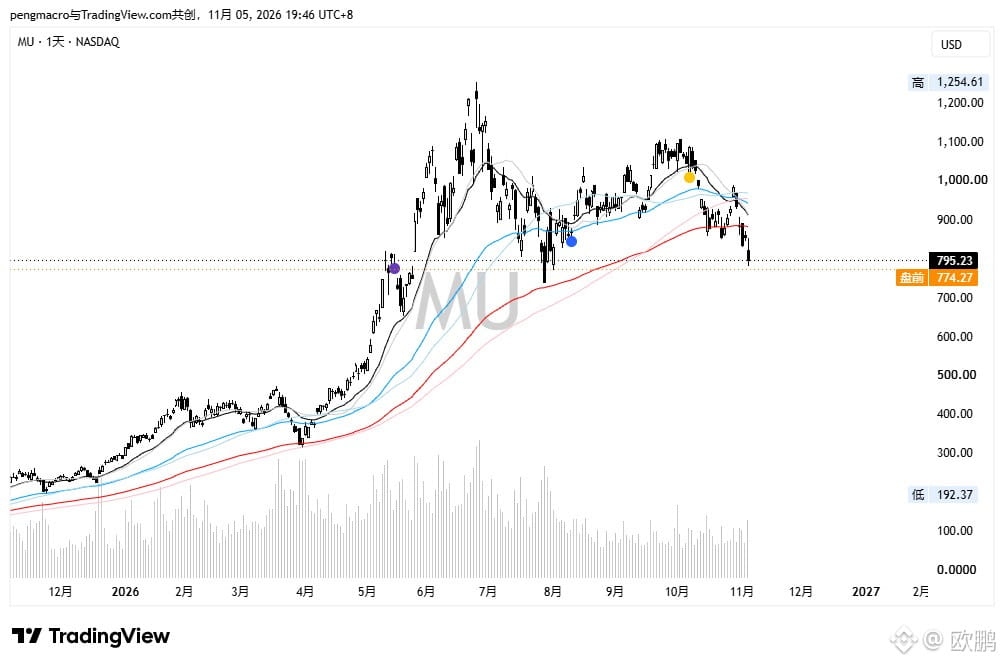
Micron $MU down in premarket trading!
Micron has paused plans to build Fab 11E in Taoyuan, Taiwan, China. The project had a budget of $3–4.5 billion and was originally scheduled to begin producing HBM and DRAM in 2028.
Three major shocks reveal risks in the AI memory supply chain:
1️⃣ Labor disputes escalate. Employees are demanding a larger share of record AI-driven profits, calling for 15% of operating profits to be distributed to employees worldwide. Proposed annual salaries would rise to NT$4 million (about US$121,000) for junior engineers and NT$6 million for senior engineers. A small union is seeking to form a larger organization and overturn the existing agreement, forcing negotiations to restart.
2️⃣ Production capacity at risk. Taiwan, China, accounts for 60% of Micron’s global DRAM output and is a key HBM production hub. Micron has invested nearly $50 billion locally and employs 15,000 people there (one-quarter of its global workforce). Any downsizing could disrupt the supply of AI memory chips, worsen shortages, and drive prices higher.
3️⃣ Geopolitics and supply chain restructuring. Micron has pledged $250 billion in U.S. manufacturing investment and is expanding in Japan and Singapore. Amid the AI boom, TSMC and others are accelerating factory construction, but the risk of military intervention threatens the viability of long-term investments. The competitive landscape among Samsung, SK hynix, and CXMT could be reshaped.
Key things to watch:
Whether Micron and the union can reach an agreement and avoid shifting production elsewhere
Whether shortages of HBM and DRAM worsen further
Whether rising memory chip prices put pressure on AI data center construction costs