【November 5 | Global Market News and Data Analysis】
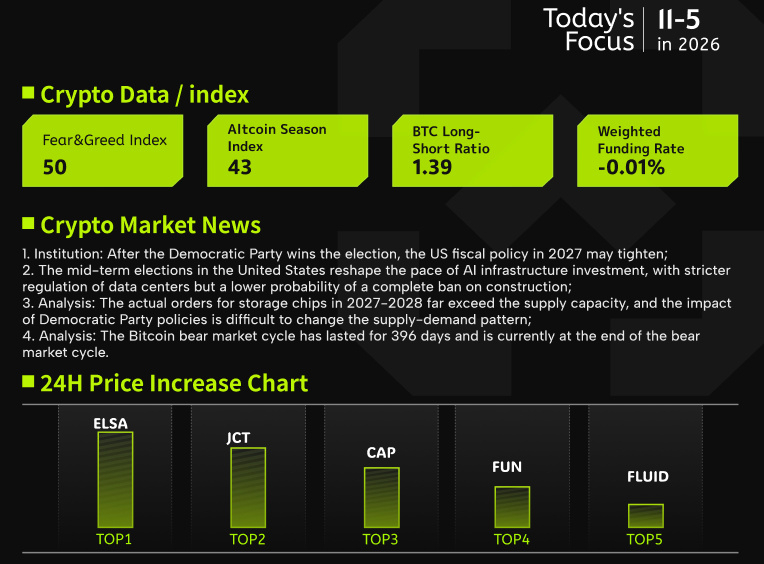
1. Institutions: After a Democratic victory, U.S. fiscal policy could tighten in 2027;
2. U.S. midterm elections reshape the pace of AI infrastructure investment; data center regulation is tightening, but a blanket ban on construction remains unlikely;
3. Analysis: Actual orders for memory chips in 2027–2028 far exceed supply capacity, and the impact of Democratic policies is unlikely to alter the supply-demand balance;
4. Analysis: The Bitcoin bear market has lasted 396 days and may now be nearing its end.
With the U.S. midterm elections settled, market expectations for AI infrastructure have shifted. Goldman Sachs believes policy uncertainty could prompt tech companies to bring some capital spending forward to 2027, advancing data center projects and strategic acquisitions before regulations change. Jefferies, meanwhile, notes that although Democrats won governorships in all five key states, the new officeholders are more inclined to set regulatory boundaries than to impose a blanket shutdown. Post-election market performance has diverged sharply: cloud service providers have gained, while data center operators and chip stocks have come under pressure, reflecting a repricing of policy risks across the industry supply chain.
In the crypto market, after Bitcoin broke above $80,000, short-term holders transferred more than 28,000 BTC in profit-taking to exchanges within 24 hours. Despite the resulting selling pressure, it has held above $80,000 and reclaimed its 21-day and 50-day moving averages. Some observers say this bear market, which began at the October 2025 peak, has lasted 396 days—close to the historical average. The roughly 53% drawdown has been relatively moderate, as ETF and institutional participation has made holdings more resilient. However, reaching a typical cycle duration does not confirm that a bottom is in: BTC still needs to hold above $80,000–$82,000 to validate a reversal. With Wall Street fund flows still unclear, the market may be nearing the end of its bear cycle.