A few days ago, I was talking about voice input methods again.
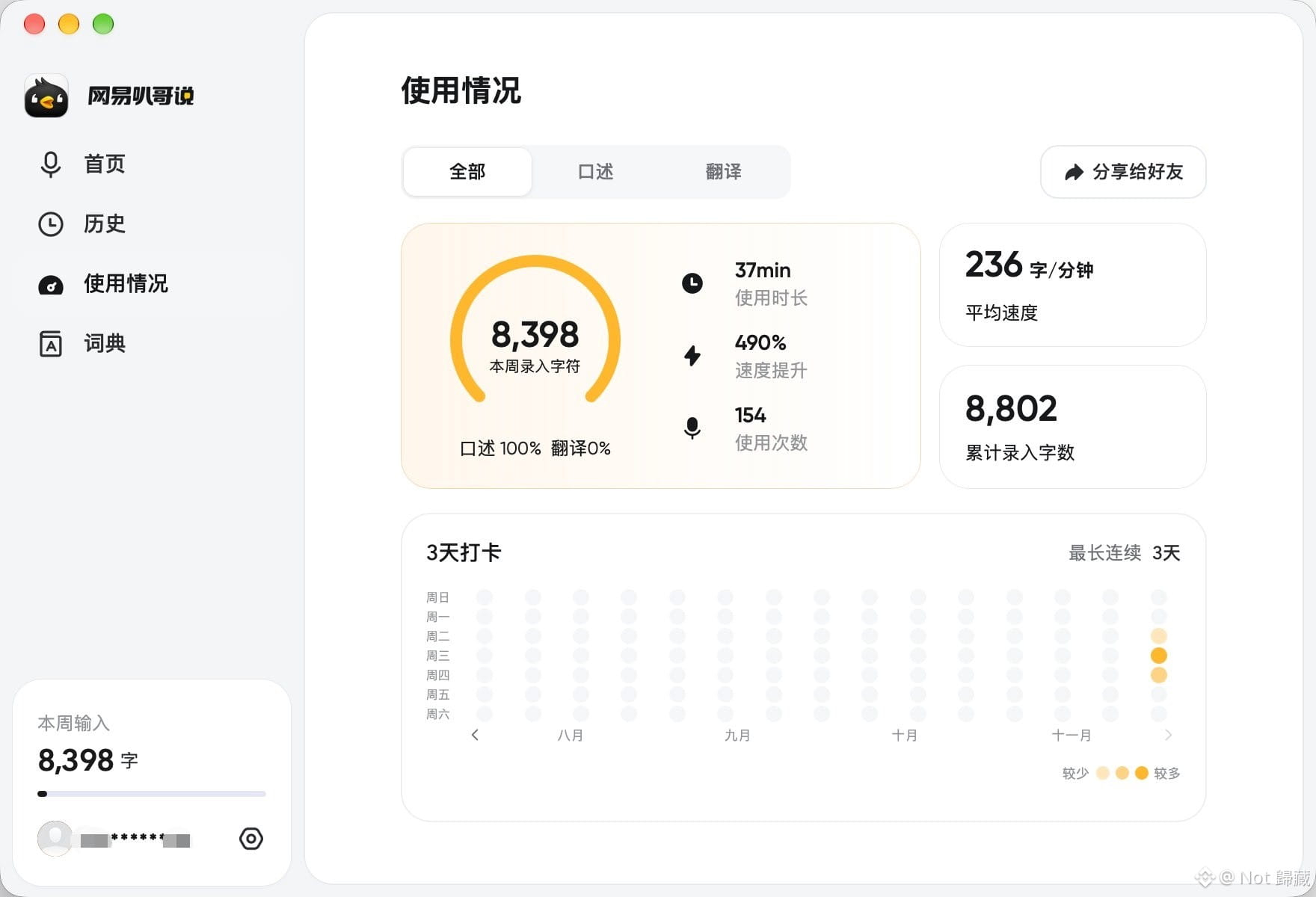
Someone in the comments said NetEase’s Bage Shuo was good, so I gave it a try. It really is!
NetEase has been doing a great job with these small AI products lately. Bage Shuo and UU Remote are both excellent.
It’s free, whereas Typeless and many similar products overseas are paid.
The local model they use is an ASR model they trained themselves.
On desktop, I mainly keep my voice input method separate from my regular input method so they don’t interfere with each other.
When you use voice input with a regular keyboard, switching input methods and things like that often interrupt it. You can dictate a long string, only for it to get interrupted and disappear at the end.
That’s really inconvenient. Keeping them separate avoids the problem.
And what’s one advantage of domestic voice input methods like this? They’re fast. Really fast.
There aren’t any unnecessary features either; it’s very restrained. It just has input and translation, with no flashy interface. You open it and get straight to work.
Then there’s polishing—like Typeless’s polishing feature. It’s really annoying.
Especially with model names and numbers, it stubbornly thinks Claude’s models only go up to 3.5. It deliberately gets model names and numbers wrong, even when I’ve said them very clearly.
Bage Shuo doesn’t have that problem. It handles them really well and doesn’t over-polish.
It also supports a custom dictionary. I have my own Memory, so I had Codex analyze it and generate a custom dictionary file for me. I uploaded it, and everything was set up.
This whole segment was dictated using Bage Shuo, too.