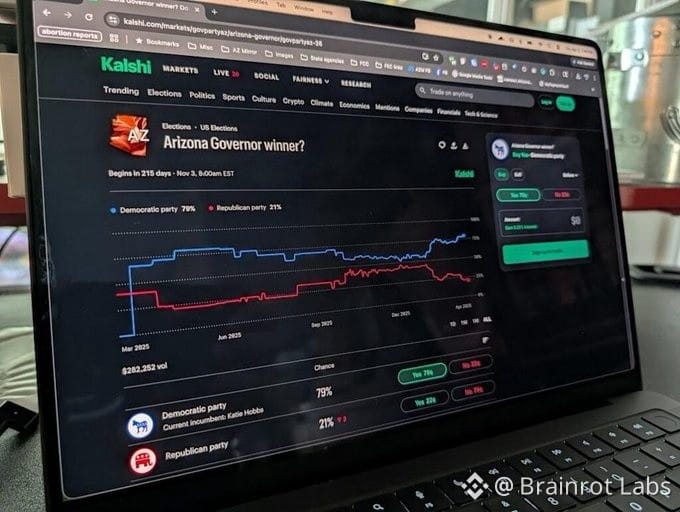
Prediction markets just went 479 for 487. Washington might want to check its homework.
Kalshi CEO Tarek Mansour says the most-followed candidate in each of the first 487 US election races won 479 of them, representing a 98% success rate.
His argument? Prediction markets aggregate information from thousands of participants, including people without political titles, media platforms, or massive followings.
The idea is simple: people put money behind their beliefs, and the market continuously reflects what participants collectively expect.
But one important detail: this measures whether the most-followed candidate won, not whether prediction markets correctly predicted every race or outperformed traditional polling.
Apparently, you don't need a Washington insider badge to have an opinion. Sometimes you just need a position in the market.
Are prediction markets becoming a serious alternative source of political information, or is 487 races still too small a sample?