
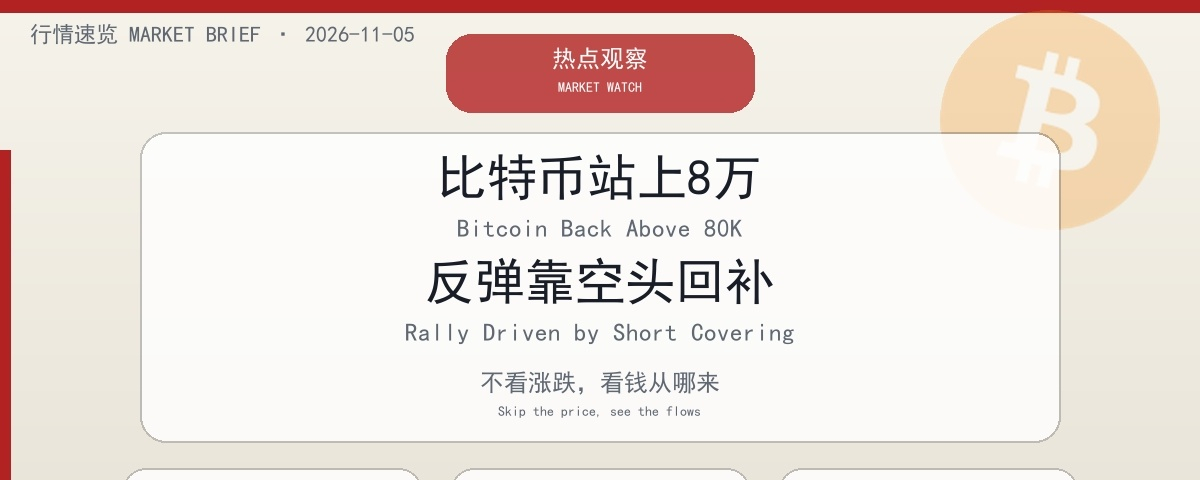

I. What happened: Prices rebounded from their lows, but fresh money wasn't the main driver
After the results of the U.S. midterm elections came in, political uncertainty eased and risk appetite recovered somewhat. Bitcoin (BTC) climbed steadily from its lows, once again topping the $80,000 mark. The total market capitalization of global crypto assets rose along with it, and trading volume increased significantly.
But if you focus only on whether prices are up or down, you'll miss what really matters. The main force behind this rebound wasn't a large influx of new money to buy in, but the mass closing of short positions in the derivatives market.
Events of this kind are not uncommon in history. Around major macroeconomic milestones, concentrated adjustments to leveraged positions often create sharp but short-lived volatility. Once you understand this, you won't be spooked by a single day's gains or lose your composure amid wild swings. The market is never short on excitement; what it lacks is a calm perspective.

II. Why This Rally Should Be Viewed with Caution
According to verifiable data, short positions accounted for the bulk of the total amount closed out over the past 24 hours, while overall open interest actually declined. What does this tell us? It means the price rise was driven by short sellers being forced to buy back their positions—not by new money entering the market. It was the unwinding of old positions.
A rally driven by short covering gets its momentum from existing positions battling it out. Once the covering is over, if there is no sustained buying to take over, prices can easily fall back. So when assessing this rally, the key question isn't “how much did it rise?” but “who is buying, and is it new money or old positions being unwound?”
Put simply, short sellers initially borrow assets and sell them, betting that prices will fall. When prices rise instead, their paper losses keep growing. If they can no longer meet margin requirements, they have no choice but to buy back the assets and close their positions. Those purchases, in turn, push prices a little higher, creating a self-reinforcing rebound. Once most of these forced buyers have exited, that upward momentum fades too.

III. Learn to Look at the Second Layer
Most people look at the market and focus only on the price line. A smarter approach is to learn to look at the second layer: “fund flows.”
Rising prices alongside falling open interest often signal short covering. Rising prices alongside increasing open interest look more like genuine new money entering the market. Compare these two layers, and you won't mistake a temporary sentiment-driven recovery for a confirmed trend.
A common mistake among retail investors is to see a big bullish candle and think, “The rally is here,” then rush in and buy at a high. But if that candle was fueled by short covering, it's nothing like sustained buying with real money. The former is paying off old debts; the latter is adding new capital. If you can't tell these two apart, you're most likely to get caught buying at the peak of market euphoria.
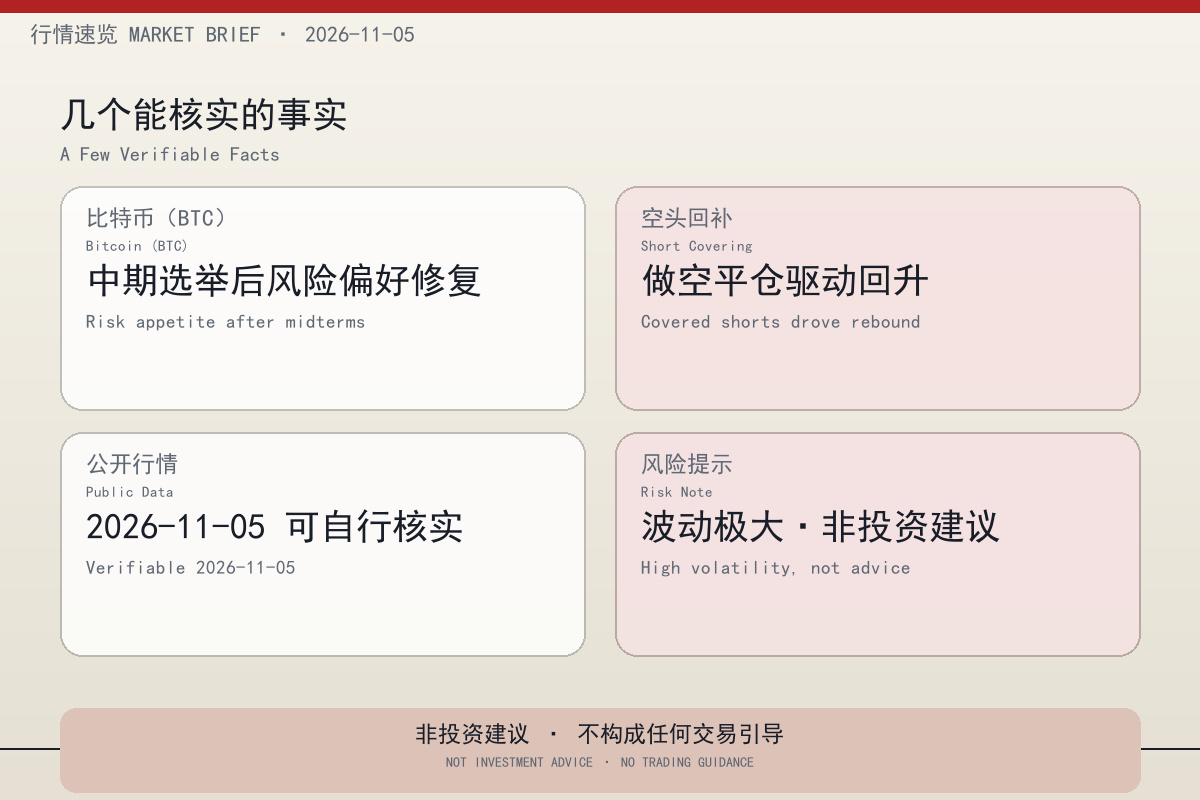
This isn't a prediction; it's just a reminder: when things get heated, don't forget to take a look at who's really buying and selling. Whether prices rise or fall, understanding where the money is going matters more than guessing which way prices will move.#BTC走势分析 #特朗普家族支持矿企三季度盈利 #美国中期选举:市场有哪些期待?