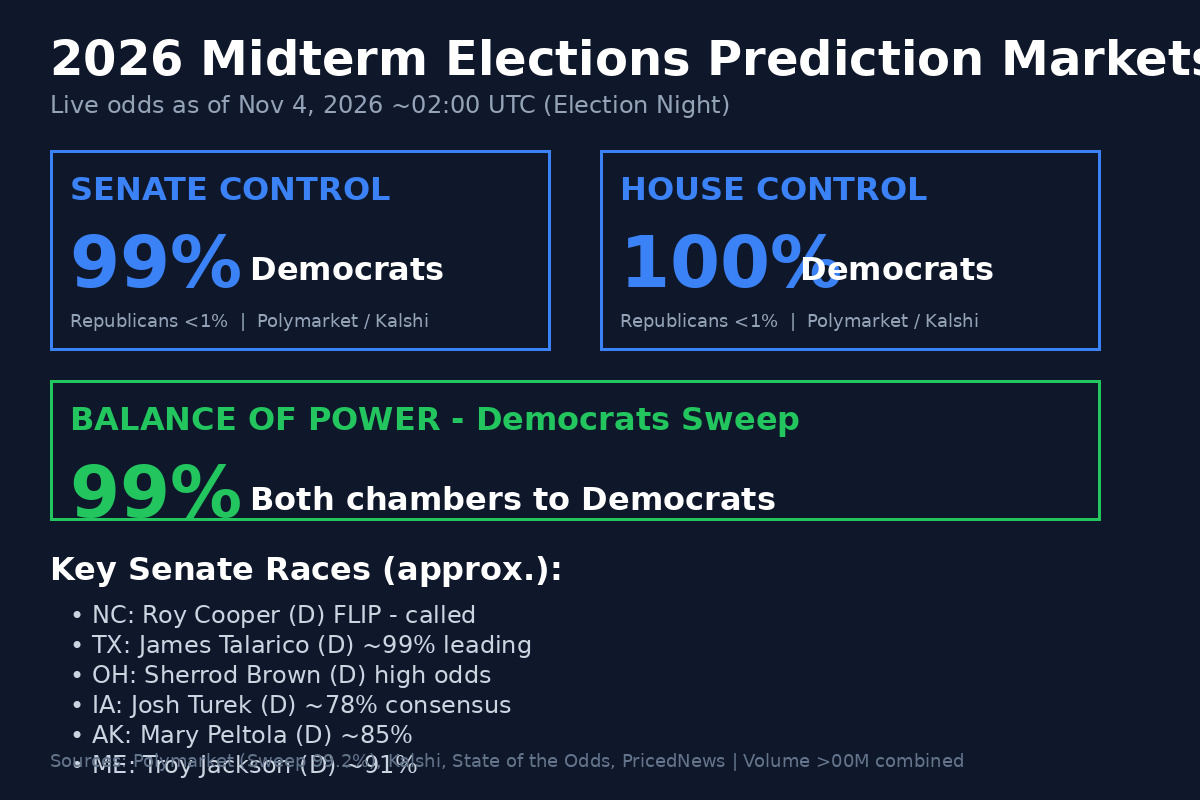
Trump’s midterm election losses—has the crypto world panicked?
But I don’t think this is as simple as people imagine.
Here’s the bottom line👇
⭐️Regulatory headwinds will grow stronger in the short term, but in the long run, they could push the industry to mature.
First: legislative gridlock.
The Democrats have won control of both chambers. Trump is still president, but it won’t be so easy to push new bills through.
Complex issues like exchange regulation, DeFi, and market structure laws involve many competing interests, making it hard to reach consensus quickly.
The fantasy that Trump could say the word and regulations would all be rolled back? That’s over.
Second: stop betting on one person’s endorsement.
In the past, the crypto world pinned its hopes on Trump’s personal stance—if he was supportive, people assumed everything would be fine.
But now it’s clear:
The president has veto power, but Congress also has the power to investigate, hold hearings, and control funding.
What truly protects the industry isn’t having one person in its corner, but having rules written into law.
Third: the long-term outlook isn’t necessarily bad.
Political tug-of-war will push the crypto industry away from relying on “sentiment and connections” and toward “institutions and compliance.”
Those who can get clear rules written into law are the ones who will go the distance.
So, as you can see,
After the election results came in, BTC fell before bouncing back. What the market fears isn’t a blue wave—it’s “uncertainty.”
Once the uncertainty clears, the picture actually becomes clearer:
The next phase for crypto
isn’t about who’s closest to the president,
but about who can make the rules work first.
$BTC