

A few days ago, I posted about depositing and withdrawing funds via C2C, and there was quite a lot of discussion in the comments. It’s clear that many people are interested in this topic, but there may be some details they haven’t looked into carefully yet.
Today, based on my own experience, I’ll share how I choose a payment method and select a merchant when depositing or withdrawing funds via C2C on Binance, as well as what to watch out for before and after a transaction.
These tips can’t guarantee that nothing will ever go wrong, but it’s better to know about potential pitfalls in advance than to deal with them after the fact. If I’ve missed anything or gotten something wrong, feel free to add to the discussion in the comments.
1. How should you choose a payment method?
On Binance, the supported deposit and withdrawal methods include Alipay, WeChat Pay, QQ Wallet, and bank debit cards. Which of these methods is best to choose? How do they differ?
First, I don’t recommend choosing QQ Wallet, because it doesn’t let you check the other party’s real-name verification details. You don’t know exactly who you’re trading with.
Of the remaining options, I prefer bank cards. Here’s why I choose bank cards.
First, it’s best to keep this deposit and withdrawal channel separate. In other words, use this card (account) only for deposits and withdrawals, and not for anything else. That way, even if the account is flagged by risk controls or runs into problems, it won’t affect your everyday life. I don’t have spare Alipay or WeChat accounts. That’s the first reason.
Second, when choosing a channel, we naturally want one with less stringent risk controls that’s less likely to be detected. So I specifically chose a bank card from a small rural bank (a city commercial bank would also work). Smaller banks certainly have weaker risk controls. Alipay and WeChat are also major companies, and in my experience their risk controls may be nearly as strict as those of large banks.
So if you also have a bank card from a small bank, I recommend choosing it as your first option too. Ideally, use it only for deposits and withdrawals, and not for anything else.
2. How do you choose a relatively reliable crypto merchant?
First, I recommend trading with merchants in the “Verified Merchants” section. The reason is simple: if your card is frozen, Binance provides compensation, giving you an extra layer of protection.
Second, I check how long the merchant has been trading.
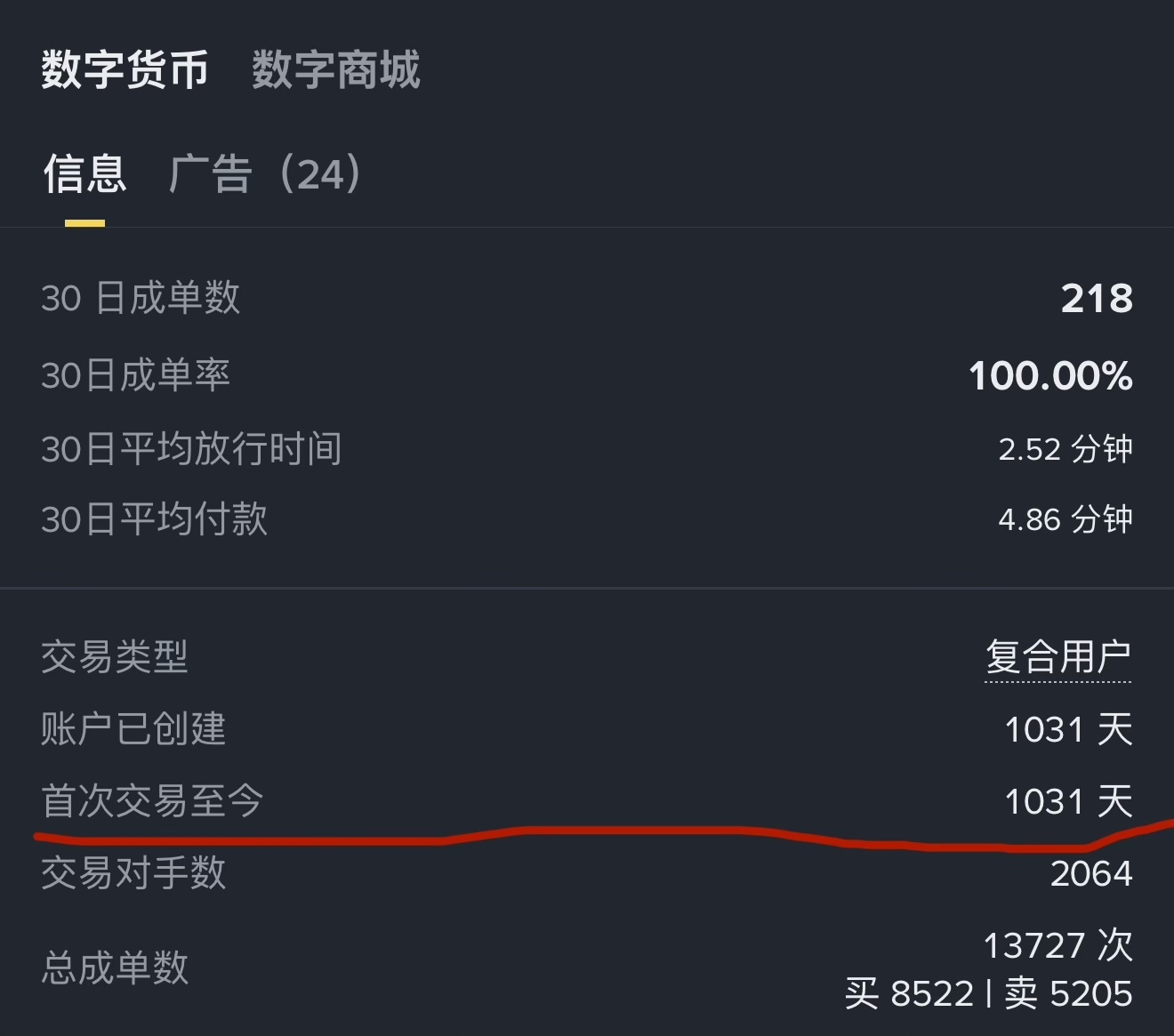
Note that merchant profiles usually show two dates: “Account created” and “First trade to date.” I pay more attention to the latter, because an early registration date doesn’t mean they’ve been trading all along.
Based on my own screening habits, I usually rule out merchants who have been trading for less than a year, then also look at their trading volume, completion rate, and reviews.
3. What information must you verify after placing an order?
First, I recommend making withdrawals during business hours on weekdays, because transactions are more likely to trigger risk controls at night or on weekends, especially large transfers.
Next, after you choose a merchant and place an order, the merchant will usually chat with you and ask you to provide things like screenshots of your transaction history. Once you’ve finished chatting and the merchant agrees to send or receive the payment, you can view their real-name information in the order details. At the very least, their name will be shown. If the bank card number and name they provide don’t match the real-name information in the order details, I recommend refusing the transaction. When canceling the order, you can select the reason that applies. Whether the other party agrees or the 15-minute time limit expires, it won’t affect your completion rate.
Make sure the payment is made under your real name. The payer’s name must match the real name on the platform. Do not accept payments from someone whose name isn’t verified.
Make sure the payment is made under your real name. The payer’s name must match the real name on the platform. Do not accept payments from someone whose name isn’t verified.
Make sure the payment is made under your real name. The payer’s name must match the real name on the platform. Do not accept payments from someone whose name isn’t verified.
This is important, so I’ll say it three times.
It’s even better if the bank card number also matches the one in the order details.
If you choose Alipay, you can also ask the other party for their Alipay account and search for their real-name information using that account. If they won’t provide it, choose someone else.
In my experience, the crypto merchants with the best prices near the top usually provide payment details that don’t match their real-name information. Scroll further down and look for merchants charging a premium; their details will usually match.
Finally, to confirm that your withdrawal has arrived, log in to your own bank account and check. Don’t rely only on the other party’s screenshots or text notifications. Also keep the order details, chat records, and bank receipts.
4. What else should you pay attention to after withdrawing funds?
After receiving the money, don’t think, “I’ll be safe if I transfer it out right away,” and move the funds back and forth between several cards.
If there’s a problem with the incoming funds, transferring them to another card won’t change where they came from, and may link more accounts to the transaction. In fact, moving the money out immediately is more likely to trigger the bank’s risk controls.
I recommend leaving the funds in your bank card account for at least 3 days, preferably 7 days or more.
Here are a few more things to keep in mind:
If you don’t have a large amount of money—less than 500,000—I recommend withdrawing it all in one transaction instead of splitting it into several. Splitting it into multiple transactions only adds unnecessary transactions and risk!
All right, that’s everything I wanted to say.