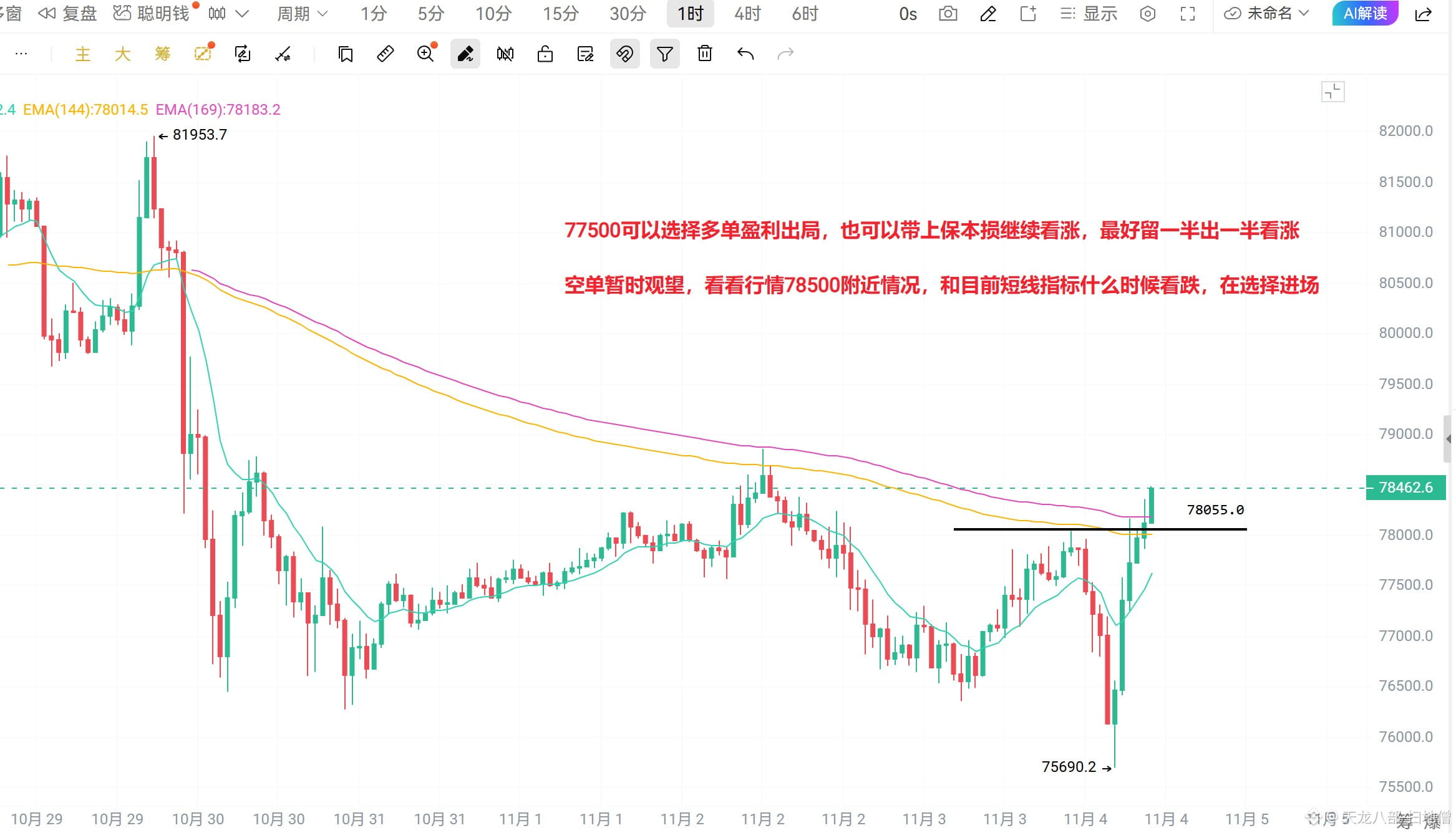
$BTC During the livestream this afternoon, I said that if the market broke above 77,500, it would head for 78,500. For long positions, I recommended taking half off at 77,500 and keeping the other half with a breakeven stop while watching for further gains. But when it reached 78,100 on the first push, it was time to take profits and exit. A swing trade is a swing trade—you mustn’t get greedy.
I also said that after the market reached 78,170 this afternoon, it began to fall toward 77,700. I recommended continuing to wait and not entering short positions. Although the market was approaching 78,500, the short-term indicators had not formed a bearish pattern, and the 1-hour indicators were still bullish. At times like this, you have to wait. That’s how swing trading works: let the market move first. If the short-term indicators form a bearish pattern and the market fails to break through resistance at 78,500, you can consider entering a short position.
The weekly indicators have recovered to a relatively ideal pattern, and the broader market could start rising at any time. So if you’re entering a short position, make sure the indicators are bearish—it’s not enough to aggressively short just because the market briefly stopped rising at 78,500.
Based on the current indicators, the very short-term trend does appear to be turning downward. But I’m looking for bearish signals on the short-term indicators, so I’m still waiting. Once those indicators turn bearish, it will be another swing-trading opportunity. That’s what I mean by waiting for confirmation in analysis and trading.
If the very short-term outlook turns bearish but the market only falls slightly, without bringing the short-term indicators down with it, then we can be confident that 78,500 will be broken and held. The market’s next targets would then be 79,500 and 80,500. Rest assured—even if it rises, the market will most likely make you wait a long time.
In any case, swing trading is the priority.