


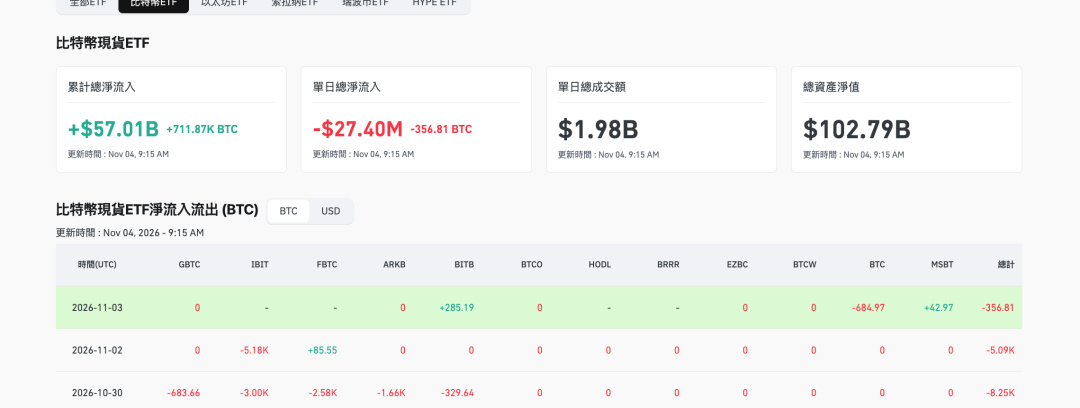
Looking at macro conditions and market signals, the overall market is predominantly bearish. First, ETF data: after a large net outflow of 5,000 coins the day before yesterday, there have now been large net outflows for three consecutive days, with substantial amounts flowing out.
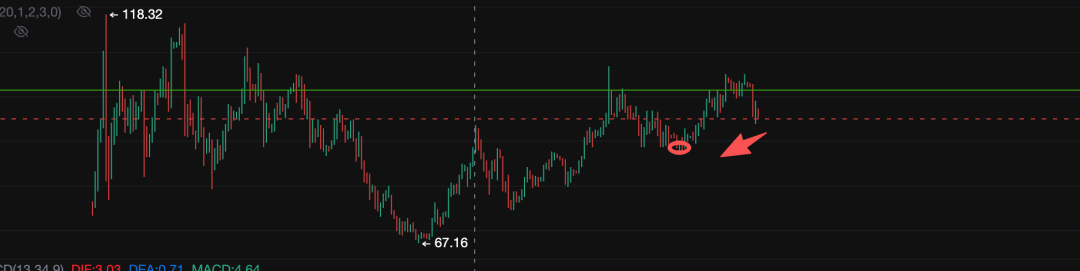
Across asset classes, oil prices have quickly retreated from their highs. There is still plenty of room for prices to move down toward the $87 target, but the drop in oil prices has failed to stop the broader market from declining overall;
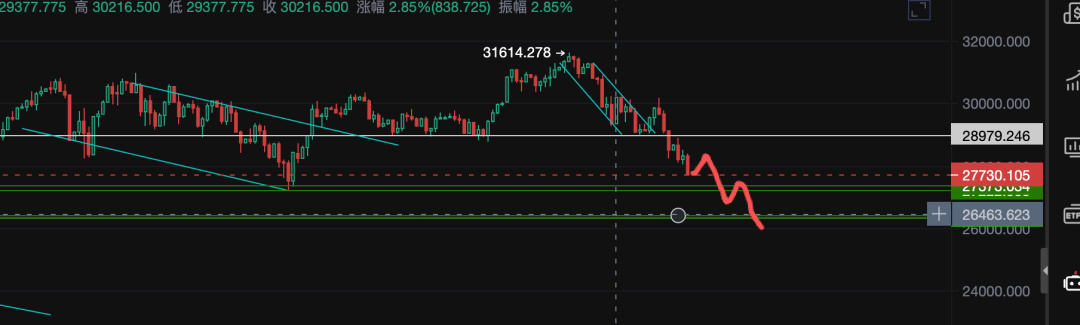
However, despite such clear bearish signals, blindly chasing shorts is unwise. The current market setup is extremely nuanced: there is strong structural support below (iron support), while liquidity at higher levels remains uncleared. So, where key support and liquidity overlap, don't rush to chase shorts.
Bitcoin Range-Bound Trading and Scenario Analysis
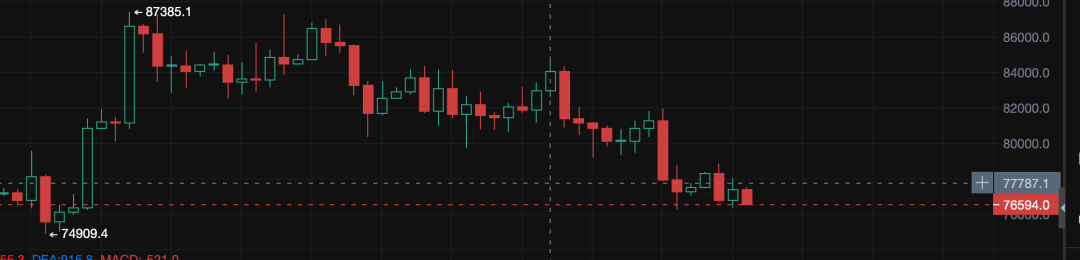
Building on the ongoing refinements and advance forecasts of market views previously shared in the public community, Bitcoin is facing short-term resistance near $78,700 from the range’s equal highs and the one-hour Vegas Channel, while the equal lows near $76,200 provide support. Until the midterm election results are finalized and macro uncertainty subsides, the market is likely to consolidate within this range.
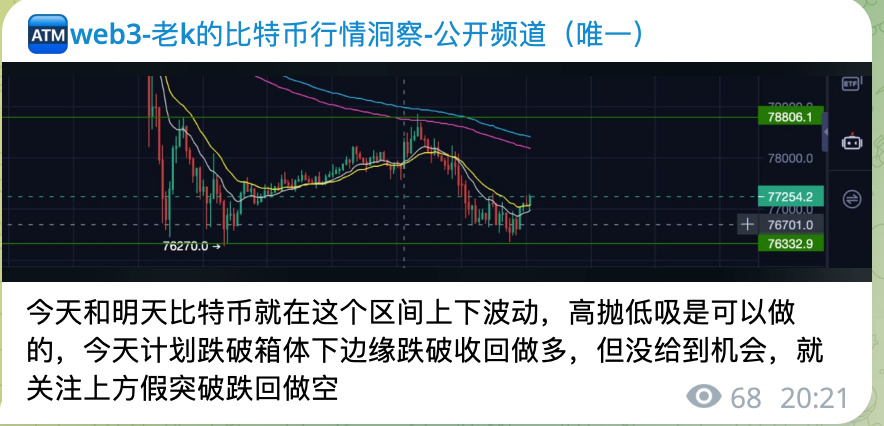
Based on the current market structure, we have outlined two key trading scenarios:
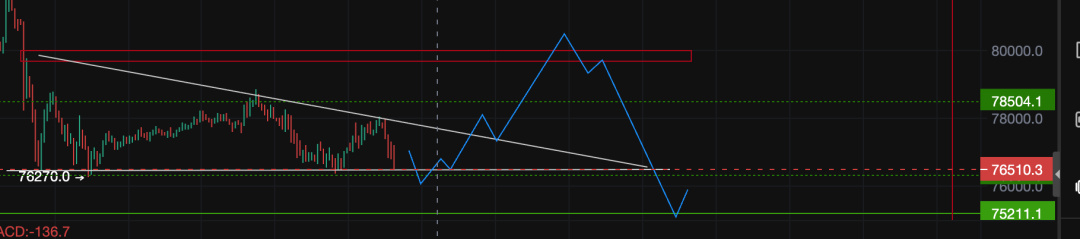
Scenario 1: Break Below, Reclaim, Then Sweep Liquidity to the Upside
If the price breaks below the lower boundary of the $76,200 range but quickly reclaims it, then breaks through the short-term descending trendline, it could rebound to fill overhead gaps. The first gap-fill target is near $80,000, followed by the $82,500–$82,700 area. However, since the highly liquid $75,000 zone has yet to be tested, this rebound would essentially be a fake-out intended to liquidate leveraged long positions. Once the price rebounds to higher levels, that would offer an excellent short entry; ultimately, the market is still likely to test $75,000. Shorting from there offers a very favorable risk-reward ratio (over 1:2), far better than chasing shorts directly at the bottom of the range.
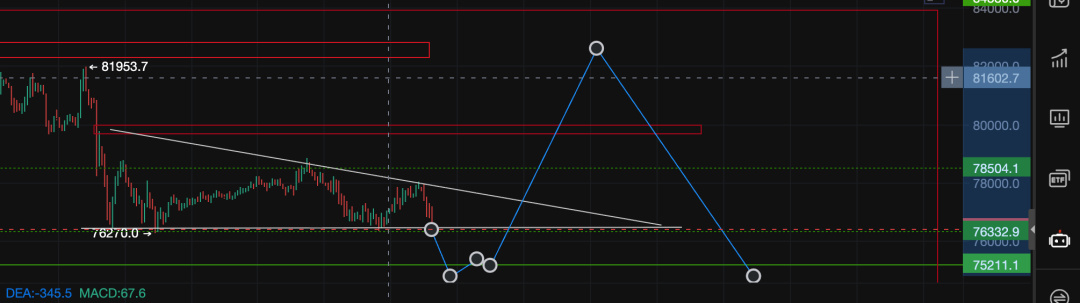
Scenario 2: Hold $75,000 as a Key Interim Floor and Rebound in a Wave B
If the price sells off directly and wicks down to around $75,000 or even $74,800, this level is likely to hold for now and trigger a sharp reclaim. The reasoning is that $75,000 is a key structural level at the starting point of this rally. A decisive break below it could, based on an equal-distance projection, send the broader market straight down to $62,000—the key line of defense at the start of the bull market—which would completely invalidate the current uptrend. For this reason, major bulls are likely to defend this level aggressively. Combined with retail traders’ willingness to buy the dip and shorts taking profits in the near term, this could form a solid base for a rebound. Once the midterm election results are finalized, the market could see a strong Wave B rebound lasting as long as a week. After liquidity at higher levels has been swept, funds may be reallocated ahead of Christmas at year-end, and the broader market could begin a second test or resume its decline.
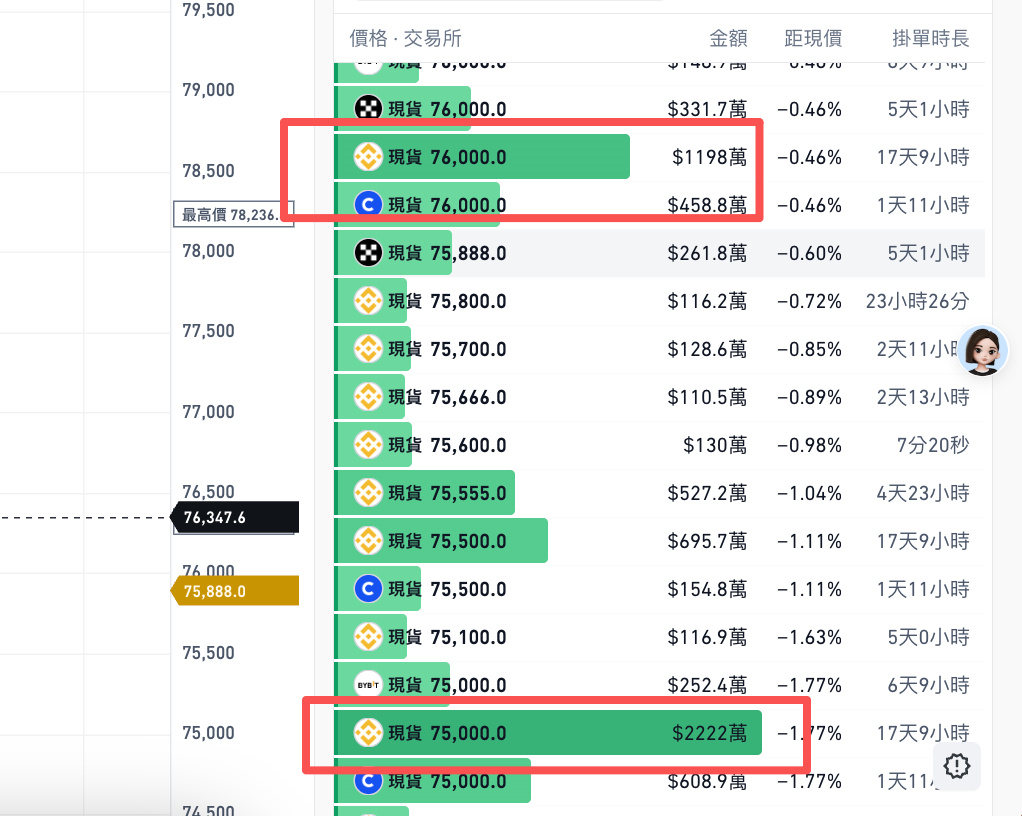
Order Book Details and Screening for Strong Trading Candidates
Looking at order book and positioning details, although the ratio of large buy and sell orders still favors the bears, large buy orders are now notably concentrated at $76,000 and $75,000.
If Bitcoin breaks below the range without offering a chance to reclaim it, shorting Bitcoin does not offer an attractive risk-reward ratio. At that point, attention should turn to alternative assets with greater downside potential and higher volatility:
MicroStrategy (MSTR): As a Bitcoin proxy, it is far more volatile than the broader market. Bitcoin’s maximum recent swing was just 2.49%, while MSTR’s reached 7%. Previously, we guided the team into a precise entry around $133 and successfully closed the entire position at $138, locking in a quick profit of over 4.6% on this short-term move.
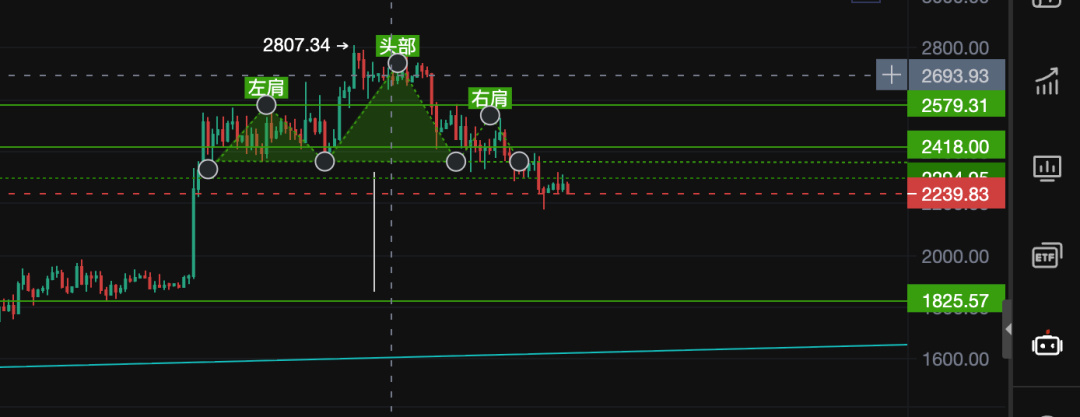
Ethereum (ETH): After breaking below its head-and-shoulders pattern, ETH has declined in stages, with rebounds capped by the former support-turned-resistance level at $2,300. If Bitcoin tests $75,000, ETH is likely to follow suit and test $2,147–$2,174. If that support fails, the next equal-distance target points directly to $1,800.
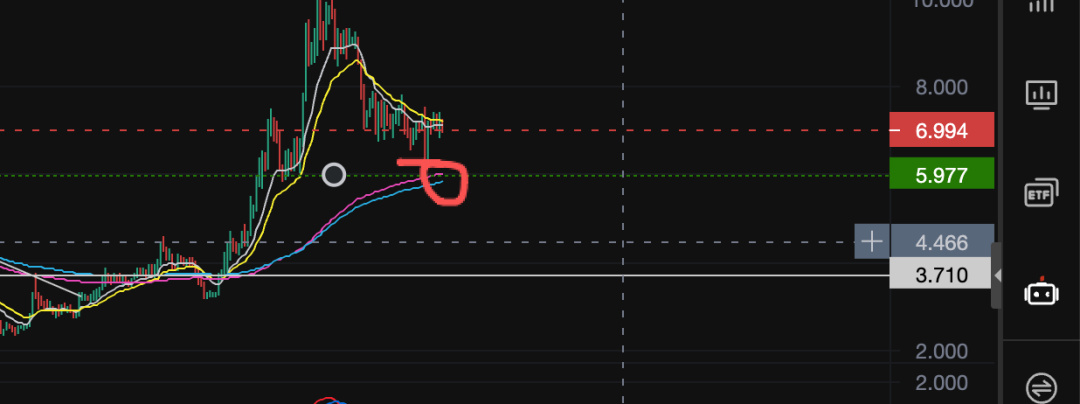
·Uniswap (UNI): The daily head-and-shoulders pattern broke below the consolidation range on rising volume. Moving averages continue to weigh on the price, with both highs and lows trending lower. If Bitcoin moves down toward $75,000, UNI is expected to wick down to $6.28, where the daily Vegas Channel and a prior structural low converge to form strong support. There is around 10% of potential downside profit below that level.
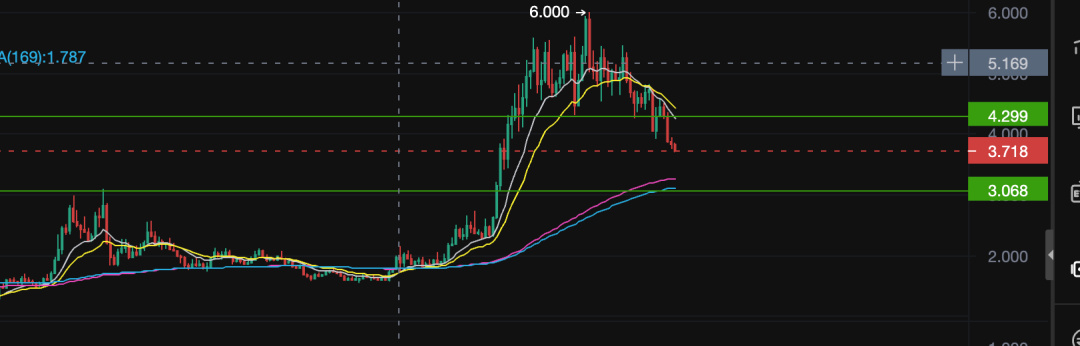
·NEAR Protocol (NEAR): After a false breakout from a double top, the price broke below the neckline, and the daily chart formed a bearish engulfing pattern. If Bitcoin sells off, NEAR could see a rapid flush, with a target near $3.00, where a structural multiple bottom converges with the Vegas Channel. This makes it a strong candidate for a short position.
As we did in the VIP community, we had previously placed a limit short order for ENA at $0.196. The subsequent price action confirmed that our trend call was accurate. If your order didn’t fill, that’s okay—there are always more opportunities.

Summary: Macro Treasury Yields and Trading Psychology
From a broader cross-asset perspective, the U.S. 10-year Treasury yield has fallen from last month’s high of 5.3%, breaking below 5% to around 4.9%, and is weakening in a bull-flattening trend. Meanwhile, the Nasdaq has become extremely oversold three times on the RSI during its rapid decline. U.S. tech stocks often form a quick bottom and stage a V-shaped reversal. Therefore, with catalysts such as the midterm election results being finalized, the market could face a sharp rebound at any time.
The underlying principles of short selling, value investing, and trading futures are the same: it’s not enough to get the overall direction right; you must also consider your margin of safety at the entry price and the risk-reward ratio. If your entry price is poor, even being right about the direction can leave you taking on disproportionate risk for the potential return. Only by positioning yourself where there is a strong margin of safety can you stay resilient in complex and volatile markets.