The next airdrop worth participating in is here
Metric is one of the few projects in this RWA and PropAMM cycle with real trades, real audits, and real distribution channels.
Its approach is to start with aggregator order flow, then build a frontend and active pools,
so its TVL and trading volume weren't just incentive-driven bubbles from the outset.
First, four numbers:
TVL: $18.27 million.
24-hour trading volume: $312 million; 30-day trading volume: $6.21 billion. Trading volume is 17 times TVL.
972 pools, with 78.8% of TVL in green-rated pools. The combined 24-hour spread fees across the three V1 chains are about $27,000.
Capital efficiency is high, but absolute revenue is still very small.
This is the first key distinction when judging whether it's early-stage or overheated.
On Ethereum mainnet,
PropAMM accounts for only 5% to 10% of spot trading volume;
on Solana, it's already around 40%.
During the week of September 14–20, Fermi had $280 million in weekly trading volume, Metric had $178 million, and Uniswap had $6 billion.
Metric's differentiator isn't faster trade execution,
but allowing regular LPs to put their money into active market-making pools.
Most propAMMs only serve professional market makers using their own capital.
1. Swap interaction flow
Open
https://app.metric.xyz/r/welinkbtc
Connect your wallet and select BNB Chain or Robinhood Chain.
Choose a trading pair, compare the Metric route with the aggregator route, then confirm the Metric route and check that the points indicator is displayed.
The amount doesn't need to be large; frequency matters more than the amount per trade.
Current Ethereum gas is about 0.055 gwei, and each Swap costs less than $0.05. BNB Chain is even cheaper.
The real cost is the 1 to 4 bp spread.
2. The right way to provide liquidity
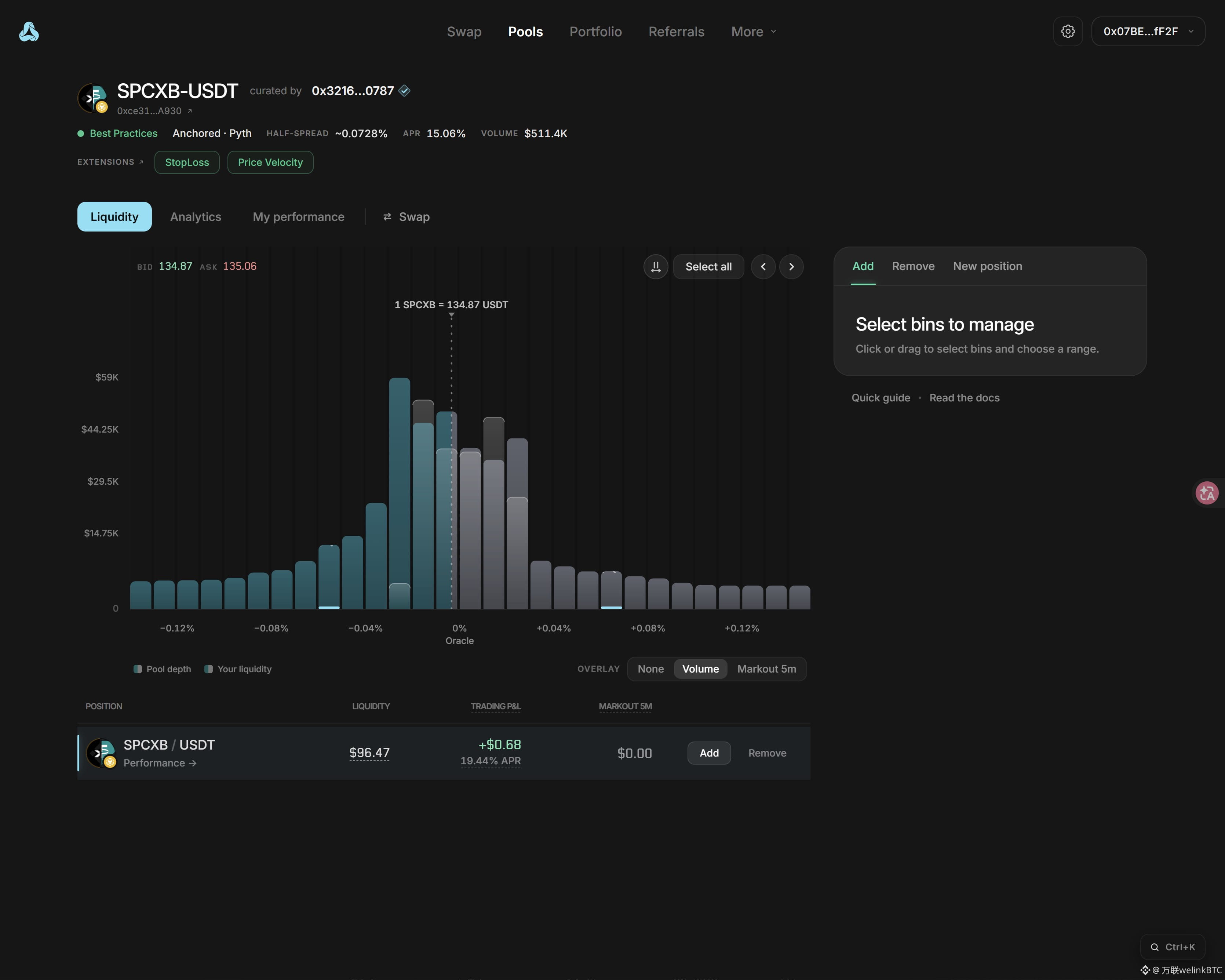
Go to Pools and check the ratings first. Prioritize green pools.
Then check four things: Is the Price Provider anchored to an independent oracle? Is StopLoss immutable? Could the withdrawal extension lock up your funds? What parameters can the curator still change?
Choose bins near the reference price. Once deposited, returns are automatically compounded.
Bins that haven't been traded against generate no returns.
3. High APR is the price of risk
The annualized gross spread fees across the three chains are about 45%, 46%, and 83%, respectively.
But the 30-day markouts are about -30%, +22%, and -14%, respectively. Spread fees are gross profit; markout is the bill for adverse selection.
#AMD超预期大涨,AI叙事延续?
$BNB