Apple (AAPL) set a September-quarter revenue record, but its gross margin was lower than the previous quarter. Both developments need to be considered together.
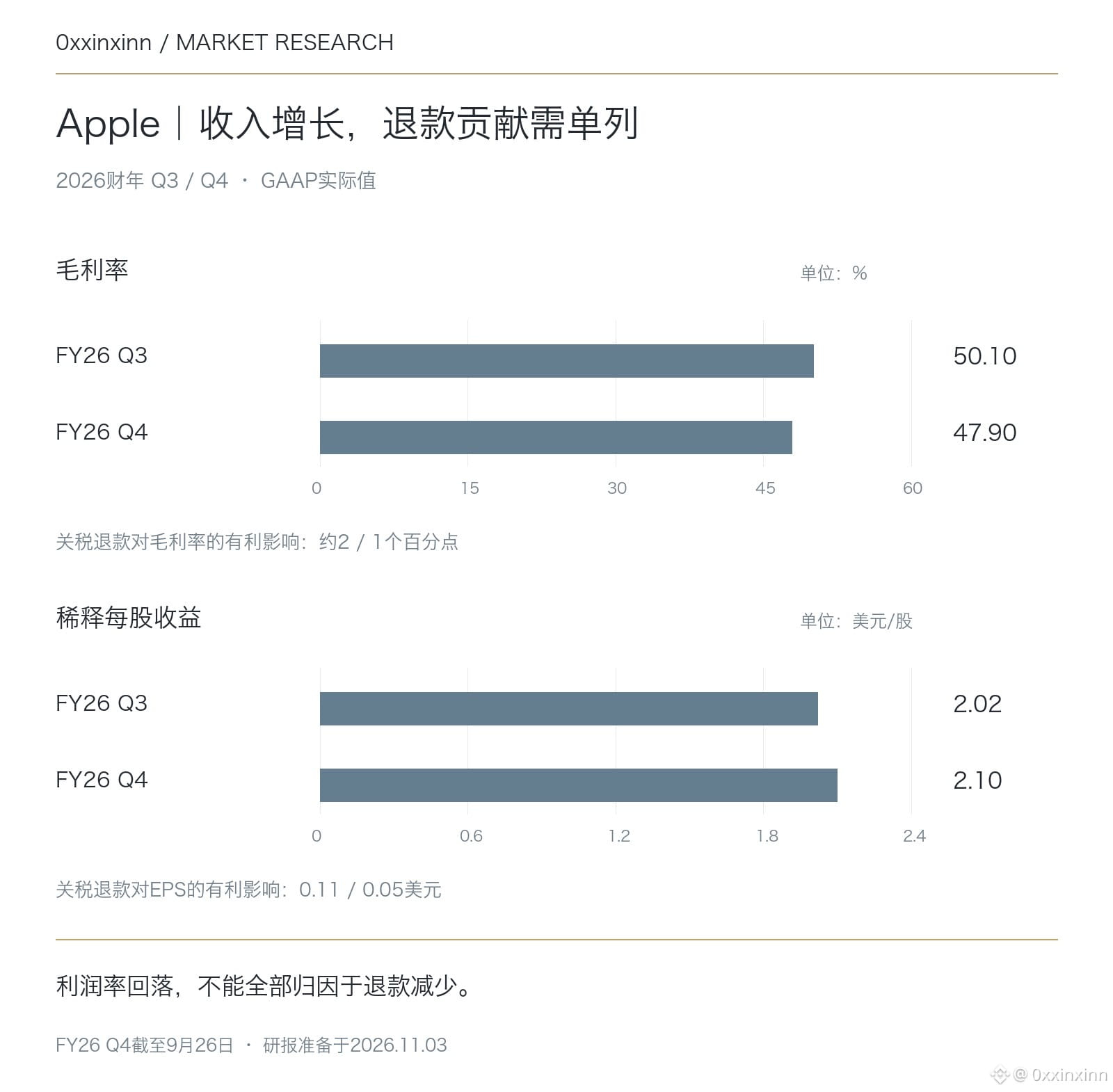
Revenue in the fourth quarter of fiscal 2026 was $114.5 billion, up 12% year over year; diluted earnings per share were $2.10, up 14%. But GAAP gross margin fell 2.2 percentage points, from 50.1% in the third quarter to 47.9%.
Both quarters included tariff refunds. In the third quarter, they contributed about 2 percentage points to gross margin and about $0.11 to EPS; in the fourth quarter, the figures were about 1 percentage point and $0.05, respectively. So a direct comparison of reported gross margins conflates the reduced contribution from refunds with operating changes; the entire decline also cannot be attributed to the tapering of refunds.
Fourth-quarter operating cash flow was about $28 billion, and the company returned about $28 billion to shareholders during the same period. Operating cash flow is not free cash flow, so you can't ignore capital expenditures and claim that buybacks were fully covered by free cash flow.
Going forward, the key question is whether product mix, cost changes, and guidance for the new fiscal quarter can jointly support profits—not just another revenue record. Details from the earnings call still need to be checked against official materials; this article does not treat unverified gross-margin guidance or after-hours price movements as conclusive.
Revenue in the fourth quarter of fiscal 2026 was $114.5 billion, up 12% year over year; diluted earnings per share were $2.10, up 14%. But GAAP gross margin fell 2.2 percentage points, from 50.1% in the third quarter to 47.9%.
Both quarters included tariff refunds. In the third quarter, they contributed about 2 percentage points to gross margin and about $0.11 to EPS; in the fourth quarter, the figures were about 1 percentage point and $0.05, respectively. So a direct comparison of reported gross margins conflates the reduced contribution from refunds with operating changes; the entire decline also cannot be attributed to the tapering of refunds.
Fourth-quarter operating cash flow was about $28 billion, and the company returned about $28 billion to shareholders during the same period. Operating cash flow is not free cash flow, so you can't ignore capital expenditures and claim that buybacks were fully covered by free cash flow.
Going forward, the key question is whether product mix, cost changes, and guidance for the new fiscal quarter can jointly support profits—not just another revenue record. Details from the earnings call still need to be checked against official materials; this article does not treat unverified gross-margin guidance or after-hours price movements as conclusive.