


Ternus himself didn’t say anything specific, but CFO Kevan Parekh gave a forecast that sent shares down as much as 4% in after-hours trading.
📊 In Q4 (October–December), Apple expects revenue growth of 7–10%, compared with 12% in the previous quarter, while margins will decline due to rising memory prices.
Officially, the slowdown is being blamed on component shortages, with claims that Apple could sell more than it can produce. But clearly, that’s not the whole story.
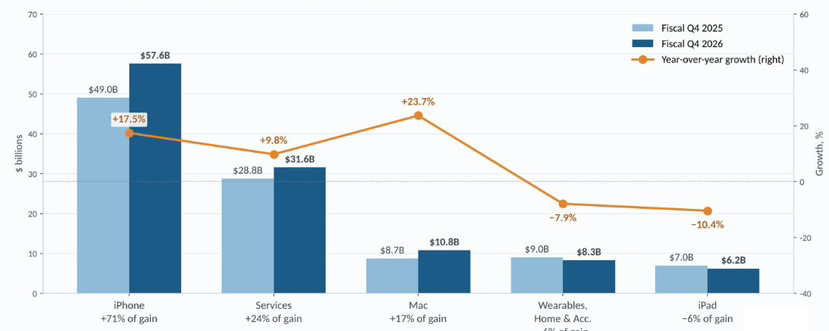
In the usually quiet September quarter, iPhone sales grew 17% as buyers rushed to get the 17 Pro rather than wait for the 18 Pro. Everyone has already figured out that the new model differs only in color, yet will cost more. So some of the December demand was pulled forward. The $2,000+ foldable Duo is unlikely to make up for it, especially with social media full of complaints about cracked screens.
There are deeper problems, too. Since Nvidia took up most of chipmakers’ production capacity, Apple can no longer dictate their supply volumes. Services are also growing more slowly due to a weak mobile gaming market and required changes to the App Store.
Three things are worth adding about the quality of the report, rather than the forecast itself:
▪️The earnings beat is artificial. Of the $0.11 EPS beat, about $0.09 came from refunded tariffs and a lower tax rate. Excluding tariffs, the margin was ~46.9% versus the ~47.5% expected.
▪️Growth is driven by two products. iPhone and Mac accounted for almost 90% of revenue growth, while Services posted its slowest growth in a year (+9.8%).
▪️Share buybacks and dividends exceeded free cash flow, while the stock trades at 36 times next year’s earnings (Oppenheimer)
Investors may cool off on the company a little, but not for long.