


Voting in the U.S. midterm elections is officially underway, but Bitcoin is still under selling pressure.
BTC has now fallen back to around $76,500, as pressure from the tech stock correction spills over into crypto markets. Meanwhile, investors are waiting to see which way control of the U.S. Congress will ultimately go.
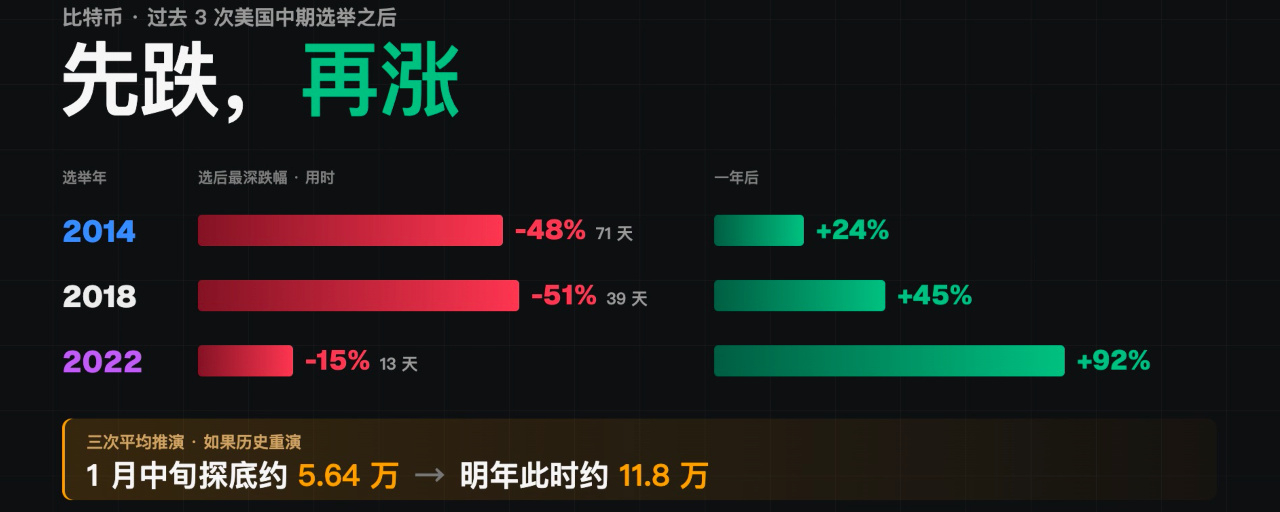
Looking back at the past three U.S. midterm elections, Bitcoin followed a similar pattern each time: a pullback after the election, followed by a rebound within the year.
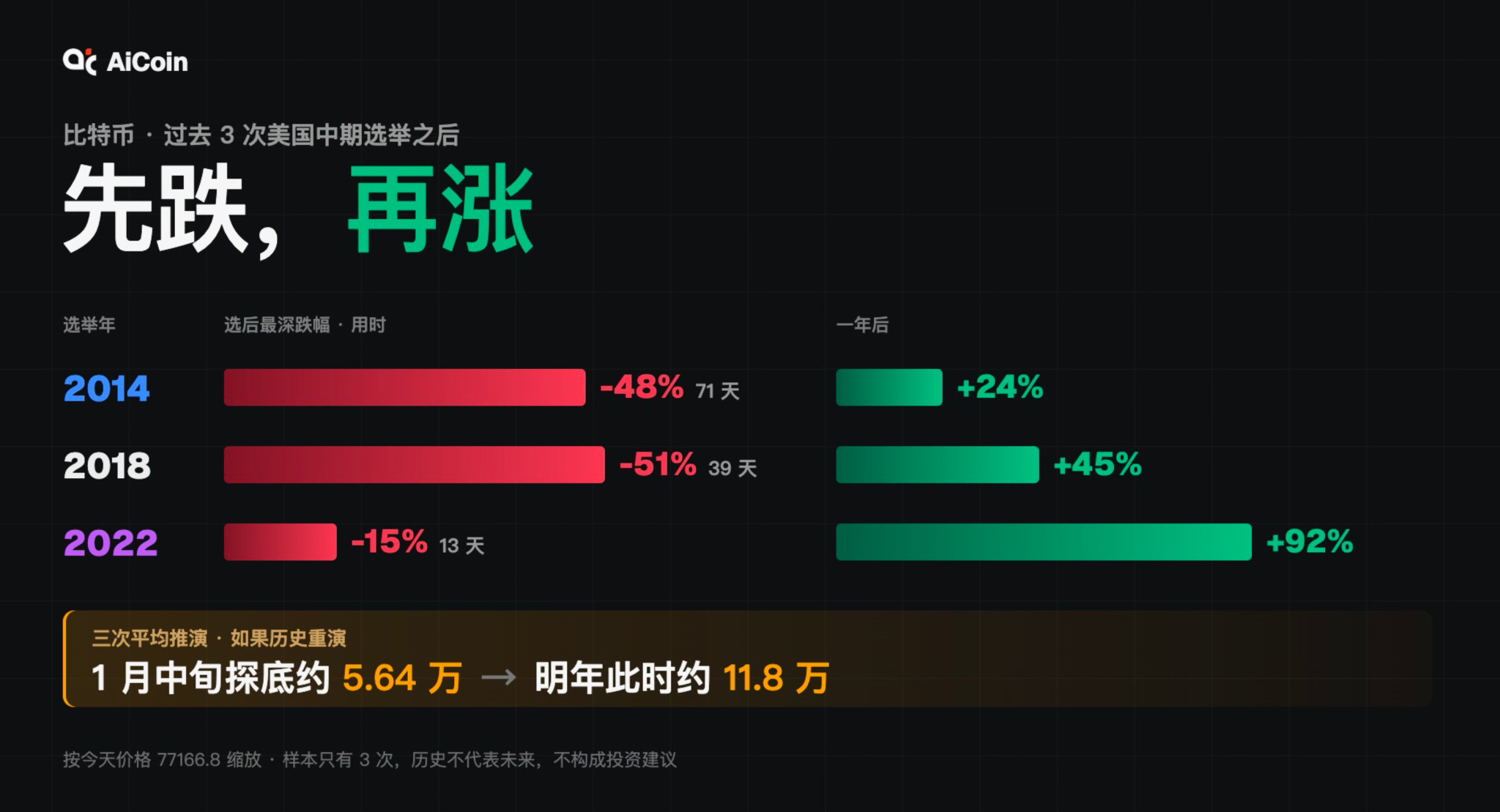
2014: Bottomed 71 days after the election, with a maximum drawdown of about 48%, then rose about 24% a year later.
2018: Bottomed 39 days after the election, with a maximum drawdown of about 51%, then rose about 45% a year later.
2022: The price bottomed 13 days after the election, with a maximum drawdown of about 15%, then rose about 92% over the following year.
Across the three elections, the average maximum drawdown was about 38%, and the average gain one year later was about 54%.
If we use the current price of $76,500 as a starting point and mechanically apply this historical data, it would imply a potential interim low of about $47,400 and a price of about $117,700 one year later.
Of course, this is only a scenario based on historical data, not a price forecast for the current market. In particular, the 2022 downturn was compounded by exceptional events such as the FTX collapse, so it cannot simply be attributed to the midterm elections.
I. Why is BTC struggling to rise? Fund flows offer a clue
Bitcoin’s recent weakness isn’t just a matter of sentiment ahead of the election; fund flows are also worth watching.
From October 26 to 29, U.S. spot BTC ETFs saw cumulative net inflows of about $441 million. But on October 30 alone, they recorded net outflows of about $643 million—more than the combined inflows of the previous four days.
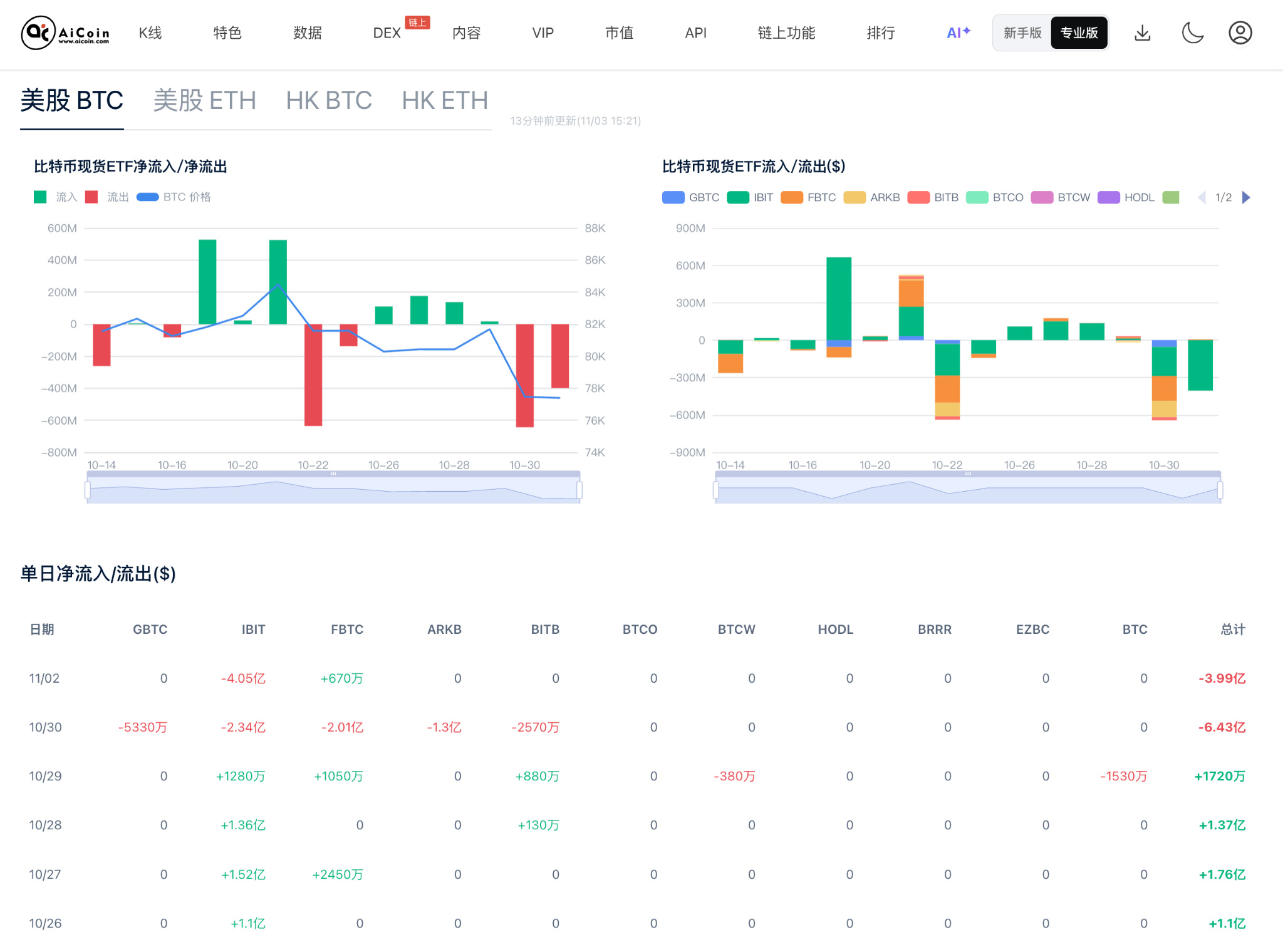
Source: AiCoin U.S. spot BTC ETF fund flows
https://www.aicoin.com
This suggests institutional buying is not consistent. ETF fund flows are often viewed as an indicator of demand from traditional-market investors, but a single day of outflows does not by itself prove that long-term investors are pulling out.
Meanwhile, election results could affect the pace at which legislation related to the crypto industry advances. Uncertainty about policy direction may lead some investors to wait on the sidelines, leaving the market without sustained buying momentum.
So, the focus right now should be not only on BTC’s price, but also on whether ETF fund flows turn positive again and whether buyers step in effectively when the price pulls back.
II. U.S. midterm elections: Which party has the edge?
The key issue in this election is the contest between Democrats and Republicans for control of the U.S. Congress.
As of November 2, prediction markets generally considered Democrats more likely to win the House, with the Senate race also swinging noticeably in their favor.
But keep in mind that prediction markets reflect traders’ expectations at a given moment; they are not the same as the final election results.
Different election outcomes could lead to different policy expectations:
Republicans retain control of both chambers: Expectations of tax cuts, deregulation, and fiscal expansion could strengthen, providing sentiment support for some risk assets. But if fiscal expansion pushes Treasury yields and the dollar higher, it could also put pressure on tech stocks and crypto assets.
Democrats win the House or Senate: Congressional checks and balances could strengthen, making it harder for the Trump administration to advance legislation related to the crypto industry. Policy benefits anticipated by the market could also be delayed.
Congress is split between the two parties: Major legislation may face more obstacles, but fewer policy changes could also make the business environment more predictable.
So, election results do not directly determine whether Bitcoin rises or falls. What the market really cares about is whether policy expectations have changed and whether those changes have already been priced into assets.
III. How might BTC and U.S. stocks perform after the election?
Once the election results are in, the market could react in two different ways.
Scenario 1: Negative expectations are priced in, and the market rebounds
If the election results are no worse than the market expects, funds that reduced their positions amid policy uncertainty may re-enter the market.
For BTC, a recovery above key levels, coupled with improving ETF fund flows, could support a rebound.
U.S. stocks have a similar historical precedent.
Historical data shows that over the past 13 U.S. midterm elections, the S&P 500 rose by an average of about 1.7% from early August before the election through Election Day. In the three months after the election, it rose by an average of 5.7%, with gains in 11 of the 13 elections. In the six months after the election, it rose by an average of 12.4%, with gains in all 13 instances.
This suggests that easing political uncertainty after an election may provide temporary support for U.S. stocks. However, past performance does not guarantee a rally this time around, especially as the market is also grappling with questions about returns on AI capital spending, the fiscal deficit, and long-term Treasury yields.
Scenario 2: Policy concerns persist, and the market remains under pressure
If Democrats gain control of Congress, the market may reassess the pace at which policies related to the crypto industry advance.
If this coincides with rising interest rate expectations, a stronger dollar, or continued ETF outflows, BTC could remain under pressure.
For U.S. stocks, the end of the election does not mean all risks will disappear. Corporate earnings, returns on AI investment, and fiscal policy will remain important factors affecting the medium- to long-term trend.
IV. What should you focus on with Bitcoin right now?
With BTC back near $76,500, the key short-term question is whether the price can stabilize.
If the price dips and then reclaims a key level, with buyers stepping in on a retest, you could consider taking a small position to watch for a potential rebound.
But if the price breaks below the levels you’re watching and fails to recover, reassess your original trading plan. There’s no need to keep adding as the price falls.
For U.S. stocks, after the recent pullback, you can also wait to see how the market reacts once the election results are in. There’s no need to rush into chasing a rebound.
If you’re not ready to enter the market, what should you do with your idle funds?
Waiting for the market to move doesn’t mean your funds have to sit idle.
V. Earn rewards on idle funds while waiting for the market
Not having a clear trading plan for now doesn’t mean your funds have to sit idle.
Binance has launched a new community rewards campaign. Eligible users who subscribe to USDT and USDC Simple Earn Flexible products, RWUSD, and BFUSD during the campaign period can earn up to 10% APR.

Rewards for each product and tier are calculated separately. Actual returns depend on user eligibility, subscription amount, and the rules for the relevant product.
If you’re waiting for the market to show a clear direction, you can learn about the features of different products based on how you plan to use your funds:
USDT and USDC Simple Earn Flexible products: Suitable for users who want to keep their funds accessible. Check the current APR, reward limits, and redemption rules before subscribing.
RWUSD and BFUSD: Learn more about each product’s mechanics, reward conditions, and potential risks before deciding whether to participate.
If you haven’t spotted a clear trading opportunity, consider reviewing the campaign rules and making sensible use of funds you don’t currently need.
Please note that not all users are eligible for the maximum 10% APR, and this does not represent a fixed return. Refer to Binance’s official campaign page for the specific reward tiers, campaign period, subscription limits, and redemption rules.
VI. How to participate in Binance Earn
If you don’t have a Binance account yet, you can register through the link below, then review the campaign and the requirements for participating in the relevant products.
👉 https://jump.do/zh-Hans/xlink-proxy?id=3
(Referral code: aicoin668, get a 10% referral commission)
If you already have an account, open the Binance App and go to the “Earn” page to view campaign details for the USDT and USDC Simple Earn Flexible products, RWUSD, and BFUSD. Check your eligibility and the reward rules before deciding whether to subscribe.

The market changes every day, but that doesn’t mean you need to act on every fluctuation.
The election results are worth watching, and Bitcoin’s price is worth tracking. If there’s no suitable trading opportunity for now, rather than trading for the sake of trading, it may be better to plan your funds and wait for clearer market signals.
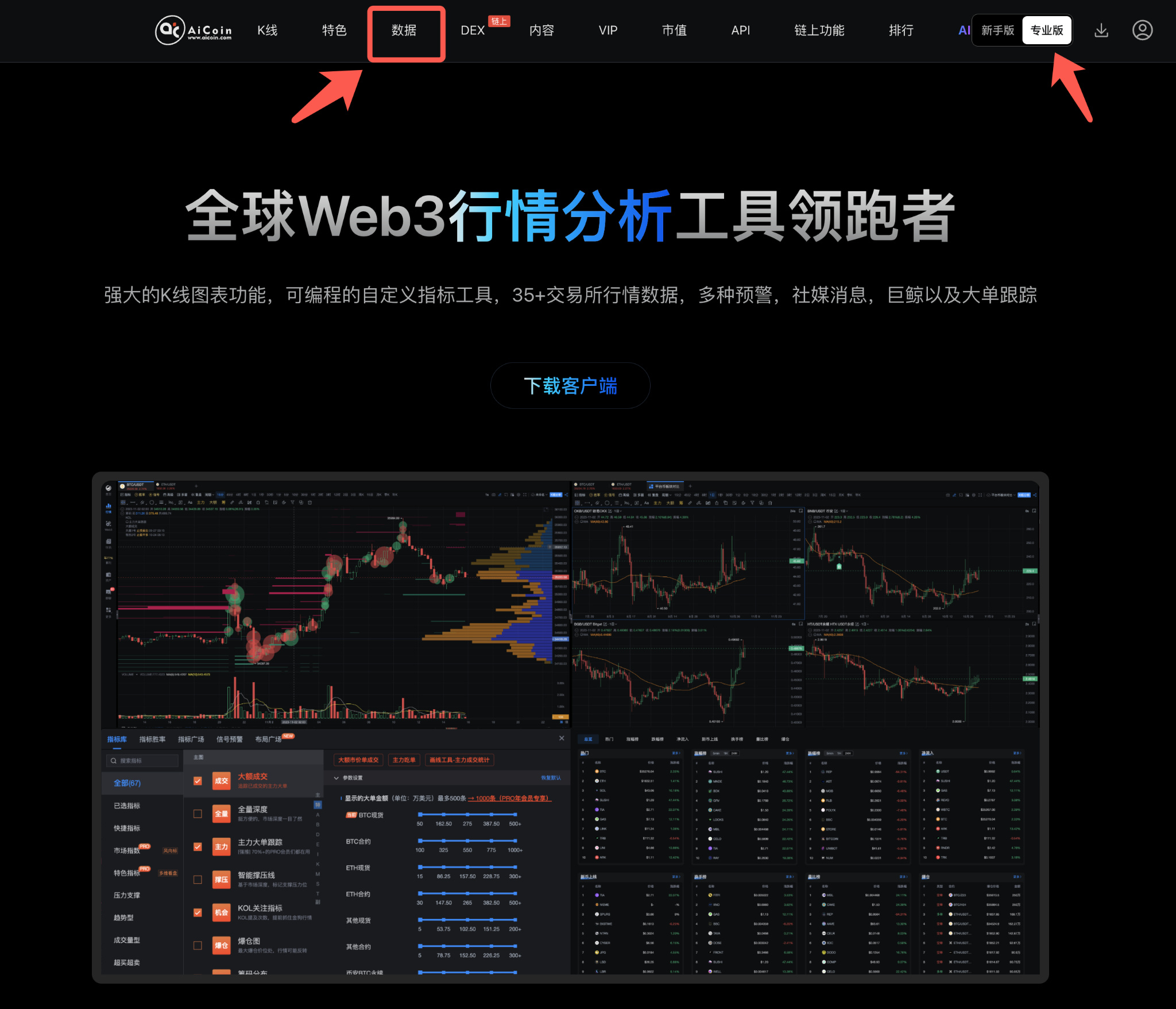
To keep track of data such as ETF fund flows and BTC price movements, visit the AiCoin website (https://www.aicoin.com), switch to [Pro], and click [Data] on the homepage to view the relevant indicators. Looking at fund flows alongside price movements can help you assess market conditions more comprehensively.
Join our community to discuss and grow stronger together!
Official Telegram community: https://t.me/aicoin_support
AiCoin Chinese Twitter: https://x.com/AiCoinzh
Binance rewards group:
https://www.aicoin.com/link/chat?cid=gmLgwvKD1
Risk warning: This article is for market information and discussion only and does not constitute investment advice. Crypto assets and related financial products involve market, liquidity, and platform risks, and returns may change. Please make sure you understand the product rules before participating.