#币安将恢复更多资产提现
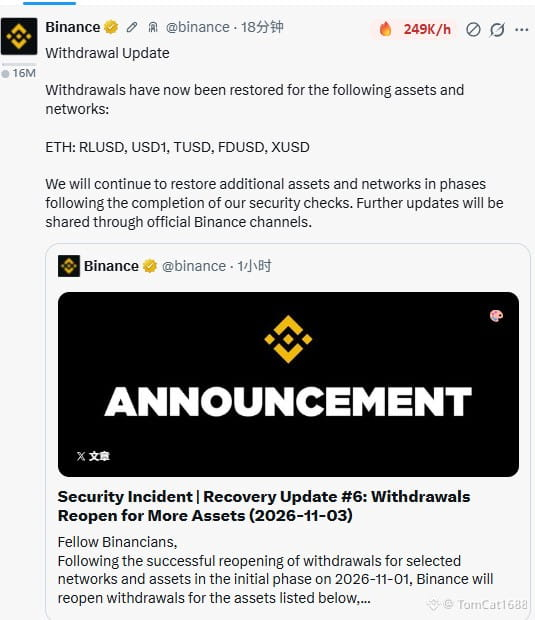
Binance will begin the second batch of withdrawals at 4:00 on November 3, with more assets to be made available gradually. The first batch started at 6:00 on November 1, initially opening $BTC . By 12:30, 15 networks were already available.
The second batch covers BSC, Ethereum, Solana, XRP Ledger, Sui, Arbitrum, Optimism, Tron, and Base. They are being prioritized based on user demand over the past week, with each batch opened as soon as its security checks and preparations are complete.
In the $6.3 billion theft on October 30, the FBI pointed the finger at North Korea, which denied responsibility. Binance suspended withdrawals, replenished assets, and conducted security checks. When the first batch of withdrawals resumed, the exchange warned users that there could be congestion and delays.
Data cited by Cointelegraph shows that Binance saw net outflows of about $7 billion over the past 24 hours, while OKX recorded net inflows of $445 million over the same period. Binance holds about $171 billion in user assets, so $7 billion represents roughly 4%—not fatal, but not a good sign.
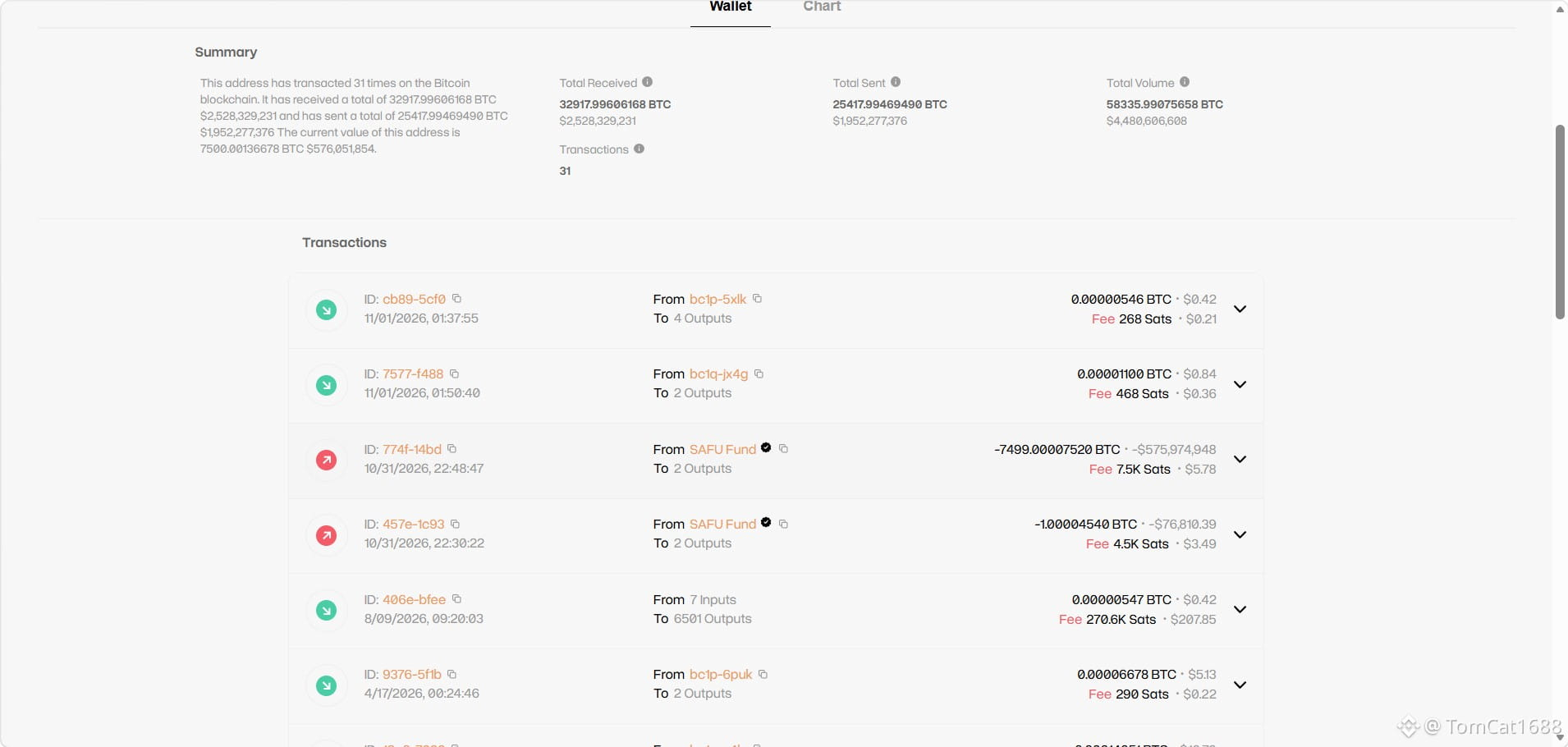
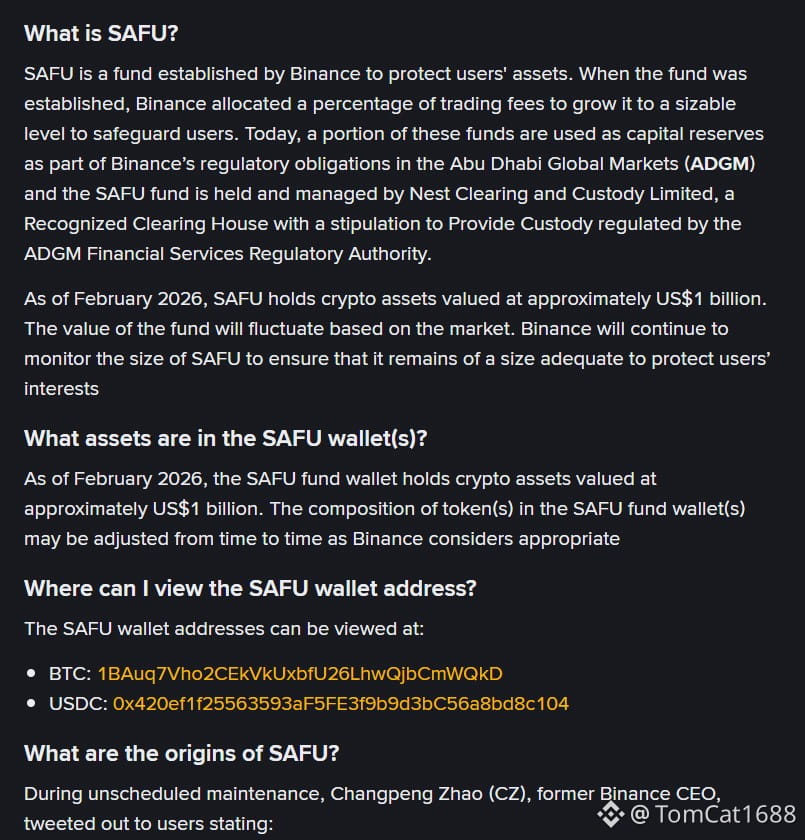
To make up for the shortfall caused by the stolen assets, Binance tapped its SAFU fund. On October 31, it transferred out 7,499 BTC, bringing the wallet balance down from about 15,000 BTC to 7,500 BTC, worth $583 million. SAFU's rules state that it will be replenished to $1 billion if its market value falls below $800 million, but after this withdrawal, the exchange did not say when it would be replenished. It has already covered 95% of the shortfall; the remaining 5% consists of illiquid tokens that are still being bought gradually over the counter.
The proof of reserves is also being updated. The October 31 snapshot covered 10 tokens, including BTC, ETH, and USDT, each backed at a ratio of at least 1:1. Users can now verify this for themselves. Another snapshot will be taken on Wednesday, covering more tokens, and generating the proof will take another 40 to 50 hours.
The market's reaction has been muted. BTC is currently at $76,837, down 2.1% over 24 hours; ETH is at $2,253, and BNB at $697. The broader market is also falling, and the resumption of withdrawals has not reversed the weakness, suggesting that people care more about whether the funds have actually returned.
The second batch of withdrawals addresses the issue of receiving funds. Rebuilding trust depends on two things: proof of reserves and whether net outflows narrow over the coming week. If Wednesday's snapshot covers most assets and outflows slow, then this wave of withdrawals may be over. If the proof still covers only 10 tokens, or outflows continue to accelerate, the resumption of withdrawals will merely have pushed the problem further down the road.