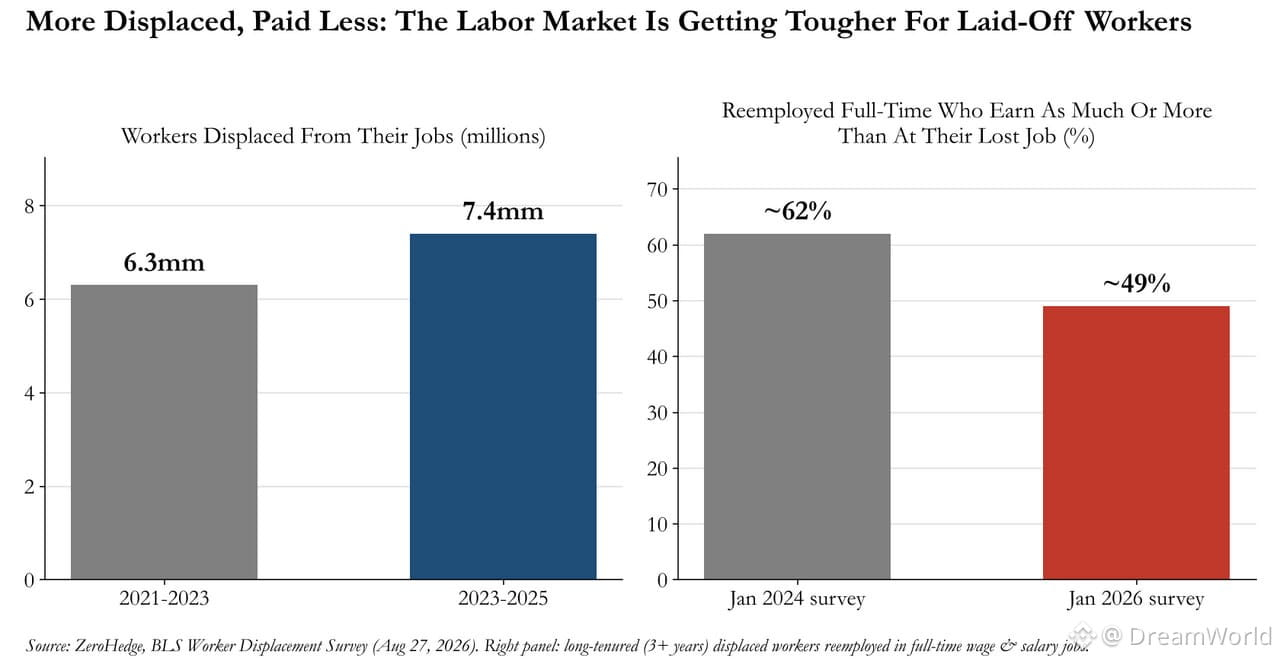

🧐 The impact of AI on jobs has been discussed for several years, but until now it’s mostly been predictions.
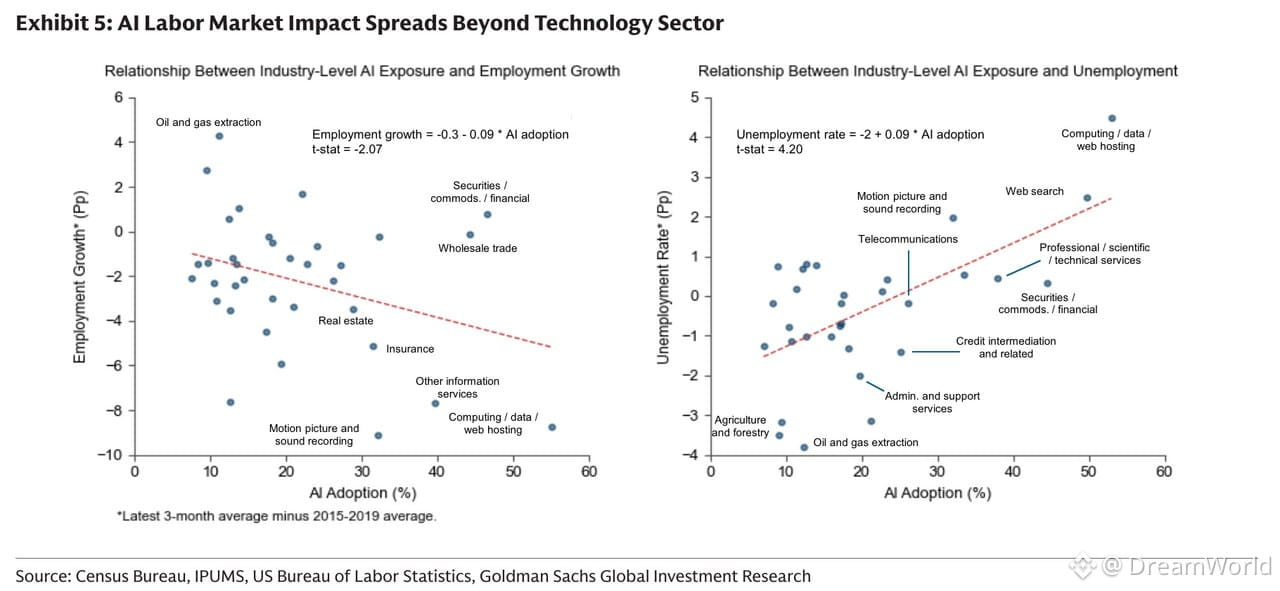
Now Goldman sees the effect in the data. Where companies are adopting AI more actively, employment is growing more slowly and unemployment is higher. And it’s no longer just IT, but also finance, insurance, and professional services.
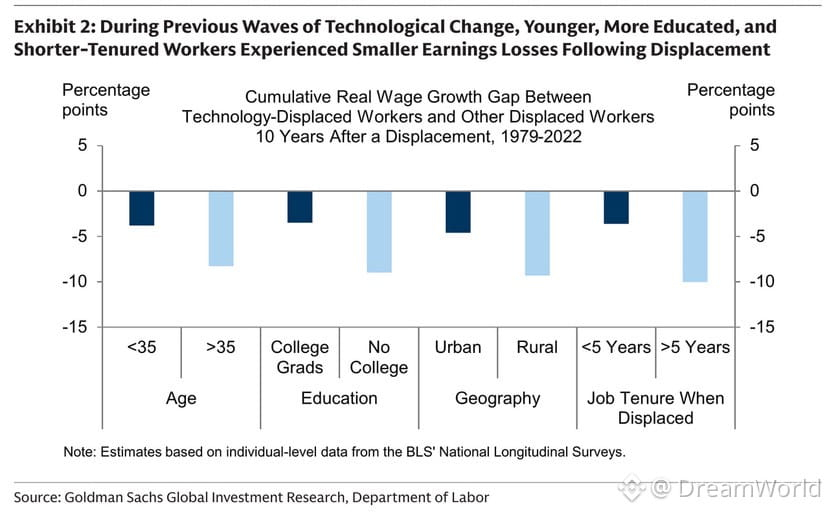
According to their data, people laid off because of AI have a harder time returning to the job market. On average, they spend an extra month looking for work, and a year later, their risk of remaining unemployed is 10% higher. Younger workers (under 35) adapt faster, as always.
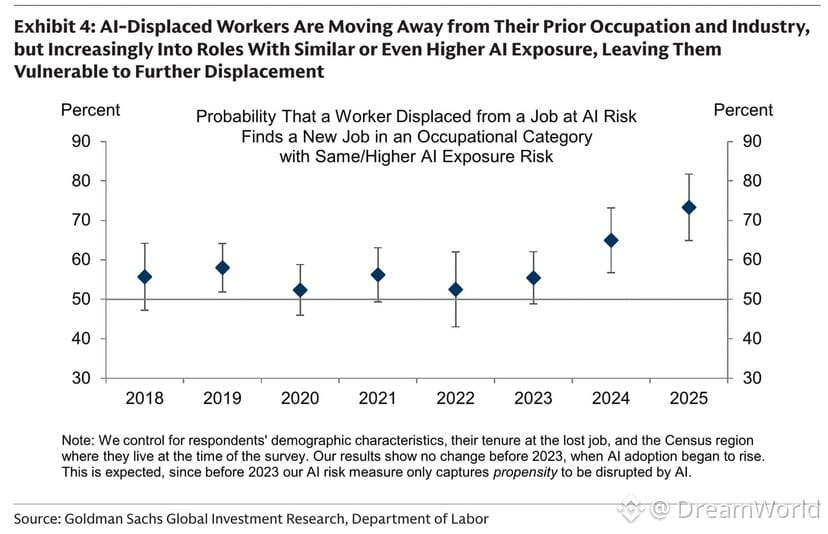
Of course, they can’t retrain quickly, so almost 75% of them end up in new roles that AI can also automate. People look for jobs that match their familiar skills and find themselves exposed to a potential next wave of layoffs.
There haven’t been mass layoffs yet because companies usually automate during recessions, when a downturn gives them a reason to cut staff. So the next recession could bring regular layoffs alongside those delayed by AI. Overall, Goldman estimates that during the transition, AI could displace up to 9% of US workers—about 15 million people.
The example of Microsoft is telling.
On Friday, November 6, the October employment report will be released. BofA expects +75,000.