AI Agents are moving from “being able to answer questions” to “being able to carry out tasks independently.”
Analyzing information and writing code are just the first steps. If an agent can also purchase data, call APIs, pay for computing power, and even transact with other agents, then it is no longer just an intelligent assistant—it is beginning to participate in economic activity.
But there’s an unavoidable question here:
How can we confidently let agents manage funds and make payments on their own?
That’s why I’m paying attention to @KITE AI 中文 .
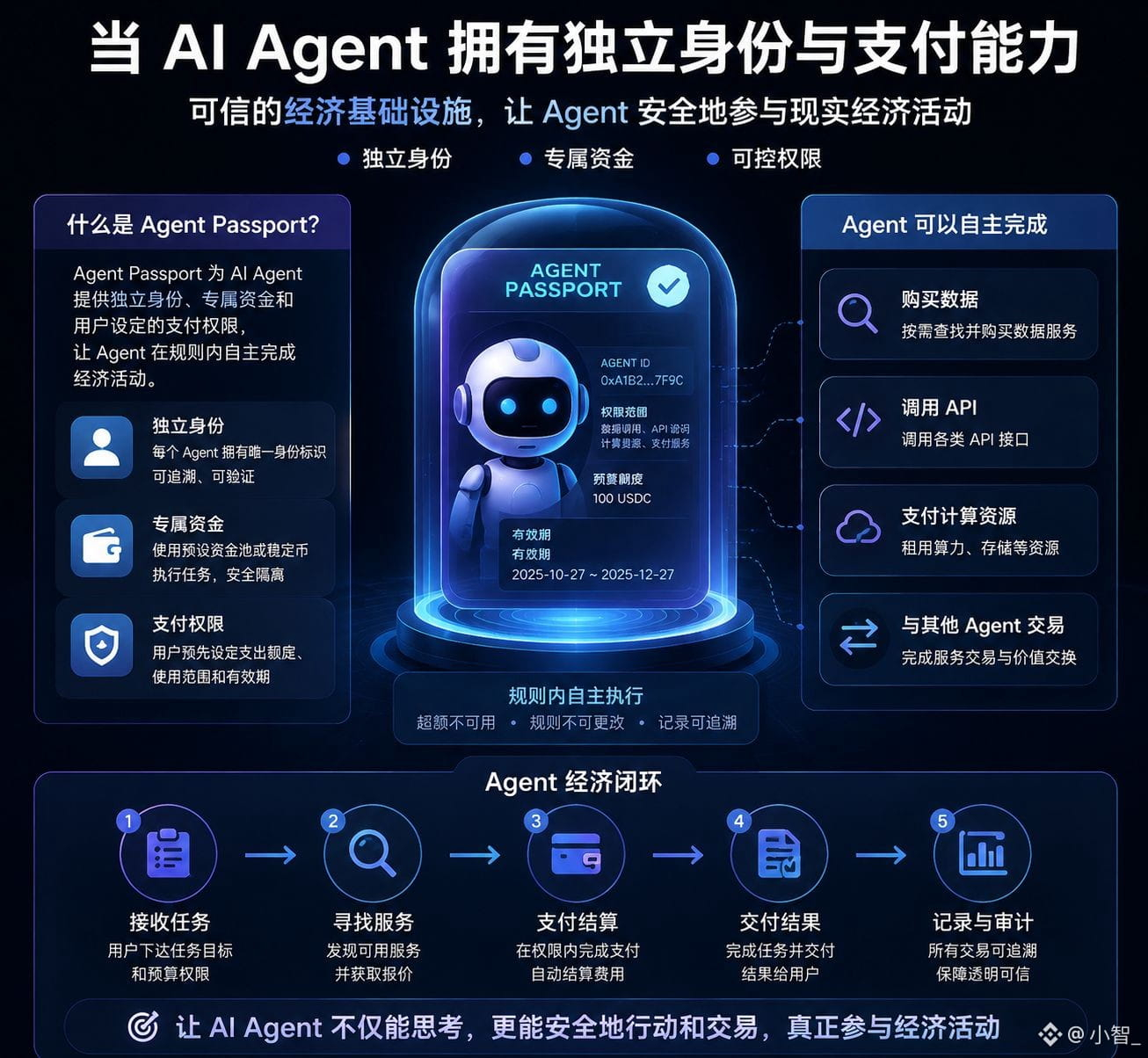
Kite is exploring an economic identity system for agents through Agent Passport, giving AI agents their own identities and dedicated funds, along with payment permissions set in advance by users.
Users can set spending limits and define the scope of authorization ahead of time, allowing agents to carry out tasks autonomously within those rules, rather than handing over unrestricted control of funds.
The significance here goes beyond adding a payment feature.
When agents can securely purchase data, call APIs, and pay for computing resources, the entire process could form a complete economic loop:
Identity verification → Service calls → Payment settlement → Task delivery
What I’m especially interested in is whether this system can genuinely attract developers and service providers, creating ongoing demand for services and transactions between agents.
After all, competition in AI isn’t just about models.
Enabling agents to access resources securely, make payments independently, and truly participate in economic activity is also a direction worth watching.
#KiteBBW $KITE