Golden Pig’s take: Recovering Binance’s $6 billion-plus will be harder than most people think. But there’s one thing ordinary people should do right now—stay away from ETH of unknown origin.
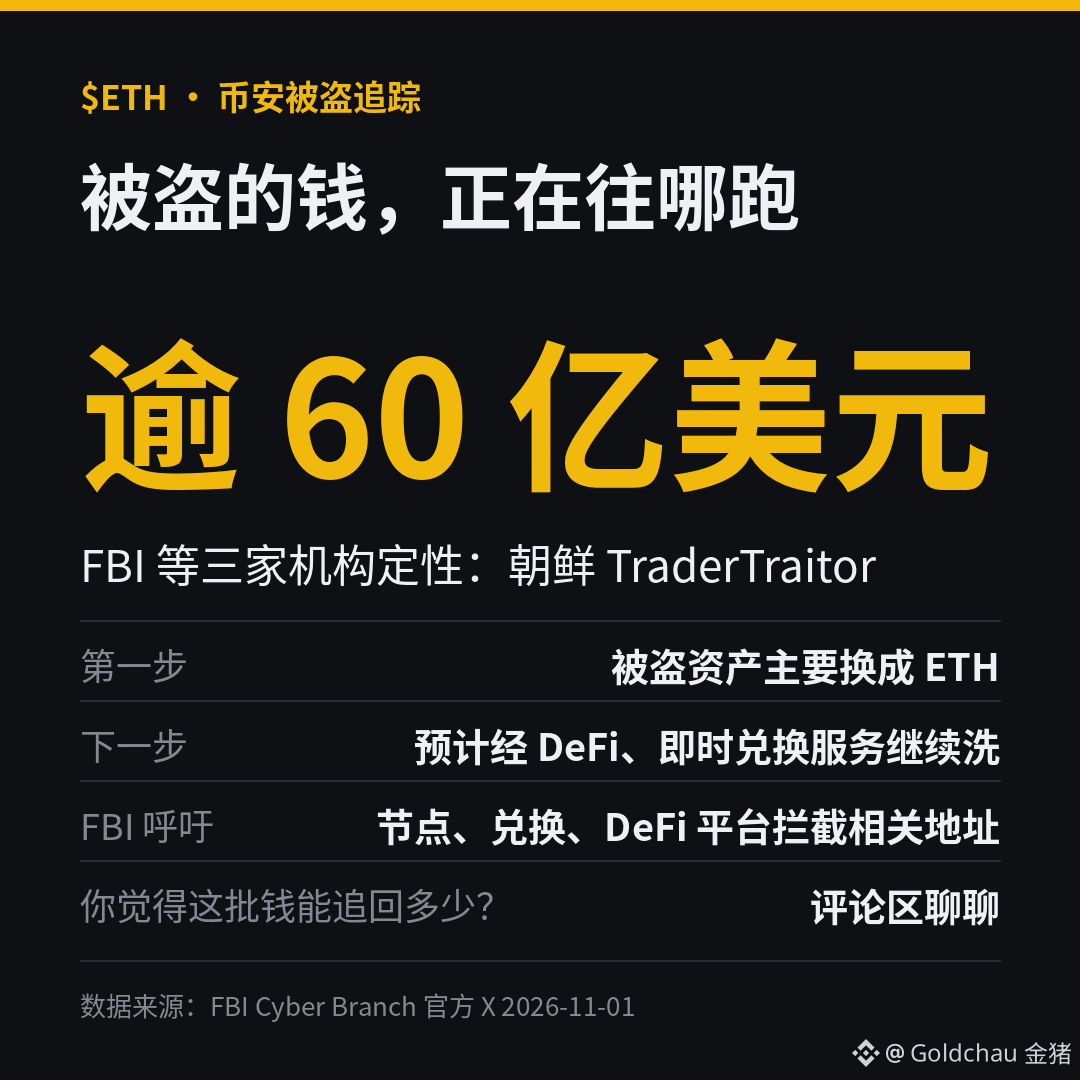
The FBI, the U.S. Secret Service, and the IRS Criminal Investigation division have officially attributed the theft of more than $6 billion from Binance to the North Korean hacking group TraderTraitor.
The second half is even more important: They observed that the stolen assets were mainly converted into $ETH , and are expected to be laundered further through DeFi and instant exchange services. The FBI has specifically called on node operators, instant exchange platforms, DeFi services, and blockchain analytics firms to block transactions linked to these addresses.
My take: Binance has nearly made up for its losses through replenishment, so user assets are basically unaffected. The real thing to watch out for is on-chain. For a while, buying coins over the counter at unusually low prices, transfers from unknown sources, and “cheap ETH” from small exchange platforms could all be connected to illicit funds. If an address gets flagged, its funds may be frozen.
So my own approach is simple: Only deposit and withdraw through legitimate channels, and don’t rush to use coins sent from unfamiliar addresses.
How much of this laundered money do you think will ultimately be recovered? Share your thoughts in the comments.
#币安 #安全事件 #FBI $ETH $BTC