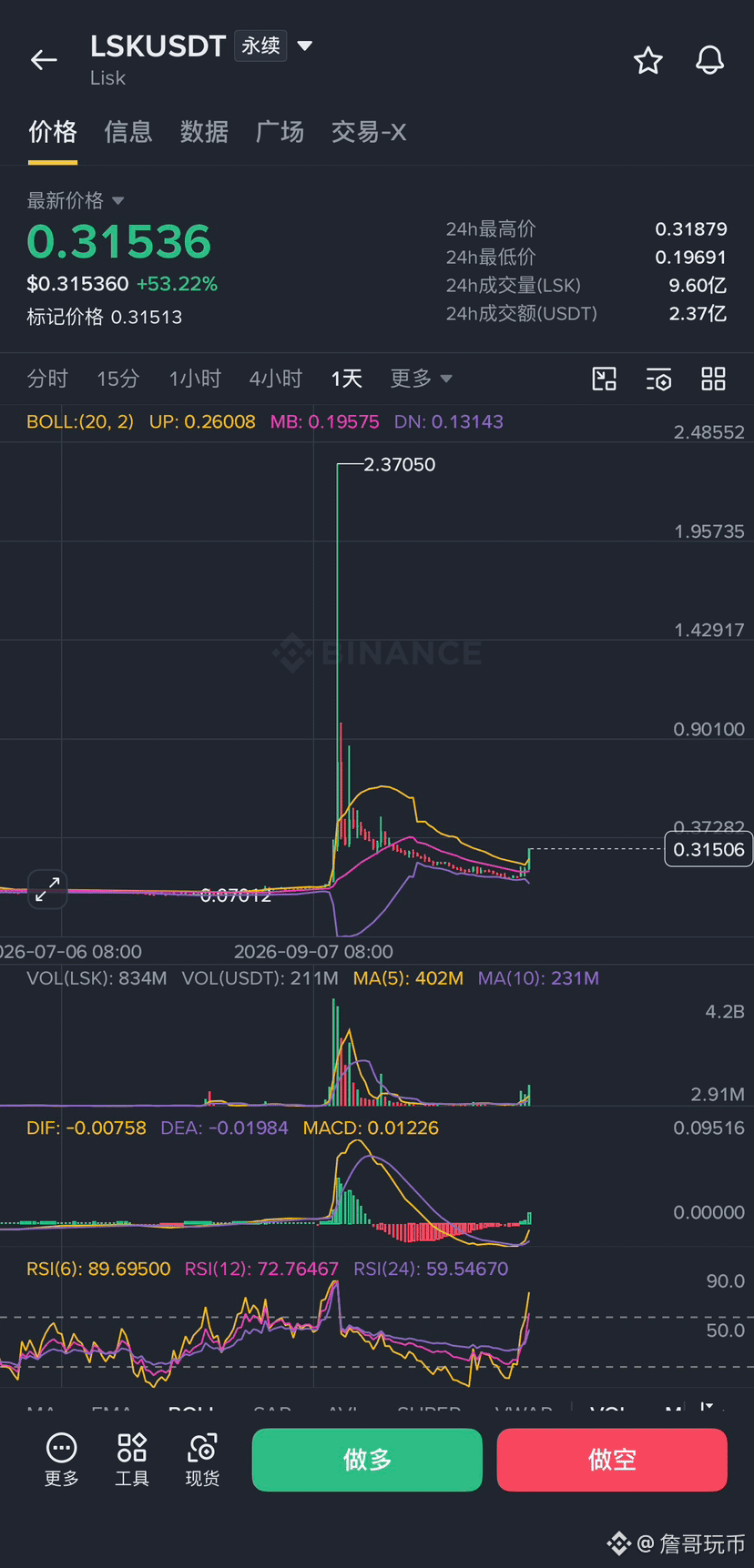
$LSK Surges 53%: Dead-Cat Bounce or Comeback? A Quick Look at Short-Term Levels
Straight to the point: The fundamentals haven’t recovered. This is a short squeeze triggered by extremely negative funding rates and a thin order book—in essence, a “structural dead-cat bounce.”
Why the price surged:
1. Narrative catalyst: The chain is set to shut down at the end of October, and a proposal to burn 100 million tokens gave bulls an emotional excuse to buy.
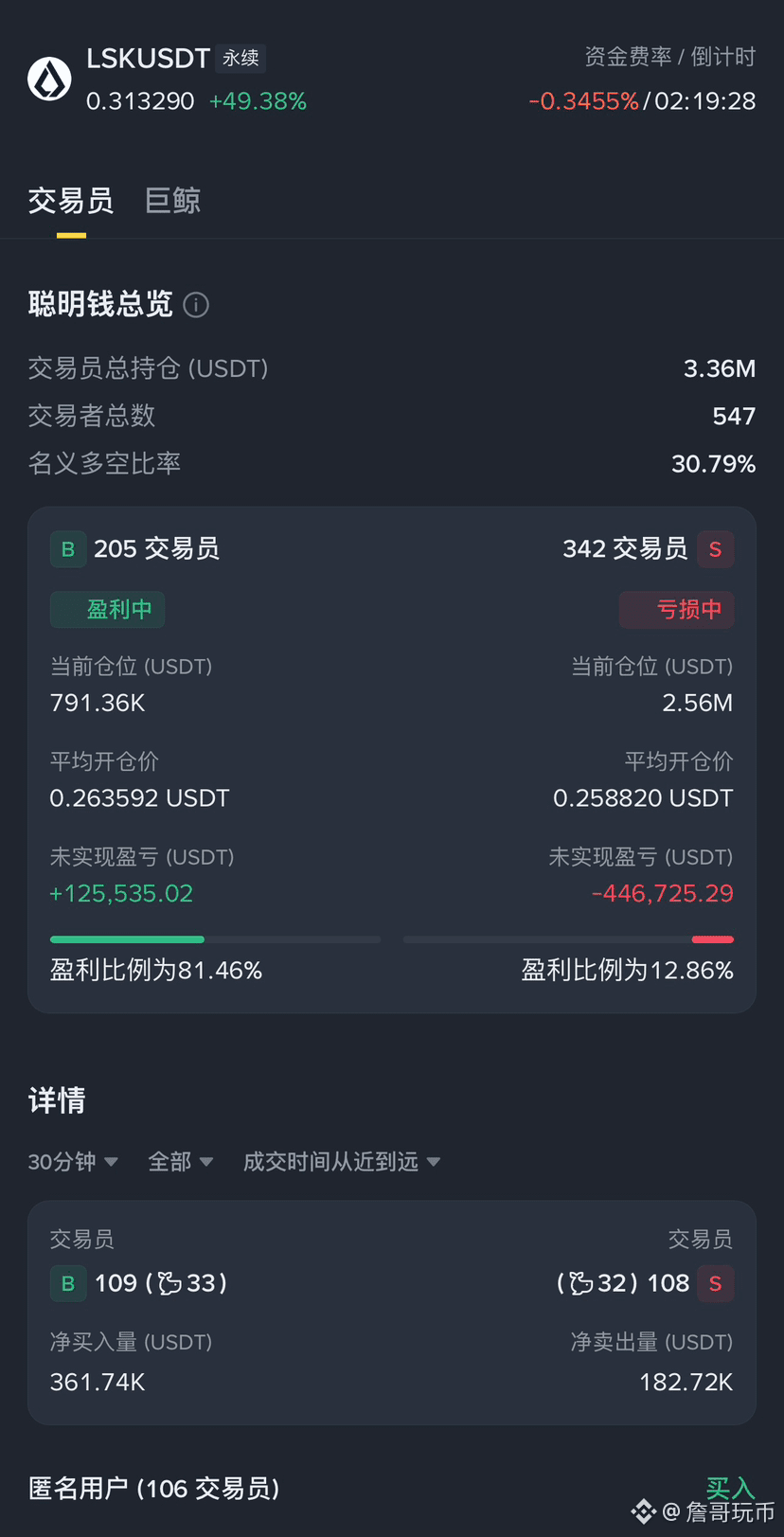
2. Fuel for the short squeeze: The funding rate reached -0.3455%. A screenshot shows 342 short accounts holding their positions, with an average entry price of 0.2588 and unrealized losses totaling as much as 446,000 U. Short-covering buy orders became the rocket fuel for the rally.
3. Extremely thin liquidity: The order book is shallow, so even moderate capital can push the price up by double digits.
Short-term futures levels (do not chase the rally):
· Long setup (wait for a pullback):
· Entry: Patiently wait for a pullback to the 0.260–0.280 support zone, and only enter with a small position if signs of a bottom appear on the 1-hour chart.
· Stop-loss: 0.240 (a break below this level would signal that the short-squeeze momentum is fading).
· Target: Take profits in stages at 0.340–0.350.
· Short setup (play a stall in the rally):
· Entry: Try a small short if signs of stalling, such as long upper wicks or price-volume divergence, appear in the 0.340–0.350 zone.
· Stop-loss: Above 0.360.
· Target: 0.280–0.260.
· Warning: The biggest risk for shorts is the negative funding rate draining your funds. Stick to short-term mean reversion; absolutely do not hold a short position for the long term.
In one sentence: You can trade short-term in the direction of the short-squeeze momentum, but keep your position small and use a hard stop-loss. Don’t mistake a “dead-cat bounce” for a “king’s return.”