At a time like this, mindlessly talking down Binance or piling on it does no good for anyone working in the industry, trading, or investing as a retail user in the Chinese-speaking world.
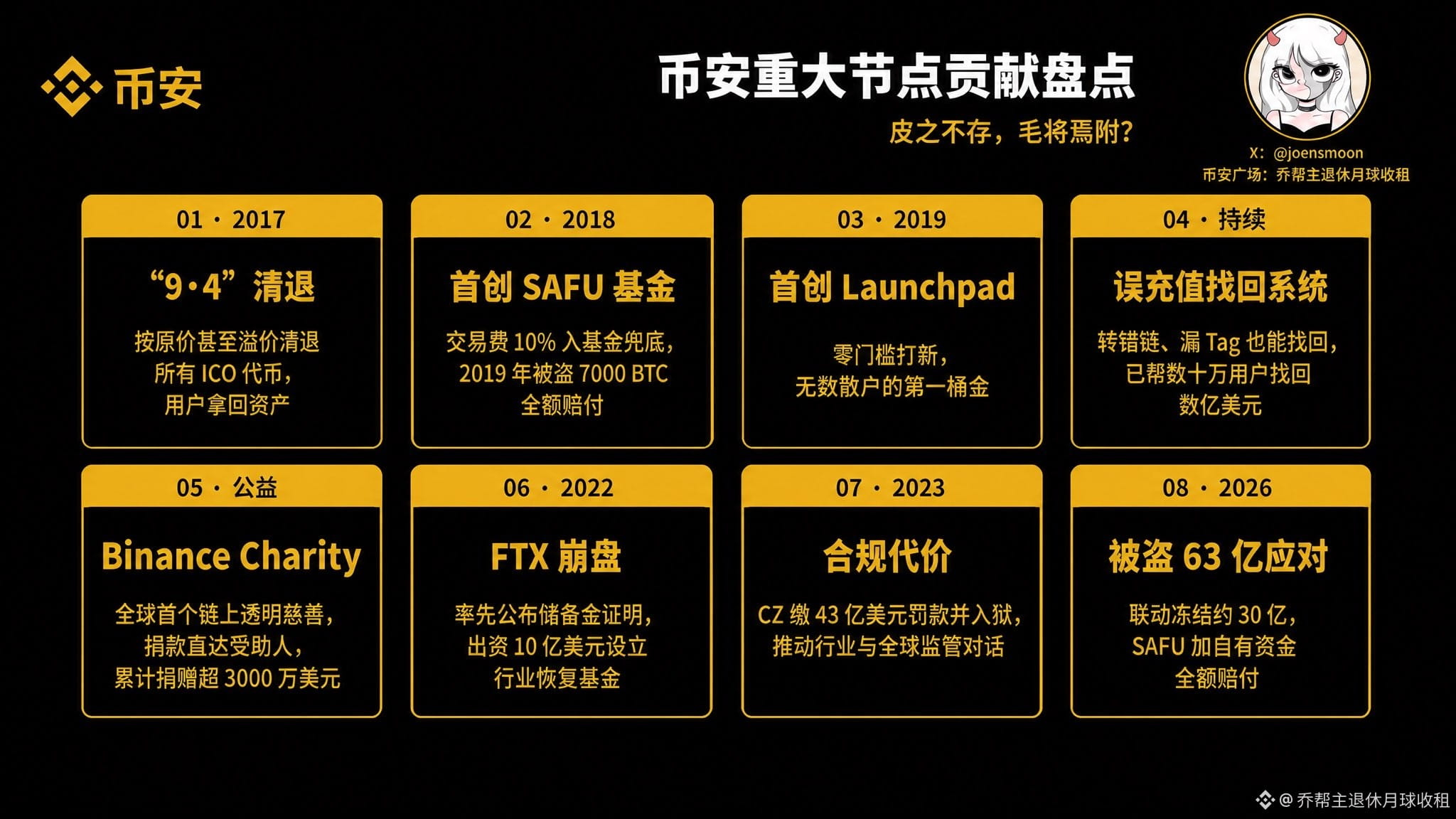
If the skin is gone, where can the hair grow?
Looking objectively at the industry’s development over the past decade, Binance is not only the world’s largest liquidity hub, but also the last line of defense for the Chinese-speaking world—and even the entire Web3 industry.
Looking back at the history of the cryptocurrency market, Binance has played an irreplaceable role at many turning points in the industry’s fortunes.
1️⃣ ▏𝟮𝟬𝟭𝟳 “𝟵·𝟰” Crackdown: Putting Trust in the Chinese-Speaking World First, Regardless of Cost
In 2017, China’s seven regulatory agencies imposed a blanket ban on ICOs and exchange operations. Many new platforms liquidated or even absconded with users’ funds. Binance had been established for only about two months when, under immense liquidity pressure from the crackdown, it announced that it would refund all ICO tokens at their original fundraising prices—or even at a premium, above their issue prices. Many users suffered heavy losses on other small platforms, but got their assets back from Binance.
This battle earned Binance an exceptionally strong reputation in the Chinese-speaking world.
━━━━━━━━━━━━━
2️⃣ ▏𝟮𝟬𝟭𝟴 Pioneered the 𝗦𝗔𝗙𝗨 Fund: Covering User Losses
Binance established SAFU (Secure Asset Fund for Users), allocating 10% of all trading fee revenue to the fund to fully cover user losses in the event of force majeure or a hack. It was the industry’s first exchange-level user insurance fund, and was later emulated across the industry.
In 2019, when 7,000 BTC were stolen, Binance immediately issued a public announcement and used SAFU to fully reimburse users. No user assets were lost.
━━━━━━━━━━━━━
3️⃣ ▏𝟮𝟬𝟭𝟵 Pioneered 𝗟𝗮𝘂𝗻𝗰𝗵𝗽𝗮𝗱 𝗜𝗘𝗢𝘀: The Retail Investor’s First Pot of Gold
It was the industry’s first model in which “an exchange helps a project issue tokens and helps users get in early,” giving users an almost barrier-free way to participate in promising early-stage projects. For many ordinary people, their first pot of gold in crypto came from Launchpad. Every exchange later adopted this model.
━━━━━━━━━━━━━
4️⃣ ▏Pioneered a Recovery System for Assets Sent by Mistake
Binance was the first platform in the industry to invest significant technical and human resources in developing an automated/semi-automated recovery system for assets sent by mistake. Sending funds on the wrong chain, forgetting to include a Tag, or sending them to the wrong address—these mistakes would usually mean the funds were lost for good, but Binance can help users recover them. So far, it has helped hundreds of thousands of users successfully recover assets worth hundreds of millions of dollars.
━━━━━━━━━━━━━
5️⃣ ▏Pioneered On-Chain Transparent Philanthropy: 𝗕𝗶𝗻𝗮𝗻𝗰𝗲 𝗖𝗵𝗮𝗿𝗶𝘁𝘆
Binance Charity is the world’s first nonprofit organization to apply blockchain technology to philanthropy. All donations can be tracked on-chain and go directly to recipients’ wallets, eliminating the entrenched problems of traditional charities: “middlemen taking a cut and accounts that aren’t made public.”
During the COVID-19 pandemic and the Ukraine crisis, it donated over $30 million in total, distributing pandemic prevention supplies and on-chain cryptocurrency living allowances across dozens of countries. In partnership with Women in Tech, it has provided free Web3 and programming scholarships to tens of thousands of women from underserved communities and students in poverty around the world.
━━━━━━━━━━━━━
6️⃣ ▏𝟮𝟬𝟮𝟮 𝗙𝗧𝗫 Collapse: Keeping the Industry Liquid
FTX, the world’s second-largest exchange, collapsed after misusing user assets. This triggered a domino effect of bankruptcies among leading institutions including Alameda, Celsius, and BlockFi, leaving the entire crypto market gripped by extreme panic and a severe liquidity crunch.
Binance was the first to publicly release Proof of Reserves, pushing the entire industry toward greater asset transparency. It also committed $1 billion to establish the Industry Recovery Initiative (IRI), supporting promising projects and development teams caught in the crossfire of the credit crisis and preventing the industry from becoming completely paralyzed for years.
━━━━━━━━━━━━━
7️⃣ ▏𝟮𝟬𝟮𝟯 The Cost of Compliance: Bringing the Industry into Dialogue with Global Regulators
CZ paid a $4.3 billion fine and served time in prison. The cost was enormous, but it also helped bring the entire crypto industry into formal dialogue with global regulatory systems. Binance was the first exchange to work extensively with regulators in different countries to obtain licenses, making a major contribution to the industry’s progress toward compliance.
━━━━━━━━━━━━━
8️⃣ ▏𝟮𝟬𝟮𝟲 · $6.3 Billion Stolen and the Response: Industry-Wide Coordination
A public announcement was issued immediately. Tether froze $1.6 billion in USDT, Circle froze $800 million in USDC, and the Arbitrum Security Council coordinated the freezing of 8,425 ETH—around $3 billion frozen on-chain.
Binance pledged to fully reimburse users using the SAFU fund and its own corporate funds. The funds are ready, and Binance has also bought altcoins through OTC and on-market purchases to make up the shortfall.
The industry needs builders, and it also needs us to be objective about those who have truly contributed to it.
@binancezh @cz_binance @heyibinance
@sisibinance