

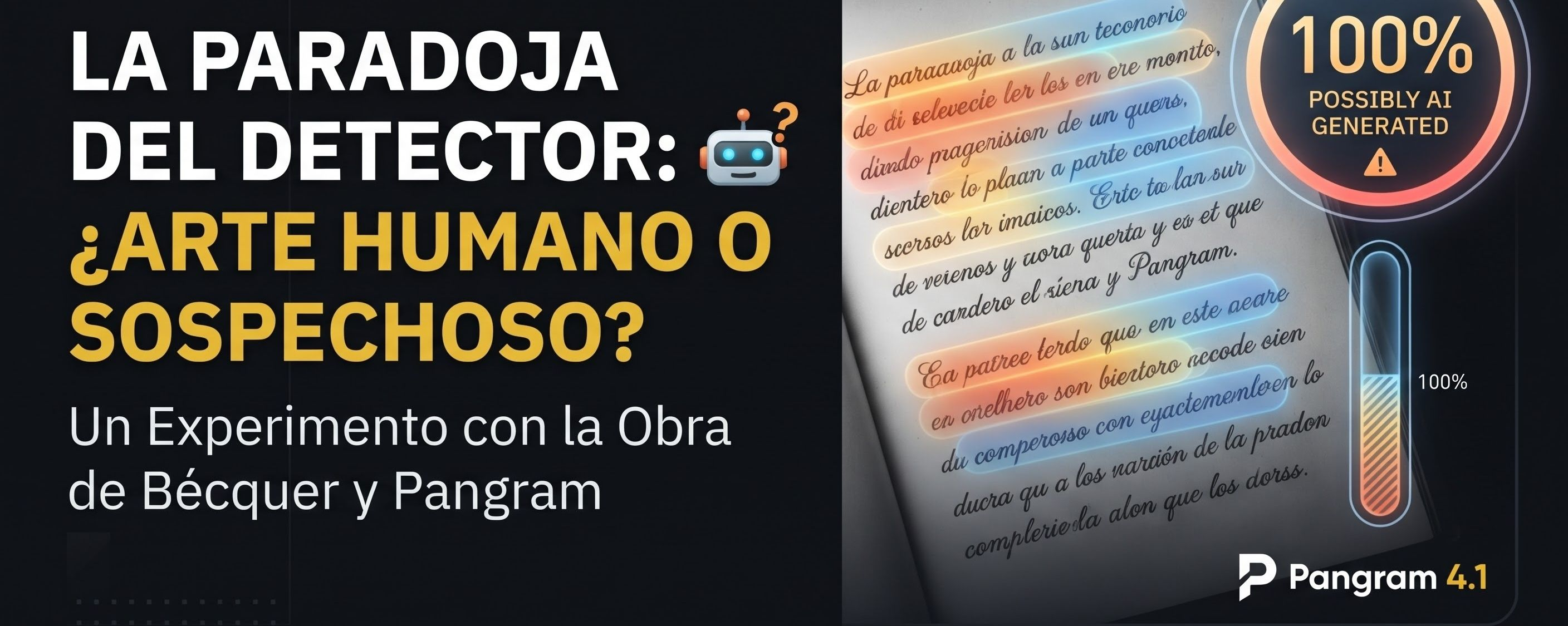
Motivated by the excellent analysis in a program I recently watched on YouTube about the literary world scandal and AI detectors, I wanted to put it to a concrete test.
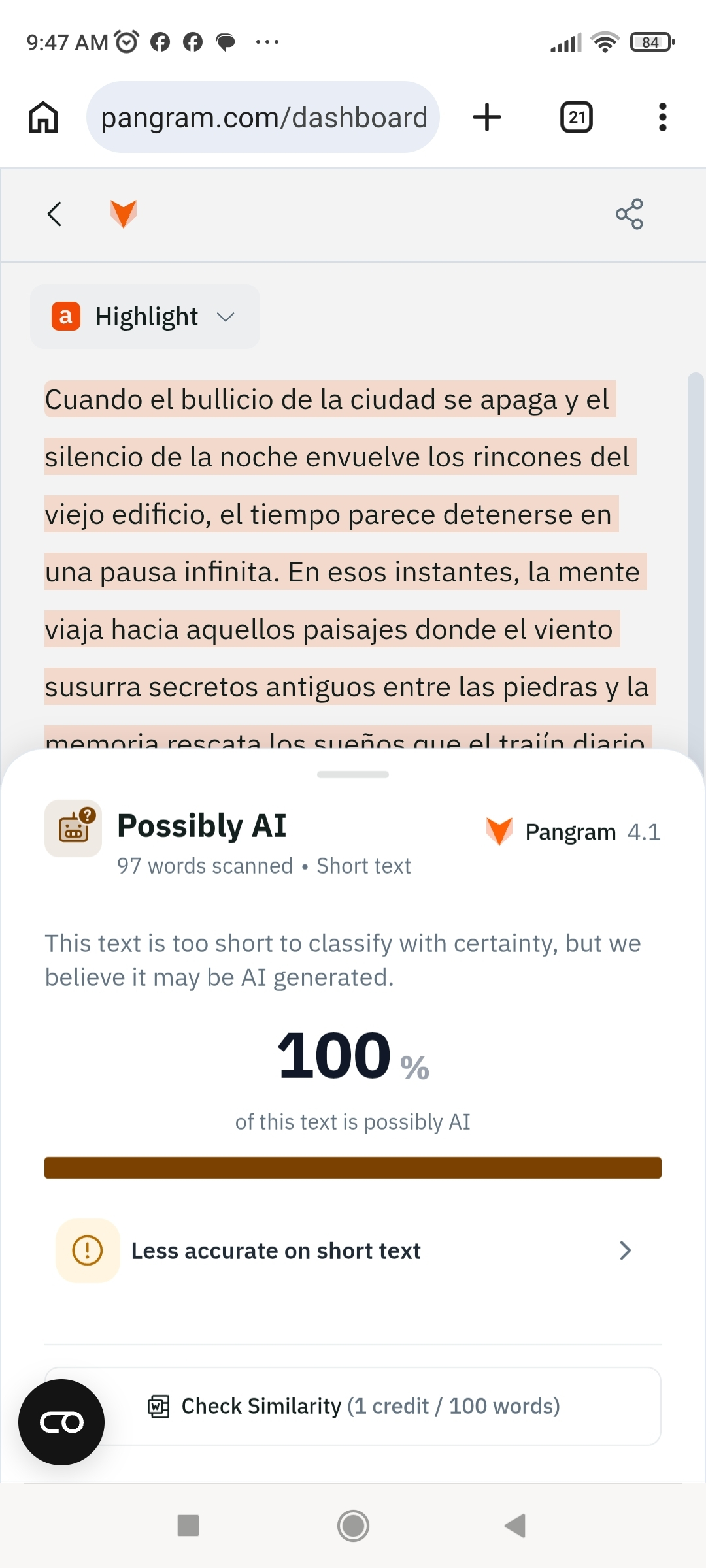
I took a passage inspired by the classic atmosphere of Gustavo Adolfo Bécquer and ran it through Pangram, the app discussed in the debate. The result? The tool judged the text to be 100% likely AI-generated (even attaching its own warning that it is not very accurate on short texts).
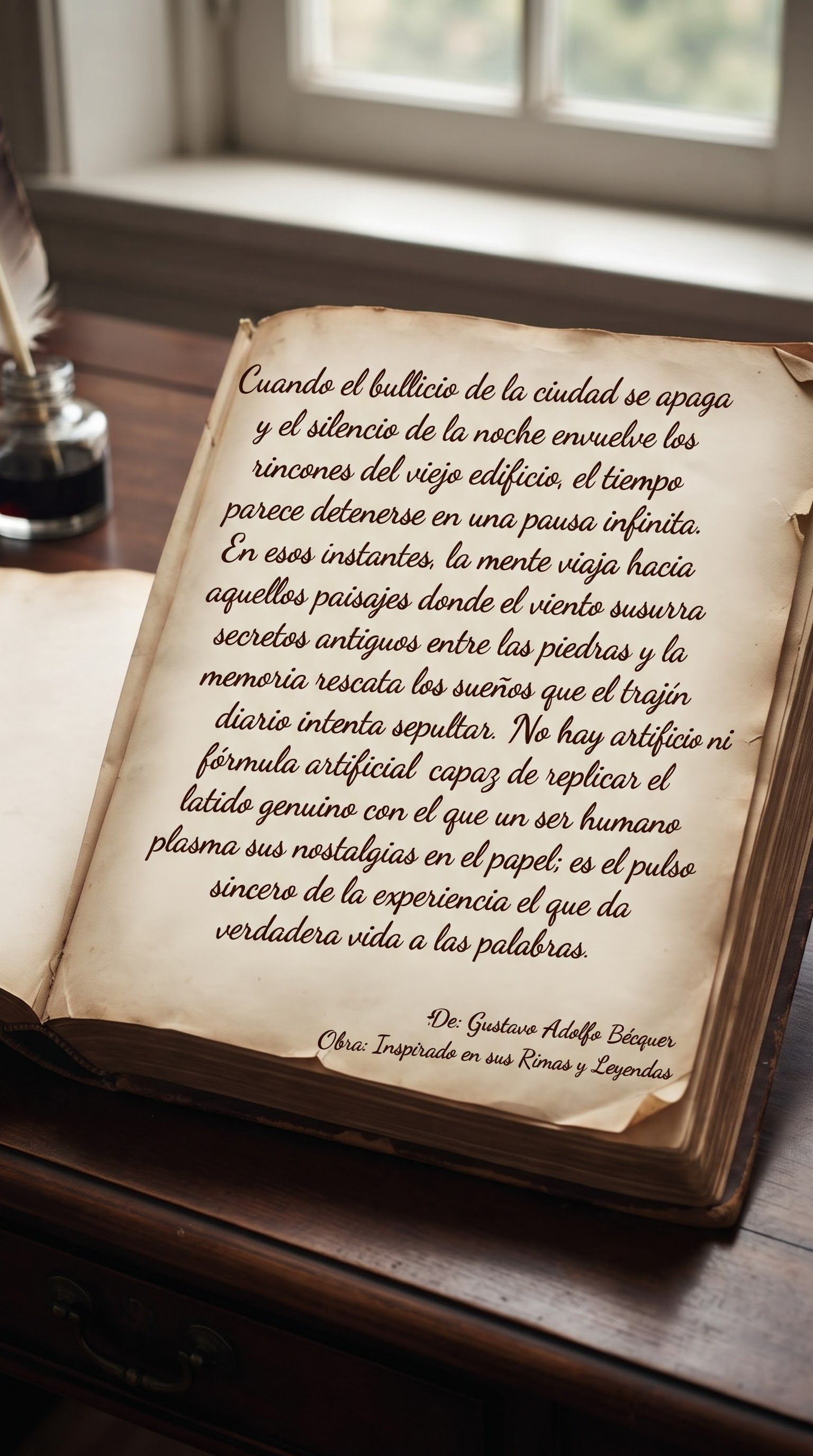
This is what the text in question says:
“When the city’s bustle dies down and the silence of the night envelops the corners of the old building, time seems to stop in an endless pause. In those moments, the mind travels to landscapes where the wind whispers ancient secrets among the stones and memory brings back the dreams that the daily grind tries to bury. No artifice or artificial formula can replicate the genuine heartbeat with which a human being puts their nostalgia on paper; it is the sincere pulse of experience that gives words their true life.”
Author: Gustavo Adolfo Bécquer
Work: Inspired by his Rimas y Leyendas
This small practical experiment leaves an urgent reflection on the table:
The danger of false positives:
We are delegating the validation of human talent and creativity to opaque algorithms that can tarnish any author’s reputation with a simple error in judgment.
The business of fear and paranoia:
These applications indirectly benefit from this collective hysteria, prompting thousands of creators to check their texts out of fear and freely feeding and training the very same artificial intelligences with genuinely human material.
Technology is advancing, but the blind algorithmic hunt must not replace human judgment or commodify the value of true literature.
You can watch the full program and learn more about the background to this controversy here: Did a novel that was 99% AI-written really win the Almadía Prize?
What do you think? Are we falling into a trap where human art ends up being considered “suspicious” by default?