He was crouched on the company rooftop, smoking what he’d lost count of. On his phone was a screenshot of his account balance, which had just dropped from over 300,000 yuan to only 400U.
It wasn’t that he’d never made money. He’d make it, give it all back, then gamble to win it back, only to lose again. He borrowed money to trade, copied other people’s trades, chased hot trends—he’d made every mistake there was to make. During that time, he was afraid to go home. He dreaded his wife asking, “How did it go today?” and worried that when it was time to pay the kids’ tuition, he wouldn’t have the money.
Later, he told me he’d spent a long time thinking on that rooftop that day. In the end, he didn’t jump because he couldn’t accept it. Why could other people make money while he was stuck being the sucker left holding the bag?
He started over from scratch. He emptied his account, took an entire week to clear his head, and didn’t touch a single trade. Then I gave him one rule: use only 20% of his 2,000U to test the waters. No adding to positions, no going all in, no chasing hot trends, no betting on a rebound. Steady to the point of boredom, steady to the point of nausea—but little by little, his account stopped bleeding.
Then he built himself a trading system. He only traded assets and time frames he understood, and reviewed and recorded his trades every day: why he entered, why he exited, where he lost, where he made money. He wrote down every trade, like keeping a diary.
After a while, his profits started to compound. After each win, he’d increase his position using the profits; after a loss, he’d automatically reduce it. After several wins in a row, he’d force himself to stay out of the market for two days, so he wouldn’t get carried away. He told me the hardest part wasn’t the technical side—it was being able to keep his hands off the keyboard after making money.
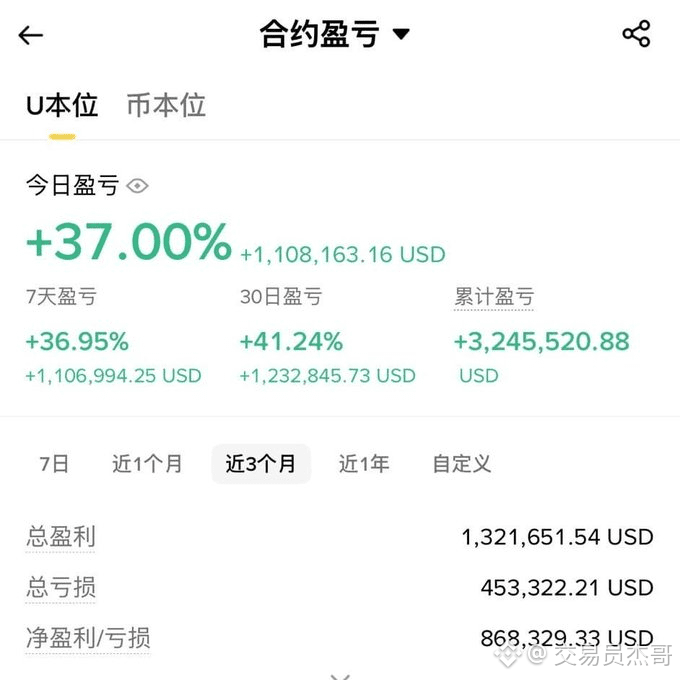
Now his account has long since recovered, and he’s frighteningly steady.
That day, he messaged me and said, “Brother Jie, these days I just check the charts. If it’s time to get in, I get in; if it’s time to get out, I get out. No more messing around. I used to think trading was about fighting hard. Now I realize it’s about knowing when not to fight.”
I asked him if he still remembered that cigarette on the rooftop. He said he did, but he’d never go up there again.
If you’re losing money in this market and don’t know what to do, Brother Jie won’t teach you how to get rich overnight. I’ll just teach you how to start with 400U and work your way out, step by step.