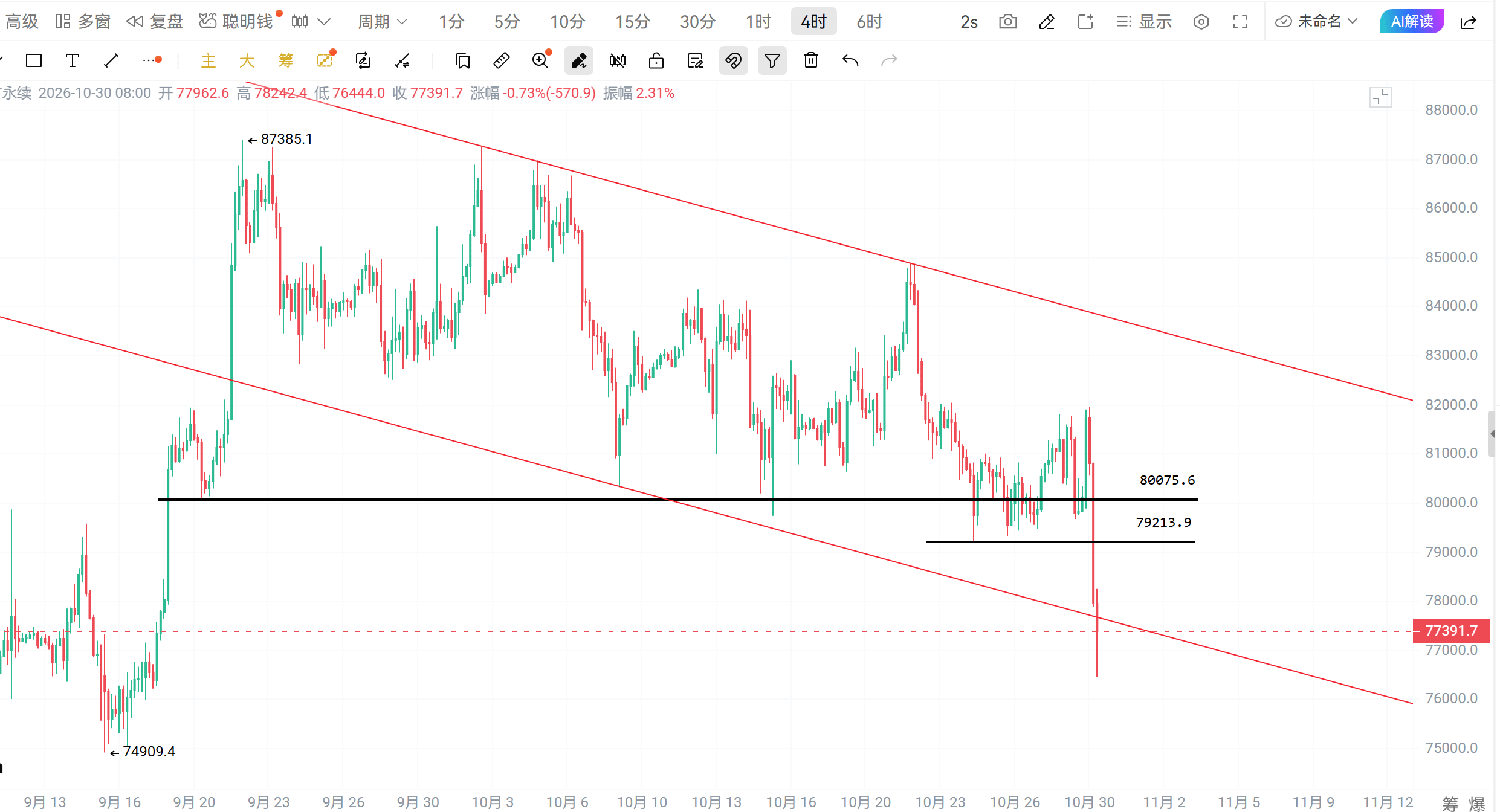
$BTC After the short-term indicators and the 1-hour chart turned fully bullish yesterday, the price rose to around 81,900. This level is resistance: the market has pulled back twice from around here after hitting resistance. But when the price climbed to around 81,900, the hourly and mid-term indicators were actually fully bullish. Although the long-term indicators were still lagging, if this breakout had taken hold, the whole market would have started moving.
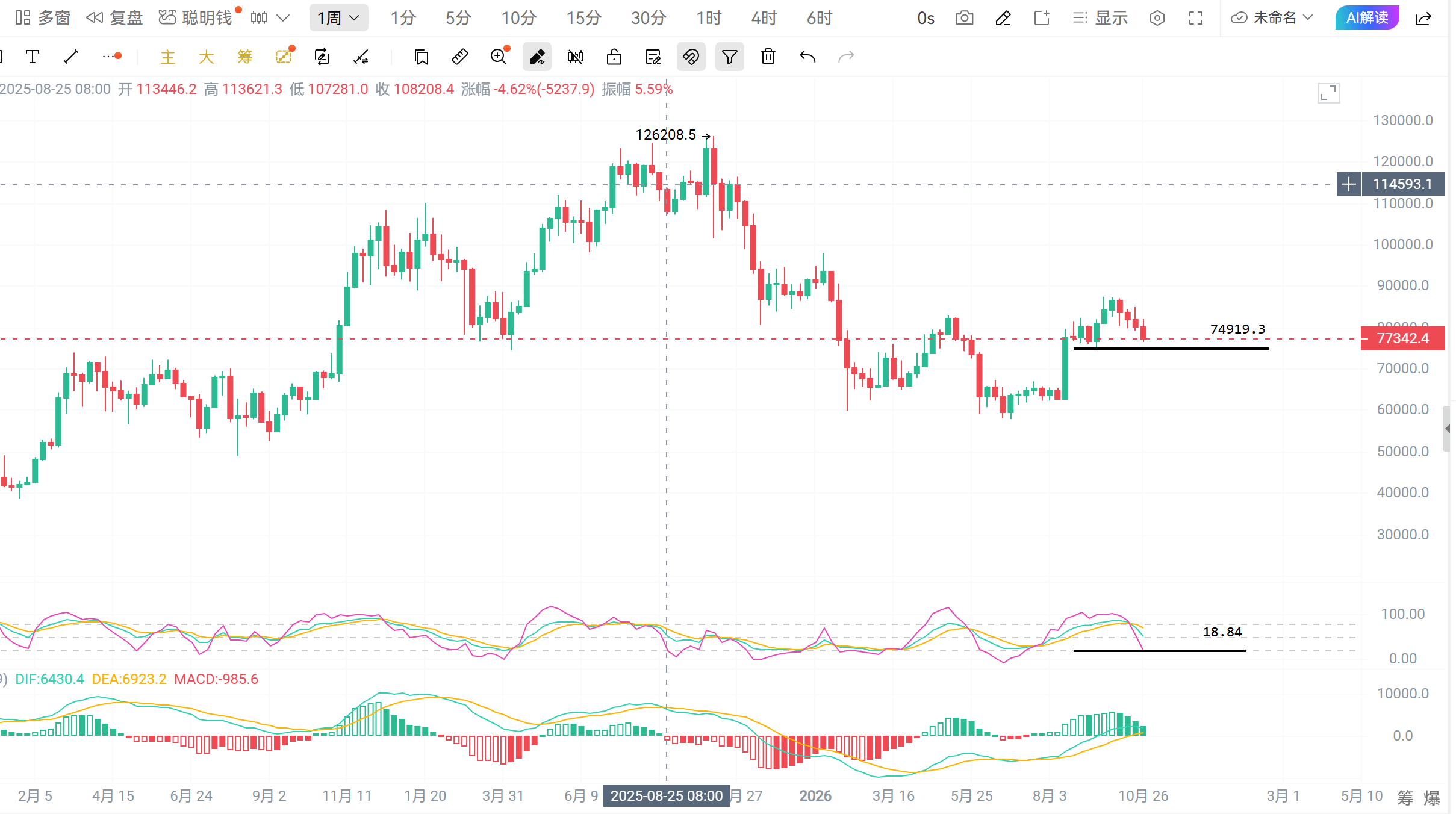
The result was yet another rejection and pullback, as usual. Just like reheated leftovers, the price action from 87,300 has been a choppy, grinding decline. I just checked the weekly KDJ: it has indeed recovered from the decline to 18, just one step away from bottoming out. Meanwhile, the MACD is still showing a golden cross above zero, providing a floor for the market. The starting point of the next upswing may be approaching soon, and 76,400 is very likely to be it.
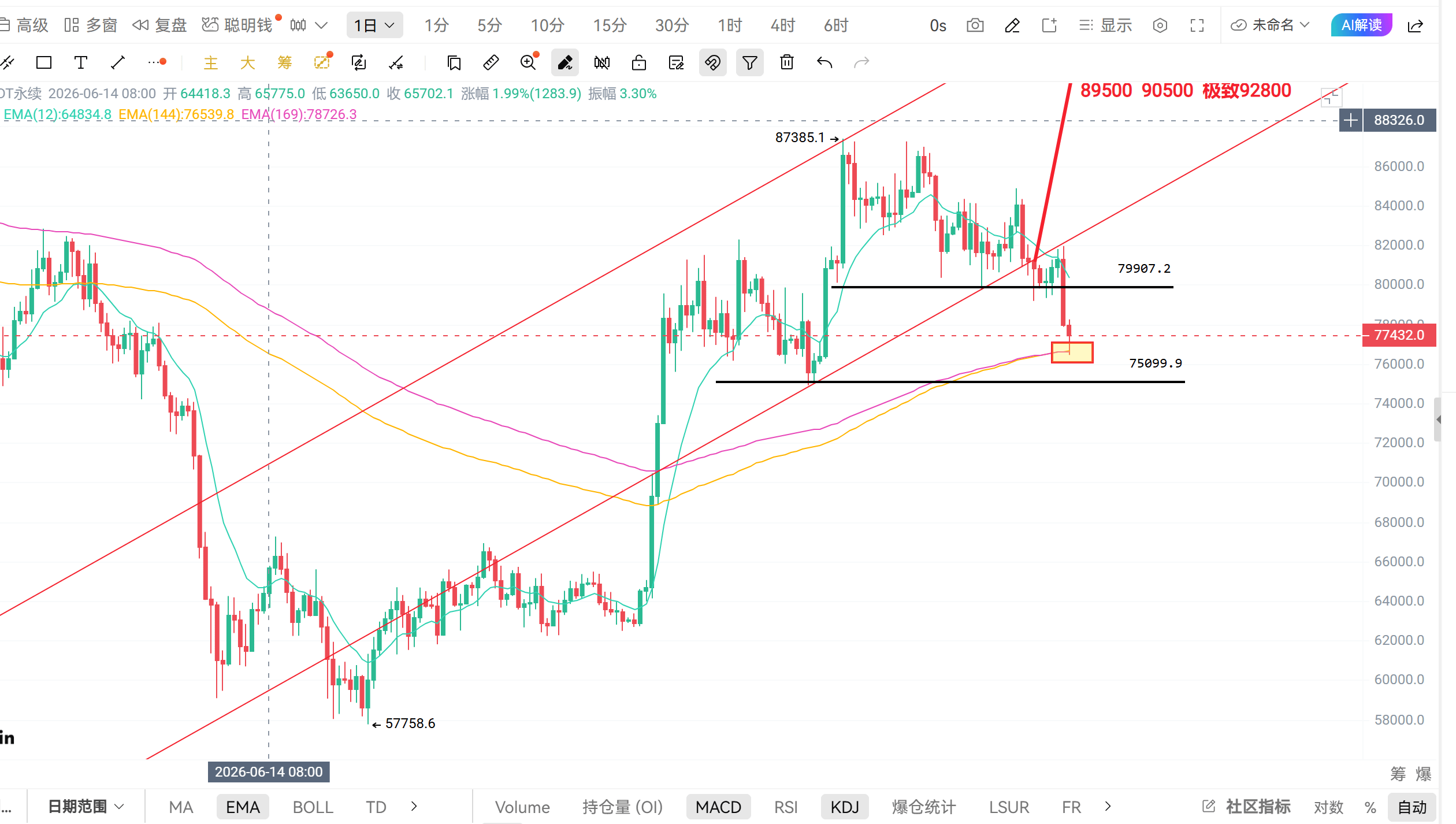
The price really did reach around 76,400, the daily EMA dual-track support level, just one step away from 75,000, where the rally following the rate hike began. In fact, the daily dual-track support at 76,000 had been there all along, but given my read of the broader market at the time, I was more focused on institutions setting a trap around 79,000–80,000.
I’ll say it again: if the market is going to fall, 75,000 won’t hold it. But judging by the current state of the weekly indicators, a drop to 72,500—or even a wick down to 67,500, the key dividing line—is possible. However, all of that runs counter to the bullish outlook indicated by the broader-market indicators.
Since the drop began at 87,300, trading futures in swings has definitely been the more comfortable approach: a grinding market, resistance and support levels, and repeated back-and-forth moves. Shorting high and going long low, with stop-losses in place, should give you a pretty high win rate. The market lacks momentum, which actually makes it easier to place stop-losses on high-level shorts.
But interpreting the broader market trend and swing trading are two different things. In the current market, swing trading really is more suitable. After all, crypto has now been legalized in the U.S., and institutional capital has built up large, long-term holdings and taken control of the market. Volatility is tightly controlled. One-way swings of several thousand, or even over ten thousand, points have become extremely rare. As for the broader market trend, that’s about the eventual direction. In today’s environment, trying to read it can feel clumsy: the market grinds sideways, and you have to wait longer for a result. You give up the chance to get in at the most extreme levels, while institutions grind people down near those very levels. That’s why so many people lose their nerve. Most people would rather see quick profits from swing trades than wait for a trend to play out.