
We turned “a lifetime” into a book
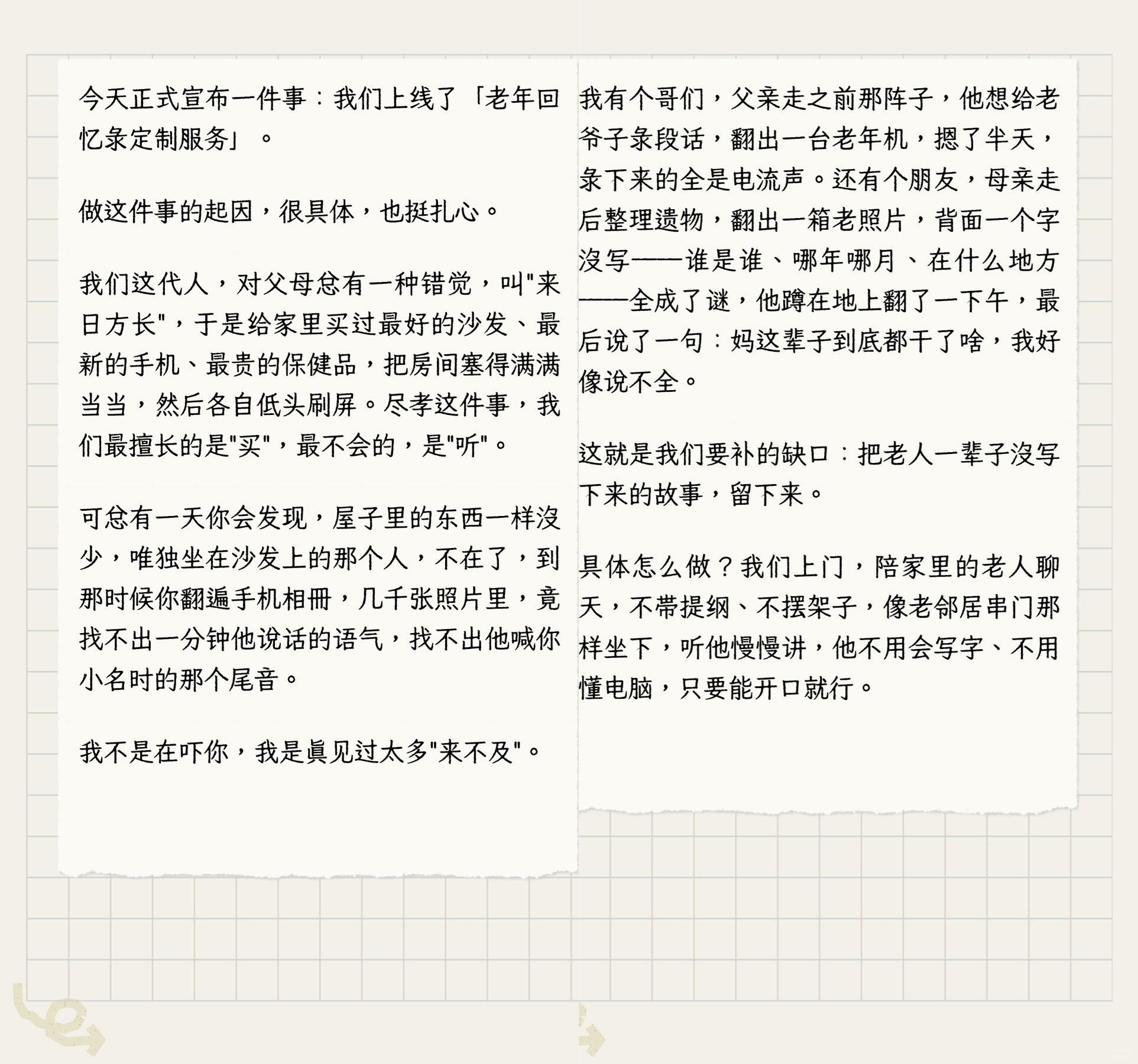
Today, we’re officially announcing something: our custom memoir service for older adults is now available.
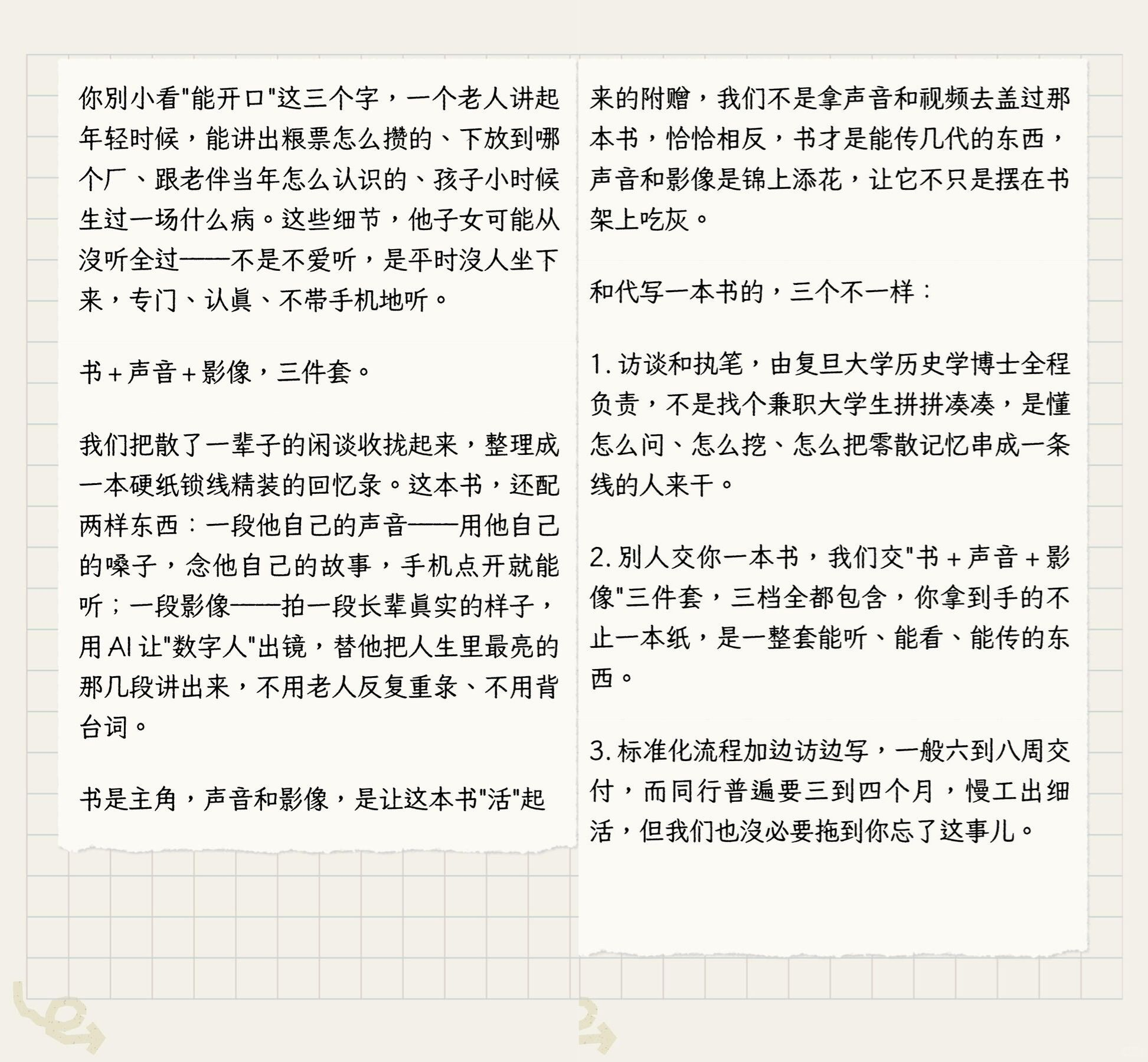
How does it work? We come to your home and sit down with the older person in your family for a chat. No list of questions, no airs—just like old neighbors dropping by. We listen as they talk at their own pace. They don’t need to know how to write or use a computer; all they need to do is speak.
Don’t underestimate those three words: “all they need to do is speak.” When an older person starts talking about their younger days, they might tell you how they saved ration coupons, which factory they were sent to work at, how they met their spouse, or what illness their child had as a little one. Their children may never have heard all these details—not because they don’t care to listen, but because no one usually sits down with them to listen, attentively and without a phone in hand.
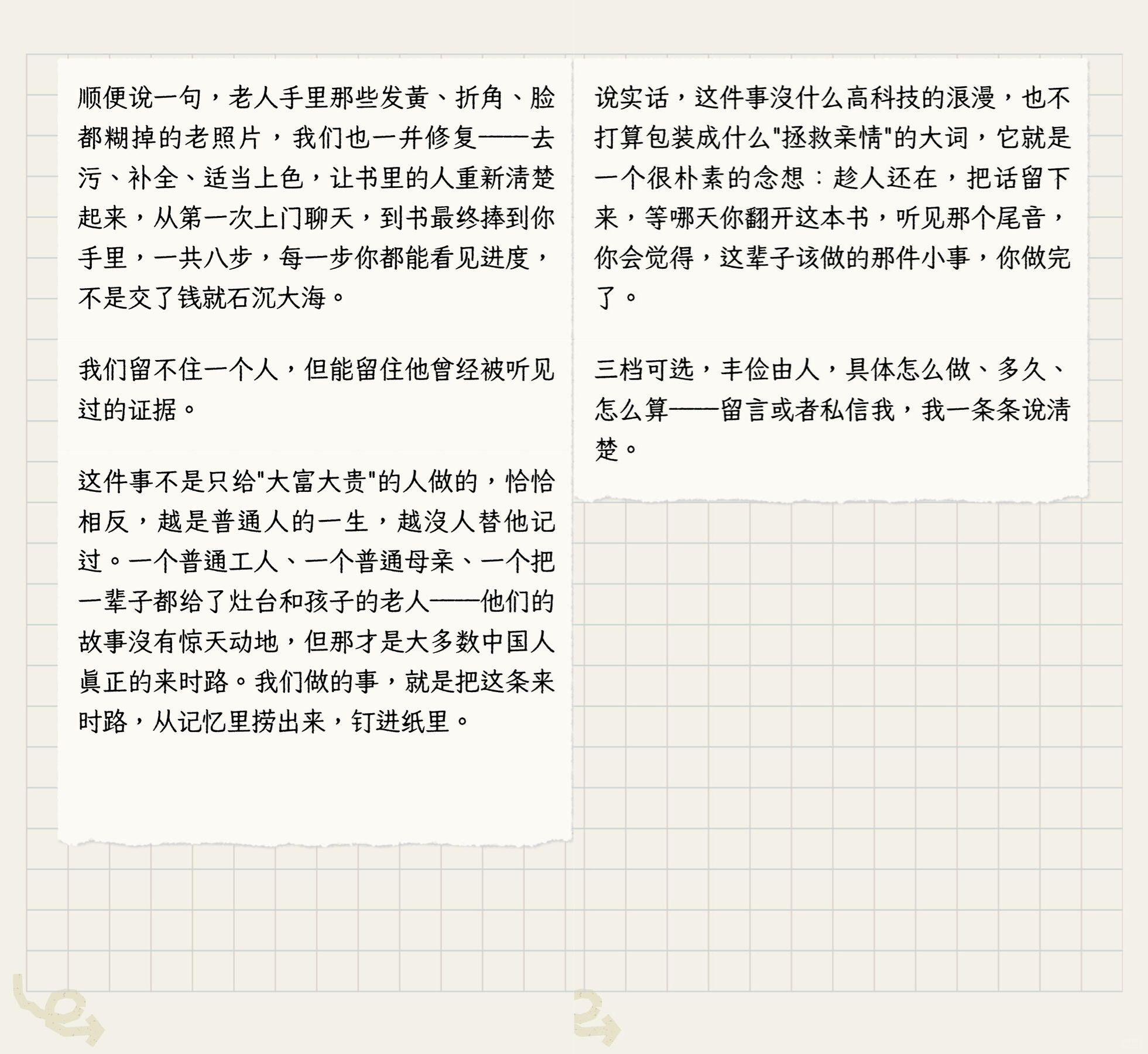
This isn’t just for the “rich and famous.” Quite the opposite: the more ordinary a person’s life, the less likely anyone has ever thought to record it. An ordinary worker, an ordinary mother, an older person who devoted their whole life to the kitchen and their children—their stories may not be earth-shattering, but they are the true path that most Chinese people have traveled. What we do is draw that path out of memory and set it down on paper.
Honestly, there’s nothing high-tech or romantic about this, and we have no intention of dressing it up with grand phrases like “saving family bonds.” It’s simply a heartfelt wish: while they’re still here, preserve their words. Then one day, when you open this book and hear the lilt of their voice, you’ll feel that you’ve done that small thing you needed to do in this life.
If you’re interested, leave a comment or send us a private message.