#fomc会议
Inflation has been above target for nearly six years. The Fed stood pat again this time, but futures have already priced in one rate hike in December and another next March 🦖
🕐 最新解读群里更新
On the afternoon of October 28, the Fed voted 10–2 to keep the federal funds rate at 3.75% to 4.00%. Governor Cook and Cleveland Fed President Hammack dissented, with both calling for an immediate 25-basis-point hike. There were three dissenting votes in July; this time, only two. Kashkari and Logan joined the majority. The September hike—the first since 2023—had passed unanimously, 12–0.
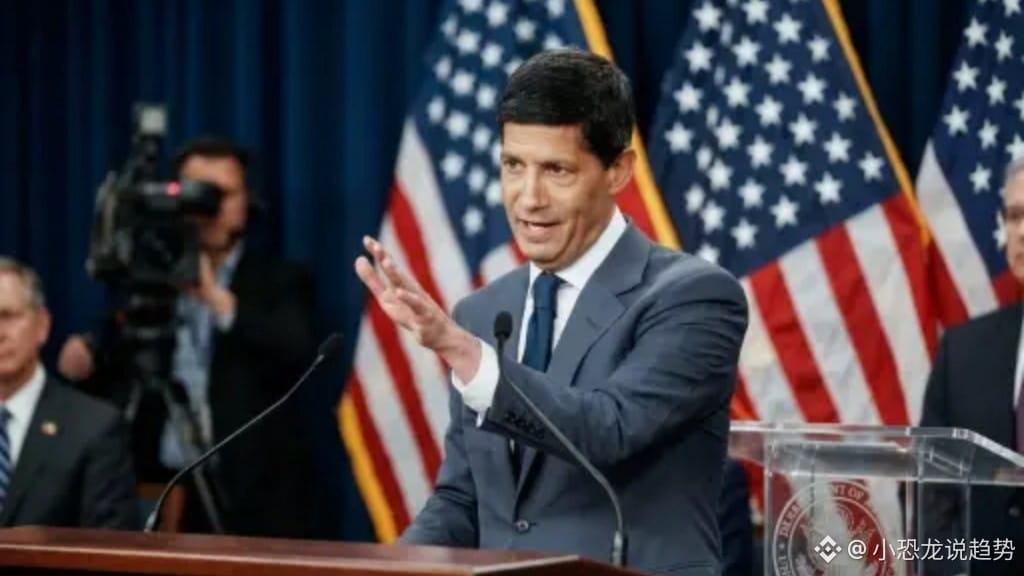
The vote count isn’t the main point. What matters is that when Warsh was asked at the press conference whether financial conditions were tight enough, he gave a pretty convoluted answer: “Although overall financial conditions have become tighter, I am neither willing nor able to characterize them as restrictive.”
Wall Street read this as meaning that tightening isn’t finished and there could be one more hike—or even two. BNY chief economist Reinhart interpreted it as Warsh laying the groundwork for further tightening while also drawing a line: there’s no need to tighten too much. TD Securities’ Muñoz put it more bluntly: he thinks the bar for the Fed to stop hiking is very high. Deutsche Bank’s Ryan said that Warsh didn’t say it outright, but had confirmed the path laid out in the September projections, which called for one more hike this year.
The data backing this view are strong. First-half GDP was revised up to 2.4%, the third-quarter growth tracker is above 3%, business investment is growing at a double-digit rate, and initial jobless claims are near historic lows. Meanwhile, inflation has been above 2% for nearly six years. September CPI was up 3.7% year over year, and gasoline prices jumped 9.1% in a single month. U.S. crude settled at $99.90 on Tuesday. The 10-year Treasury yield was at 4.99%, after touching 5.31% on October 5. The 2-year yield, by contrast, fell 4 basis points to 4.7%.
Before the decision, markets put the odds of a 25-basis-point hike at the December 8–9 meeting above 70%. Most officials also thought another hike would be needed before year-end, according to the September meeting minutes.
Bitcoin’s reaction was muted: it rose just 0.2% after the decision, to around $80,950. Several times this year, it has climbed into the $81,000–$82,500 range, only to be pushed back down 🏦
My take: the hike itself doesn’t matter much anymore—it’s already priced in, so an actual hike might not trigger a sell-off. Instead, no hike in December would be the fuse. That would be a dovish surprise and could give risk assets an initial boost, but it would make inflation expectations even harder to contain. The other scenario is two hikes, plain and simple. In that case, the pressure wouldn’t be at the short end but at the long end. With the 10-year yield near 5%, you can earn almost 5% risk-free. Something like Bitcoin, which generates no cash flow, has to compete with that for investors’ money first 💥
Do you think the December hike will happen, or will it get delayed again? Let’s talk in the comments.
Every day, I bring you the latest Fed and Bitcoin developments—not just what’s happening, but the logic and opportunities behind the headlines 👀🚀