


Source: Hua Li Hua Wai
A few days ago, someone left me a message asking: “Why don’t you usually talk about A-shares? Are you afraid to?”
I replied that it wasn’t that I was afraid; I simply don’t hold any stocks at the moment, so I don’t have much time or interest to research them. One person’s time and energy are limited. There’s no need to participate in every market, nor to expect to make money from every opportunity.
I mainly focus on and research the areas I invest in. That might be a more worthwhile use of my time. Besides, even if I went back and tried to study A-shares now, I doubt I’d be able to make much sense of them. Still, I do keep an eye on major stock market indices and government bond trends, since they’re also indicators of the broader economy.
Although the crypto market still has all kinds of problems, I continue to find it a fairly interesting market. And as crypto and traditional finance continue to converge, over the past few years I’ve increasingly followed areas such as U.S. stocks, Treasury bonds, the dollar, gold, and crude oil as well. You can see this in the past articles in the Huali Huawai series.
Every market is complicated in its own way. Although many people tend to focus on specific price movements, much of what we can actually do is keep observing, learning, thinking, and reflecting on our own decisions. It’s important to understand the limits of our abilities, rather than feeling compelled to jump into something just because it’s trending or has gone up. After all, there are plenty of opportunities in the market, but far fewer that are truly right for us and that we can effectively seize than we might imagine.
A few days ago, I saw a particularly telling comment in the messages section: “I missed the opportunity when Bitcoin was at $58,000, and now I’m sitting on the sidelines, feeling regretful and upset. I don’t dare buy altcoins, and Bitcoin at $80,000 seems too expensive, so I don’t want to buy it. Will Bitcoin crash again?”
All I can say is that even if a crash really does happen, you may still not buy and may end up missing out again. Asking this kind of question shows that you’re trapped in the prices of the past and can’t move on, and that you’ve lost the ability to assess the future. In other words, if you still don’t have a clear plan or strategy, then whether prices rise or fall, you’ll find another reason to miss out (by doubting and taking no action).
Still, it’s an interesting question. I imagine many people hope Bitcoin will crash, but no one knows whether the market will give us that opportunity.
Looking back briefly at history, if we start from the October 2025 high, Bitcoin fell 54% over the following 268 days, reaching around $57,700 on July 1. Since that July low, 119 days have passed, and Bitcoin has risen 38%. After the previous three bear-market bottoms, Bitcoin had risen by 37% (2015), 67% (2019), and 42% (2023) over the same time period.
The previous three bear markets also saw maximum declines of between 77% and 85%, and lasted 12 to 13 months. So it’s clear that if $57,700 in July was the low of this cycle, then this bear market’s decline has been considerably smaller, and its duration shorter.
In other words, although market cycles still follow certain patterns, history tends to rhyme rather than repeat exactly. We’re in the middle of a cycle, and no one can be 100% sure exactly which stage we’re in. So instead of trying to pinpoint the so-called cyclical bottom or top, it’s better to take a longer-term perspective. Over a longer time frame, although we still can’t know for certain which stage we’re in, we’re likely once again at the beginning of a new one.
Before we know it, October has only one week left. This week is packed with macroeconomic events, including Wednesday’s Fed rate decision; Thursday’s U.S. third-quarter GDP and September PCE data; Friday’s expiration of monthly Bitcoin options with a notional value of around $12.3 billion (with max pain at about $79,000); and earnings reports from major companies, including Coinbase and Strategy. All of that is followed by the U.S. midterm elections next Tuesday, and more. Bitcoin is once again at a critical juncture and is currently struggling to stay above $79,000 (the weekly EMA55). If this week’s closing price falls below that level, short-term volatility could increase further, and we might even see a repeat of something like the 2019 price action.
Looking further back, in May 2019, Bitcoin’s weekly closing price moved back above the EMA55, at around $5,400, and by late June that year had briefly risen to around $13,880. But in December, Bitcoin fell back below the EMA55, then around $7,800. The outbreak of COVID-19, a black swan event, followed, and by March 2020 Bitcoin had fallen 64% from its previous high to around $3,850, as shown in the chart below. Yet just a year later, in April 2021, Bitcoin surged to $63,000.
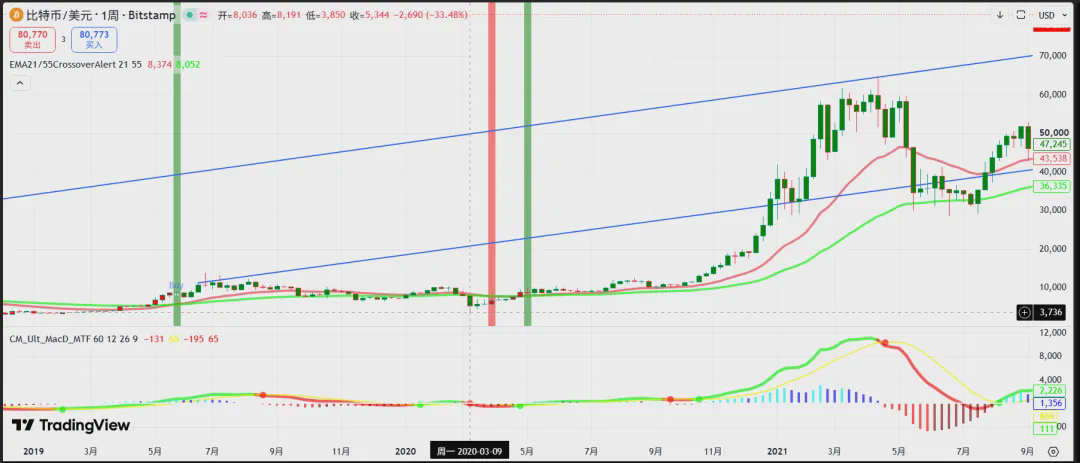
Of course, as I said above, history never repeats itself exactly. And with more institutions and spot ETF funds now participating, the market structure has changed significantly. What we’ve discussed above is just one possibility, and its probability may be only 10%–15%. So, in terms of actual trading, as we’ve shared in previous Huali Huawai articles (for example, the review published on September 24), we’ll continue to stick to our trading plans and discipline, while always keeping a portion of our funds in reserve to prepare for possible black swan events.
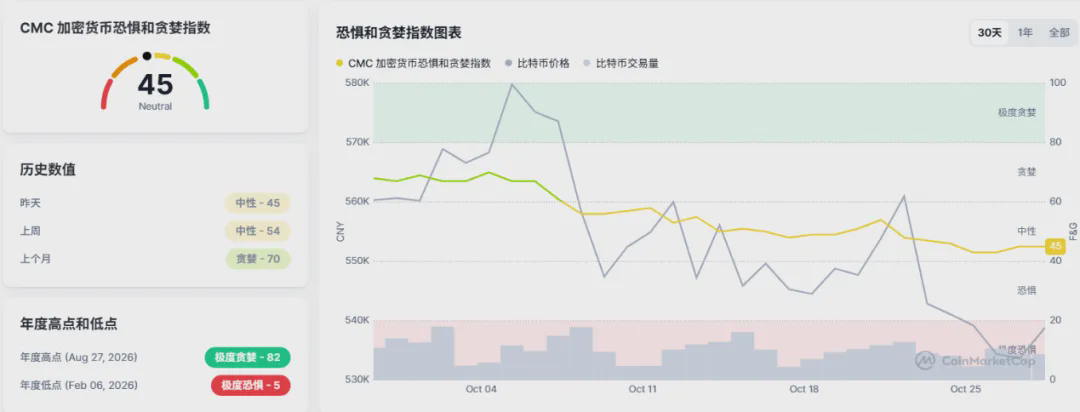
Bitcoin is currently struggling to stay above $79,000 (at the time of writing, it is priced at $80,700). Market sentiment has also shifted from greed to neutral, with the FGI at 45, as shown in the chart below.
However, some institutions are continuing to accumulate Bitcoin. For example, Strive bought another 6,182 BTC for $511.4 million (at an average cost of $82,732 per bitcoin), bringing its total holdings to around 43,000 BTC, as shown in the chart below. In other words, the company chose to keep buying Bitcoin while its price remained around $80,000—a striking contrast with retail investors’ panic and wait-and-see attitude.
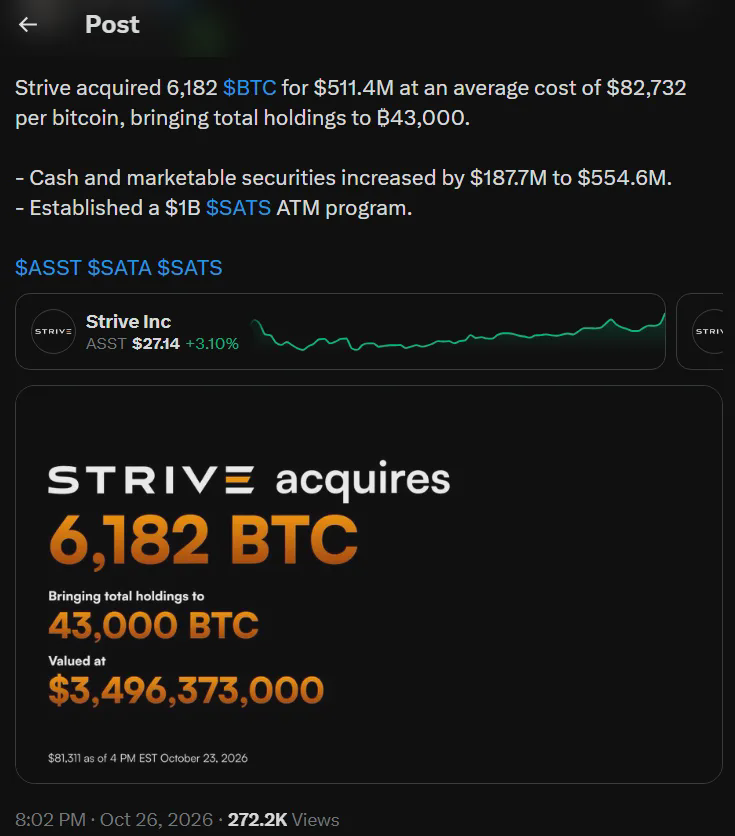
Of course, institutions’ continued buying doesn’t mean Bitcoin won’t fall in the future. It simply shows that, at current price levels, some institutions are still willing to invest more money in Bitcoin, suggesting they may place greater emphasis on its long-term value.
For retail investors like us, the same old advice from previous articles still applies: whatever stage of the market we’re in, the most rational approach is certainly not to try to predict the market—especially its short-term lows or highs—but to prepare accordingly based on our individual risk tolerance and position sizes. In other words, what would you do if the market closed below $79,000 this week? What would you do if this week’s closing price rebounded to $84,000? And if you still don’t have a clear plan, then in the face of this new short-term uncertainty, the best thing may be to do nothing for now. What you may need is to keep waiting calmly and prioritize putting a clear plan in place, rather than trading frequently out of anxiety.
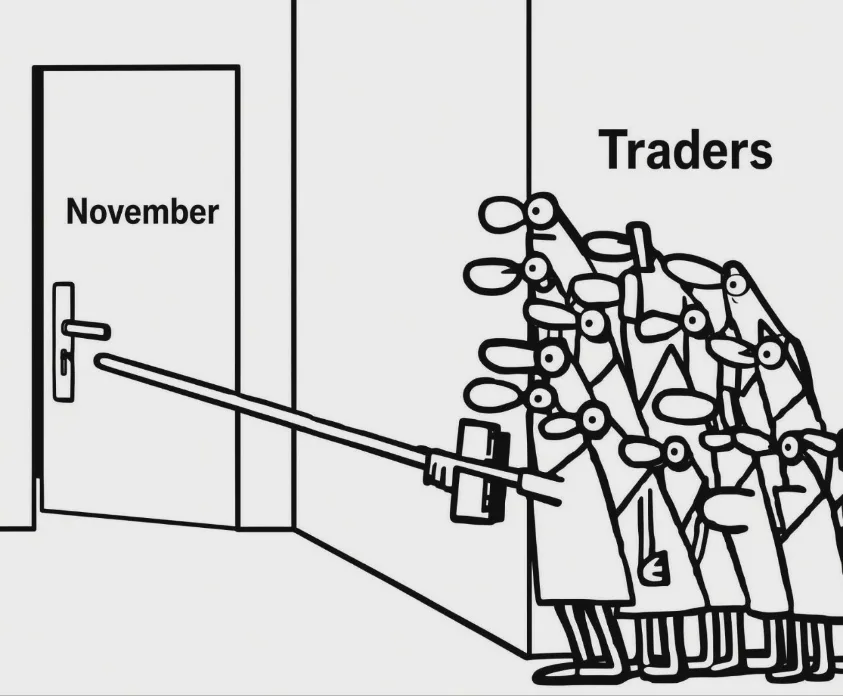
Put simply, sometimes it’s easy to figure things out once you calm down and think them through. If the bad thing you’re worried about never happens, then your current anxiety and distress will have been pointless. And if it does happen, you’ll still have to face it then. So there’s no need to give in to anxiety and panic now. In other words, if the bad thing doesn’t happen, choosing to suffer now is pointless; if it does happen, you’ll have to deal with it then anyway. There’s no reason to pay this double psychological cost for the same thing. At a time like this, just prepare—or do nothing—and give yourself some peace and rest.
A few days ago, many media outlets and independent content creators reported on J.P. Morgan’s first ten-year Bitcoin forecast. The headlines focused on its projected 10% annualized compound return for Bitcoin, and its prediction that Bitcoin could outperform U.S. stocks and gold over the next decade, reaching a price of $215,000. But J.P. Morgan’s forecast also noted that, in a bearish scenario, Bitcoin’s annual return could be negative 11.2%, which would put its price at around $25,000.
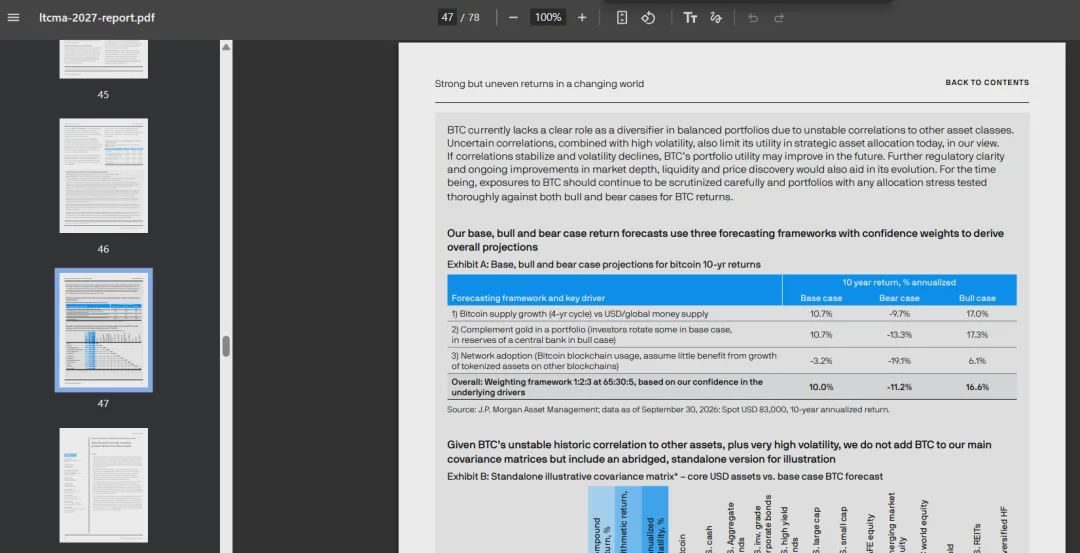
So, every market outcome is a matter of probability. There are no predictions or answers that are 100% accurate—not from prestigious institutions, and not from KOLs who claim they can predict prices precisely. What we need to do is allocate different portions of our portfolios according to the probabilities we believe in. Along with preparing Plan A, we should also think ahead about Plan B. Ultimately, what matters more than predicting prices or worrying about whether Bitcoin will crash again is not seeking or obsessing over whether a particular outcome will happen, but asking ourselves: if it does happen, can we still follow our existing plan? Will we still have the funds to stick with it?
That’s all for this issue (20261028). The above content reflects my personal views and analysis and is intended solely for reflection and discussion. It does not constitute investment advice.