Robinhood CEO: U.S. tokenization rules remain unclear, making it difficult for large assets to enter the tokenized market
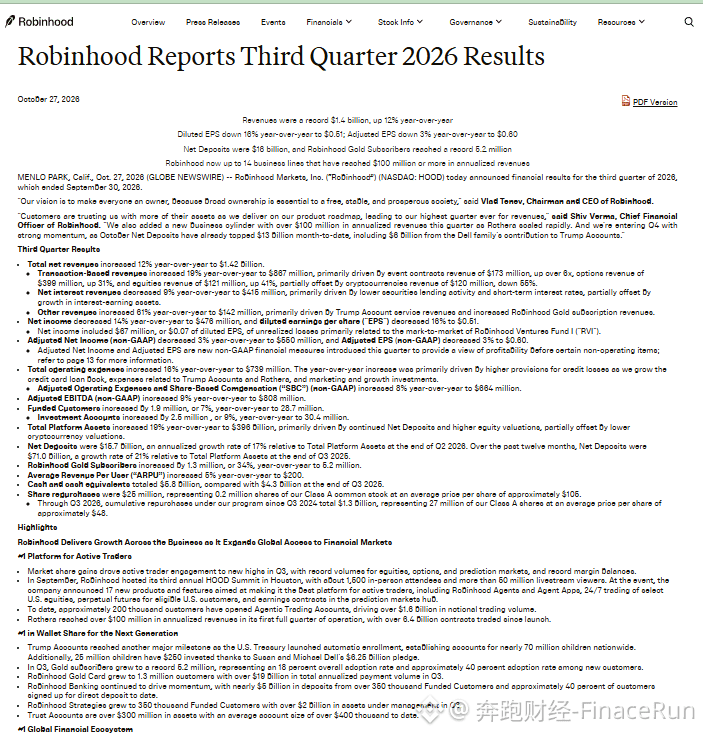
Oct. 28 — Robinhood CEO Vlad Tenevm said bluntly on Tuesday’s third-quarter earnings call that it remains uncertain whether U.S. tokenization regulations will endure over the long term, directly discouraging investors from putting large amounts of assets into the tokenized market.
He described the five-year innovation exemption granted by the SEC in September as “a very positive step,” but said further rulemaking or legislation is still needed to provide genuine, long-term regulatory certainty.
Tenev said conversations with customers had revealed that uncertainty about “where the rules will stand five years from now” could become the biggest psychological barrier to allocating large amounts of assets.
Traditional issuers are mounting a united pushback against stock tokenization. Sixteen companies, including Microsoft, Alphabet and Goldman Sachs, have publicly opposed tokenized versions of their shares being listed on the OKXICE platform. AMC CEO Adam Aron has also criticized Robinhood’s stock-tokenization product.
Robinhood Chain currently has about 200 stock tokens live. Although backed by underlying shares, these tokens provide only economic exposure and do not carry the dividends or voting rights of traditional stocks, meaning they do not meet the compliance requirements of the SEC’s innovation exemption.
However, despite the compliance challenges, Binance Research’s base-case forecast suggests the tokenized stock market could reach $349 billion by 2030, up from just $4.43 billion as of September 15, leaving considerable room for growth.
Notably, tokenized shares of private companies are expected to launch overseas first. To offer related services in the United States, firms would need to comply with accredited-investor restrictions and follow the applicable compliance pathways.
#股票代币