


The cryptocurrency market has remained volatile recently, with Bitcoin ($BTC) falling below $80,000 several times and sparking heated debate among traders about the industry's outlook. According to CoinGecko data, Bitcoin is trading at around $80,562, up 0.8% over the past 24 hours but still down 2.8% over the past seven days. As the artificial intelligence (AI) industry continues to attract capital, cryptocurrency's growth prospects are also coming under scrutiny. Some traders believe that weakening speculative demand reflects the industry's gradual loss of appeal, while others argue that blockchain is steadily building mature business models and that future growth will depend on financial infrastructure and real-world applications.
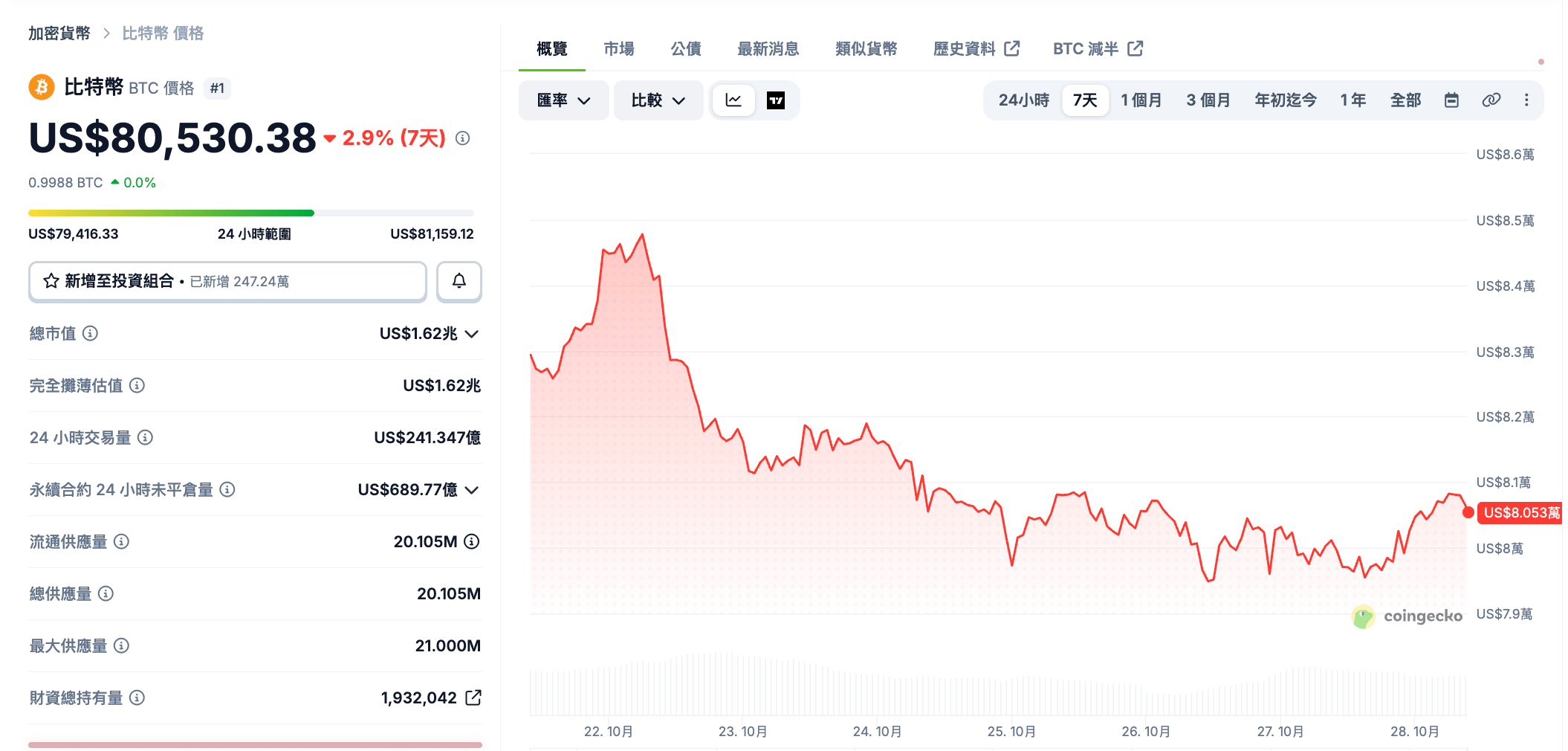 Image source: CoinGecko. Bitcoin is priced at about $80,562, up 0.8% over the past 24 hours but still down 2.8% over the past seven days.
Bitcoin Hovers Around $80,000 as Market Interest Continues to Cool
According to CoinGecko data, Bitcoin traded between $79,416 and $81,159 over the past 24 hours, with a total market capitalization of about $1.62 trillion. Although other major cryptocurrencies posted modest rebounds, Ether ($ETH) and Solana ($SOL) are still down 4.2% and 4.9%, respectively, over the past seven days.
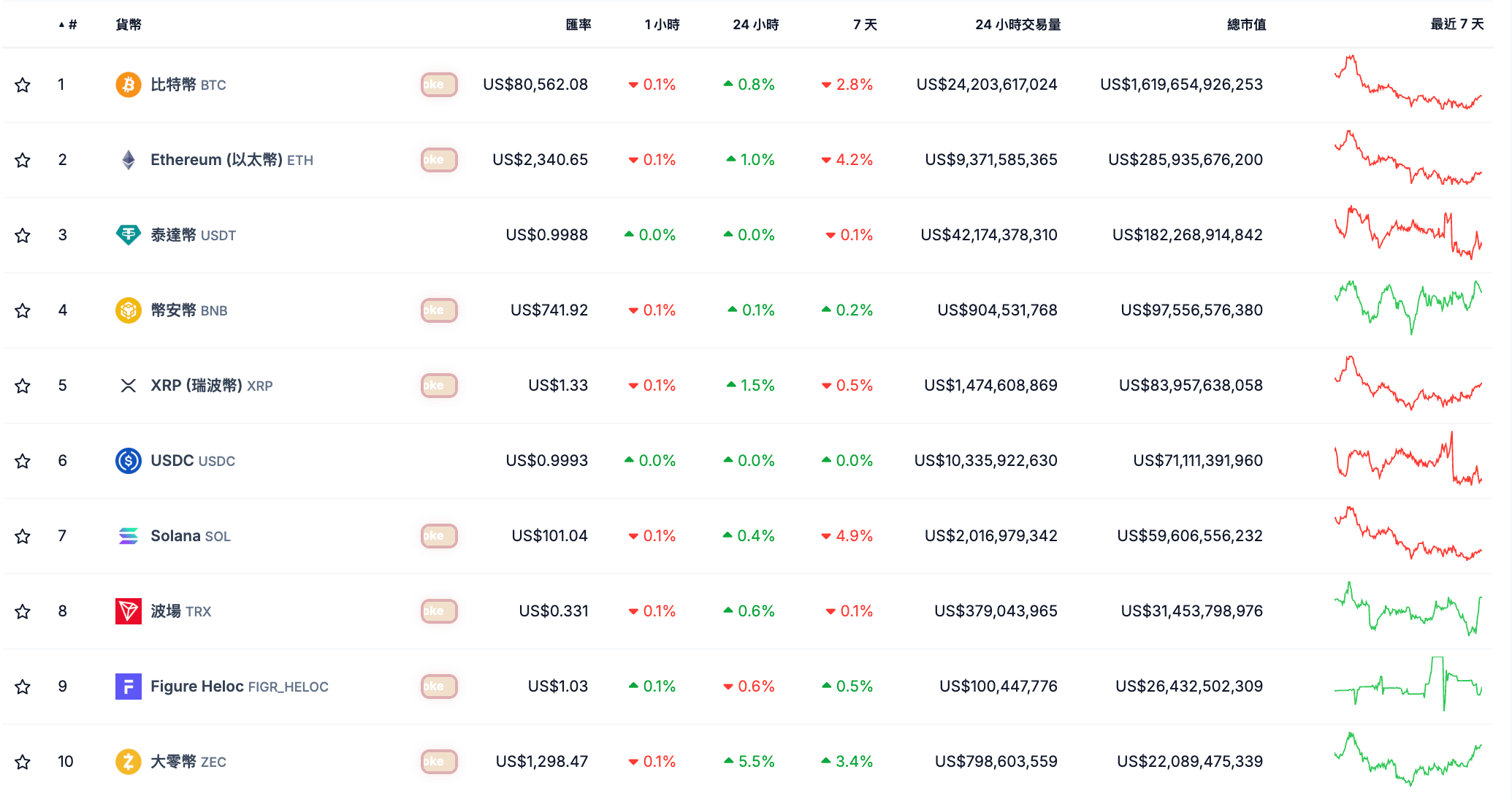 Image source: CoinGecko. Ether ($ETH) and Solana ($SOL) are still down 4.2% and 4.9%, respectively, over the past seven days.
In the derivatives market, CoinGlass data shows that about 59,948 traders were liquidated over the past 24 hours, with total liquidations reaching $147 million. Short positions accounted for 66.7% of liquidations, reflecting how the short-term price rebound also caused leveraged traders betting on a decline to incur losses.
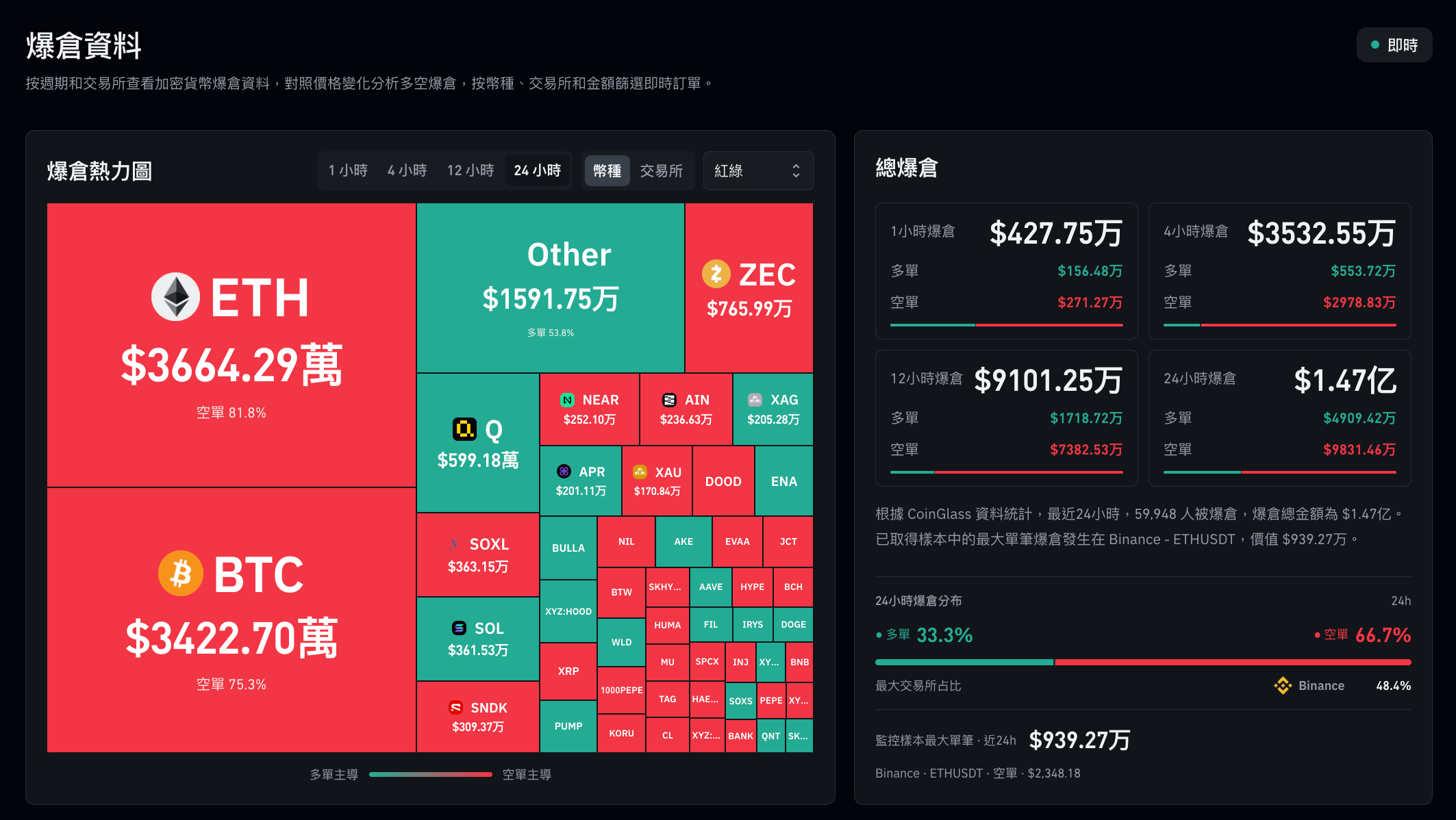 Image source: CoinGlass. About 59,948 traders were liquidated over the past 24 hours, with total liquidations reaching $147 million.
There are also signs that retail interest is cooling. According to Google Trends data, from October 18 to 24, global search interest for “Bitcoin” reportedly fell to a relative index of 20. However, search interest is a normalized relative indicator and cannot directly reflect the number of investors or the actual scale of blockchain adoption.
Skeptics Question the Speculative Model, Saying the Crypto Industry Has Lost Its Growth Momentum
According to (Crypto News), trader Rex posted on social media platform X, bluntly stating that the cryptocurrency industry is essentially coming to an end, sparking discussion among market participants.
Rex did not provide specific financial or adoption data to support this assessment, but his remarks reflect the pessimism some traders feel about the industry’s prospects.
Market commentator The Hunter also criticized cryptocurrencies for failing to deliver on the vision of financial freedom championed in their early days. He argued that the industry has long relied on speculative trading, with some participants’ profits built on other investors buying assets at inflated prices.
Venture capitalist Jason Calacanis questioned Bitcoin from the perspective of capital allocation. He argued that Bitcoin lacks the utility needed to support long-term growth and predicted that its price could retest $57,000 over the next 12 months.
Calacanis argued that investors should direct more resources toward technologies such as artificial superintelligence. His argument focuses on the ability of different industries to create economic value, and he sees AI as potentially offering more attractive investment opportunities.
However, these comments primarily reflect the individual assessments of market participants. Short-term price movements and changes in investment interest are not enough to prove that cryptocurrency companies have broadly lost their business competitiveness.
Optimists See Promise in Blockchain Commercialization, with Corporate Revenue a Key Measure
In response to claims that the cryptocurrency industry is coming to an end, trader Mert pushed back, arguing that the industry is only just beginning to develop and that the current market downturn does not mean its long-term growth opportunities have disappeared.
Market commentator Gum offered a more specific argument focused on business models. He believes blockchain is gradually building infrastructure that businesses can use in their operations, and that investors will need to pay closer attention to companies’ financial performance, actual customers, and revenue growth.
This contrasts with the skeptics’ view. Rex and The Hunter question whether speculative activity can support the industry over the long term, while Gum believes the development of financial services and blockchain infrastructure could reduce the industry’s reliance on market hype.
Bitwise Chief Investment Officer Matt Hougan also offered a different long-term perspective. He believes that if AI significantly boosts global productivity, scarce assets such as Bitcoin could benefit. However, if the AI investment boom triggers a correction in financial markets, Bitcoin could also fall in the short term alongside other risk assets.
Whereas skeptics focus on structural problems in today’s speculative market, optimists are more concerned with whether blockchain can generate sustainable commercial demand. These arguments still need to be tested against data on corporate revenue, user adoption, and actual capital investment.
AI Capital Competition Intensifies, with ETFs and Fed Decisions in Focus
Alongside differing assessments of the industry’s value, the continued expansion of AI companies is prompting investors to reassess the appeal of cryptocurrencies as an investment for capital.
According to (CoinDesk), capital expenditures, corporate financing, and IPO plans in the AI industry have been drawing continued attention. Some market participants believe this could lead investors to reduce their allocations to high-risk crypto assets, but there is not yet enough evidence to show that capital has shifted directly from crypto markets to AI on a large scale.
As for institutional flows, Farside Investors data shows that U.S. spot Bitcoin ETFs recorded net inflows of about $110 million on October 26, all of which went to BlackRock’s IBIT. Partial fund data reported for October 27 shows net inflows of about $24.5 million, though the complete figures have yet to be confirmed.
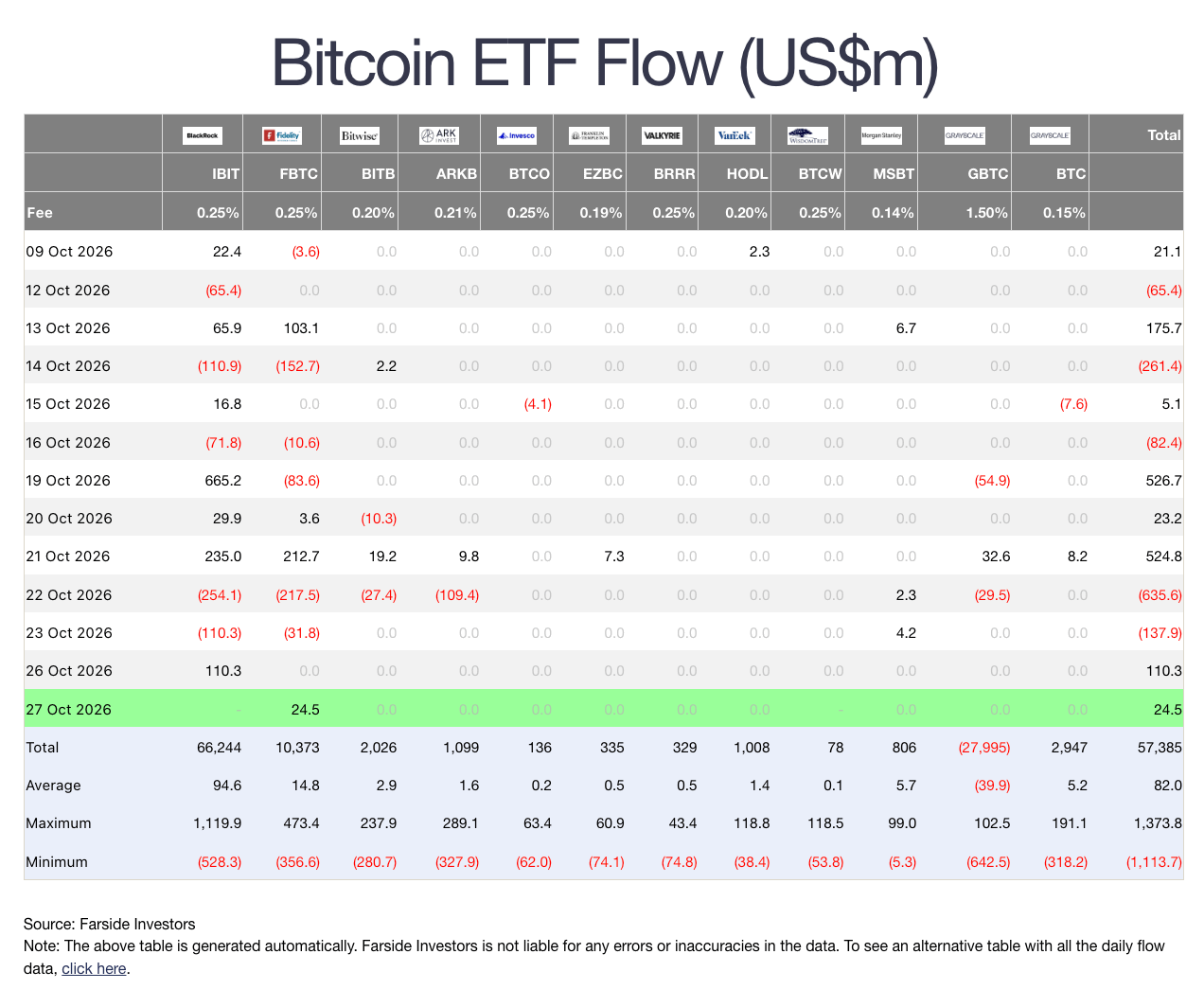 Image source: Farside Investors. U.S. spot Bitcoin ETFs recorded net inflows of about $110 million on October 26, all of which went to BlackRock’s IBIT.
Bitfinex also noted that approximately 874,000 bitcoins have an on-chain cost basis in the $81,000 to $82,500 range. If the price rises back into this range, some investors may choose to sell near their break-even price, creating potential selling pressure.
On the macroeconomic front, according to CME FedWatch Tools, the market expects a 92.8% chance that the Federal Reserve (Fed) will keep its current interest rate range of 3.75% to 4.00% unchanged on October 28.
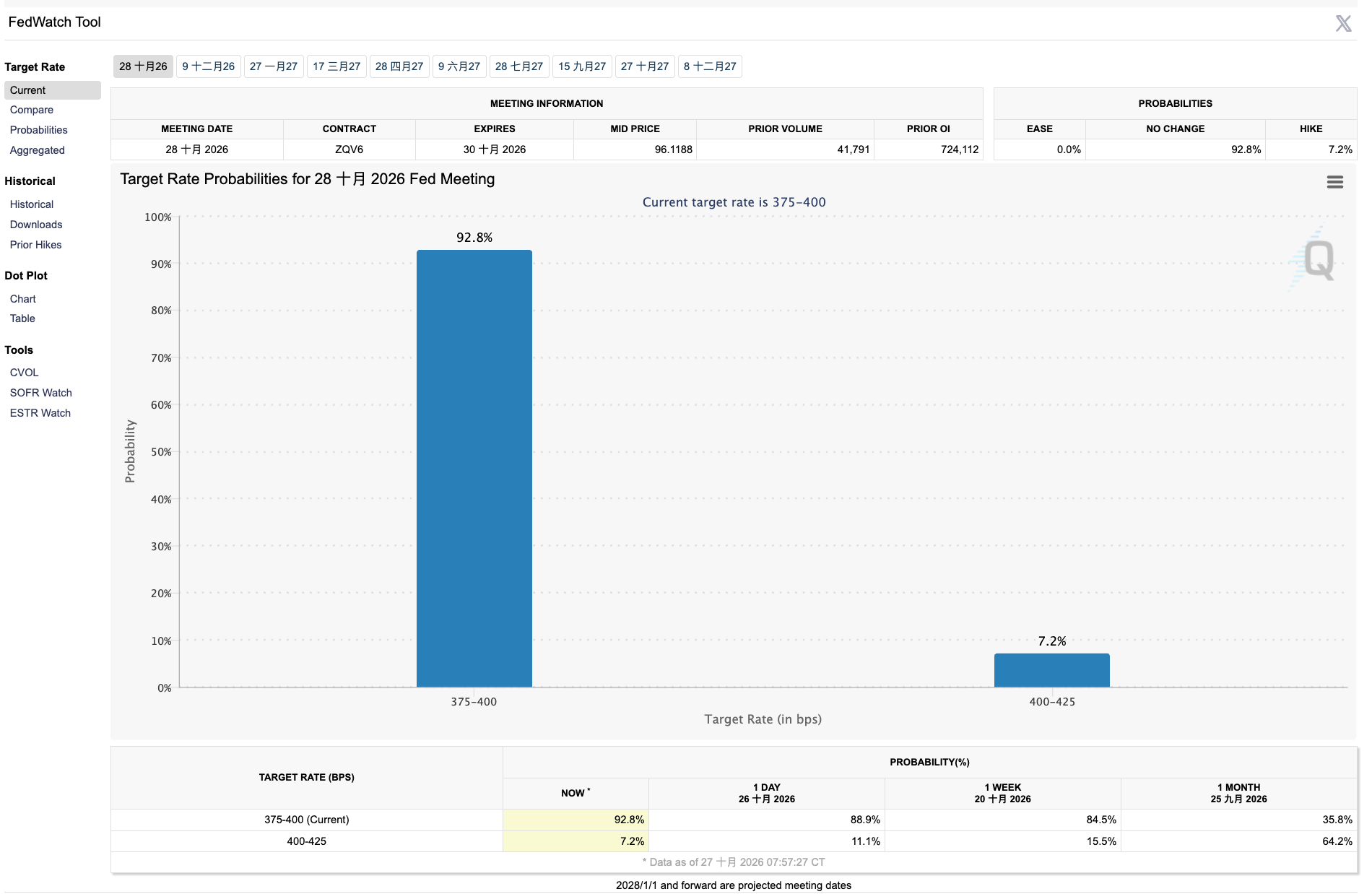 Image source: CME FedWatch Tool. The market expects a 92.8% chance that the Federal Reserve (Fed) will keep its current interest rate range of 3.75% to 4.00% unchanged on October 28.
Short-term market movements remain influenced by ETF flows and the Fed’s monetary policy. Whether cryptocurrencies can once again attract long-term capital will depend on the industry’s real-world commercial applications and companies’ operating results, which will be important indicators to watch.
This article, “Bitcoin Falls Below $80,000! Debate Erupts Over the Industry’s Survival: Is the Speculative Model Dying Out in Favor of Sustainable Commercialization?” was first published by “Crypto City.”