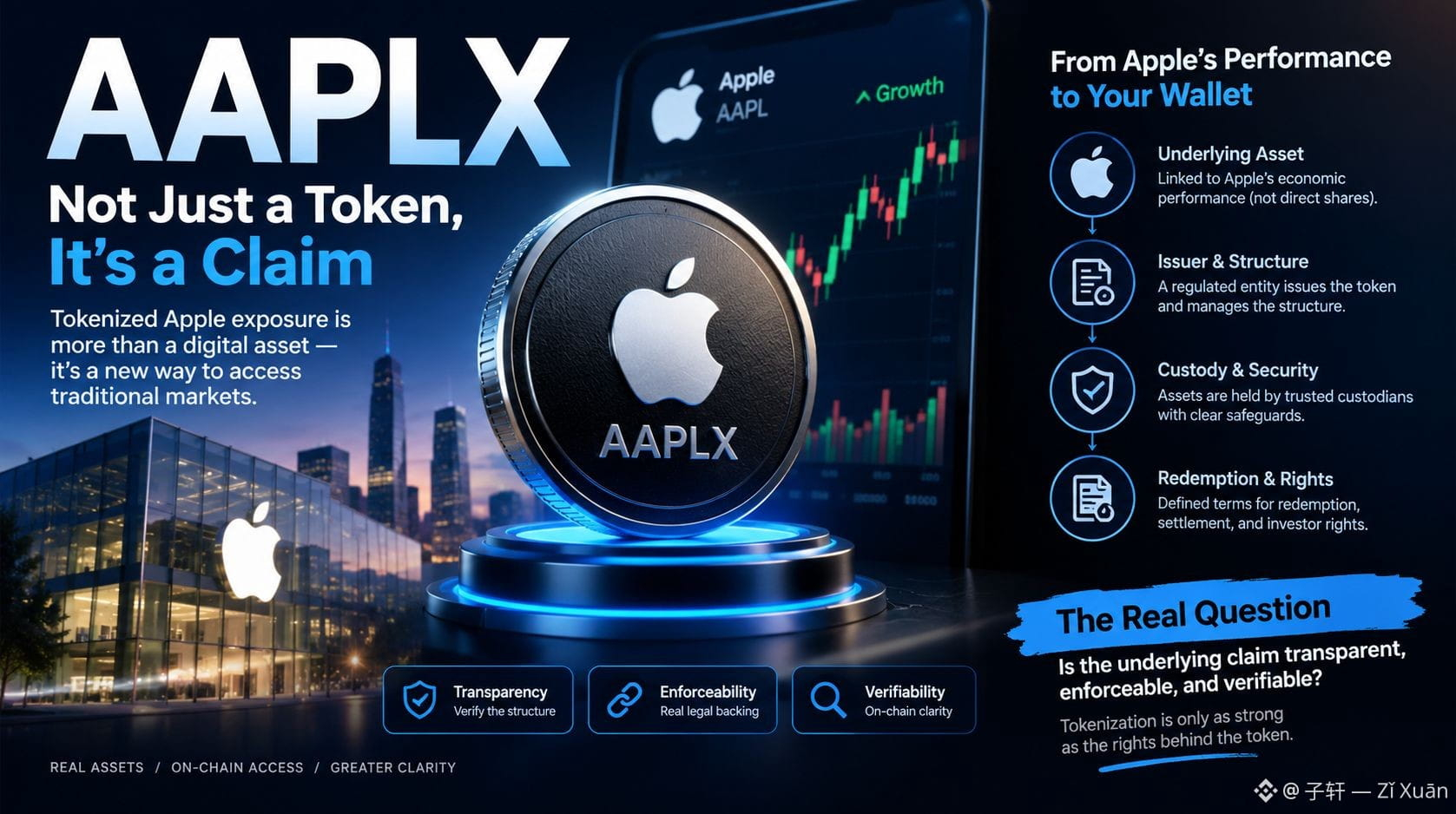

The more I look at $AAPL X, the more I think the important question is not simply how technology brings traditional assets on-chain, but what investors can actually verify once those assets enter a digital market.
Think of it like owning a digital claim to a company’s shares. The interface may look familiar, and the token may trade like an asset, but the real value depends on what stands behind that claim. Who issues it? What rights does it provide? How is ownership recorded, and what happens when redemption or settlement becomes necessary?
This is where tokenized assets need more than a blockchain address. They need a reliable connection between the digital token, the underlying financial exposure, and the legal framework governing it.
AAPLX brings this discussion into focus through the idea of tokenized Apple-linked exposure. However, investors should distinguish between holding actual Apple shares and holding a token designed to track their economic performance. The structure, issuer, custody arrangements, and redemption terms matter.
My takeaway is simple: putting an asset on-chain does not automatically make ownership clearer or safer. The market often focuses on accessibility and liquidity, while the deeper question is whether the underlying claim is transparent, enforceable, and verifiable. **Tokenization is only as strong as the rights behind the token.#SouthKoreaConsidersEducationTaxOnCryptoExchanges #ThailandLaunchesWORPTStablecoinToQRPaymentApp #CanGoogleDefindItsCore $AAPL