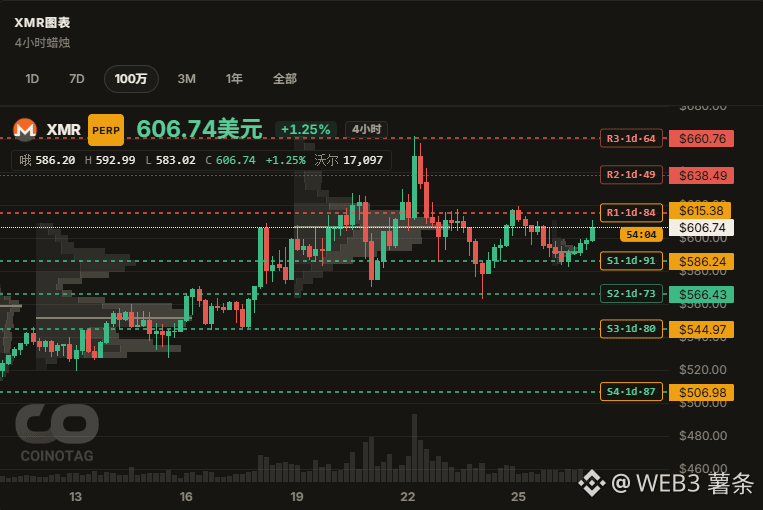
Monero was trading at around $608 on Tuesday, up 3.1% over the past 24 hours and 72.7% over the past year. However, it remains about 24% below its all-time high of $798, set in January this year.
Notably, Monero’s network hash rate is also growing rapidly. Data shows that the network’s hash rate was around 7.06 GH/s on Tuesday, reaching 93.6% of its all-time high of 7.54 GH/s, set on January 16. The hash rate rose 12.93% over the past 30 days and 31.31% over the past 90 days, indicating a marked recent increase in mining activity.
Put simply, hash rate refers to the computing power miners contribute to mining. The higher the hash rate, the harder it is for attackers to tamper with blockchain data, which in turn strengthens network security.
Rising prices alongside a higher hash rate suggest strong miner participation and that mining may still be attractive. However, price and hash rate do not always move in tandem. If the coin’s price falls or mining costs become too high, miners may also shut down their equipment.