Tesla TSLA: You’re not buying a car—you’re buying into a future it has yet to deliver
First, a look at the market (the latest closing price, from Friday, October 23, before the U.S. market opens tonight, Beijing time):
TSLA closed at $372.22, down $2.36 (-0.63%), versus a previous close of $374.58. Its 52-week range is $297.38–$498.83, putting the current price about 25% below its high. Its market cap is roughly $1.48 trillion. The stock is up 4.93% over the past five days, but remains down 17.23% year to date, making it the weakest of the Magnificent Seven this year—the car business is doing so-so, while the story keeps getting bigger.
The earnings report poured some cold water on the story: third-quarter net income was $787 million, down 43% year over year; revenue was $28.05 billion, essentially flat; operating income fell 56% to $718 million; and deliveries declined about 2%. Meanwhile, R&D spending rose 69% to $2.76 billion, and capital expenditure more than doubled to $4.73 billion. Where is all that money going? Two places: Optimus and Cybercab.
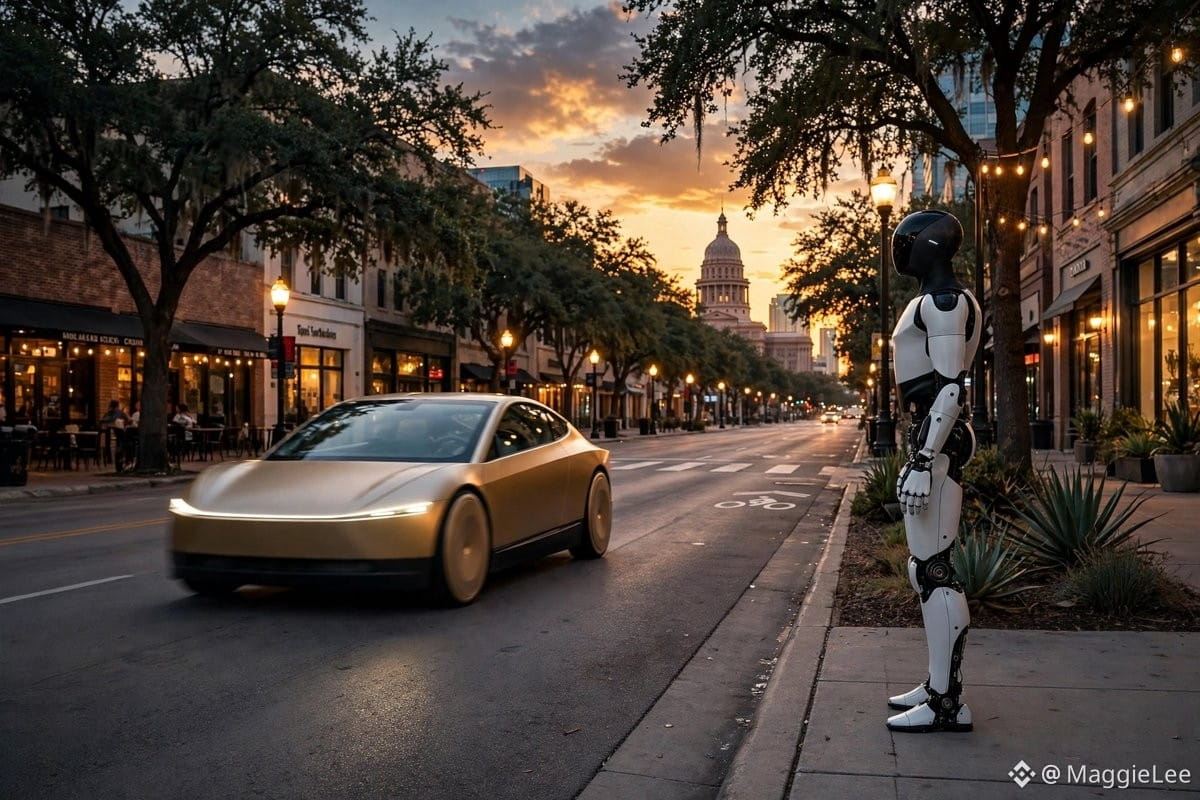
That’s the real focus of this piece. On the October 21 earnings call, Tesla confirmed that production of its first production-grade Optimus robots has begun at the Fremont factory, with external deliveries expected by the end of 2027. Musk also set a target of producing 20,000 units a week by the end of 2027—even if you discount that target, the direction has changed: from “selling cars” to “selling robot capacity.” Meanwhile, Cybercab sales to customers are set to begin by the end of 2026, starting in small volumes, with initial production going to Tesla’s own fleet. The Austin fleet has already grown eightfold in the 30 days since launch. The unsupervised version of FSD is scheduled to roll out in the second quarter of next year.
That’s why the disagreement is so stark: on October 19, ARK updated its model, giving a 2031 base-case price of $4,400 (with a bear case of $3,300 and a bull case of $5,000), with Robotaxi accounting for about 80% of enterprise value. By contrast, Seeking Alpha’s sum-of-the-parts valuation on October 26 put the stock at just $375—$285 for automotive and energy, and $90 for the AI bet—concluding that it was “fairly valued, with little upside.” On October 22, BofA reiterated its Buy rating and $460 price target. One stock, three different worldviews.
A technical level to watch: the current price is above the 50-day moving average of $364.01. In the short term, this is the line separating bulls from bears—if it doesn’t hold, the 4.93% gain over the past five days could evaporate quickly.
Let’s be clear about the risks: First, NHTSA is investigating Cybercab’s certification process. A car with no steering wheel or pedals doesn’t fit current federal standards, and the investigation’s outcome will determine whether it can legally be sold and driven on public roads. Second, ramping up Optimus production and achieving acceptable yields in hand assembly will be difficult; deliveries by the end of 2027 could still be delayed. Third, the unsupervised version of FSD has been postponed multiple times. Fourth, the valuation is still based on the future, and the stock is far more volatile than the broader market—especially around earnings, when its moves can be dramatic.
My take: TSLA is now a “future option”—the car business provides a floor, while Robotaxi and Optimus determine the ceiling. Buying at the current price means assuming that at least part of ARK’s worldview will come true; for those who don’t buy into that thesis, a fair valuation around $375 is the ceiling. It’s safer to watch and build a position in stages, adding after Cybercab deliveries begin at year-end and unsupervised FSD is rolled out, rather than going all in now.
$TSLA #特斯拉 #Robotaxi #人形机器人 #USStocks
Personal research only; not investment advice.