



Have you noticed? The new wealthy elite of this era, like Liang Wenfeng and Jeff Yan, have become multi-billionaires in their early 30s!
Many people born in the ’80s say it’s because money is easier to make this time around, thanks to the booms in AI and the internet.
Actually, to be more precise, they all have one thing in common: the ability and mindset for algorithmic trading!

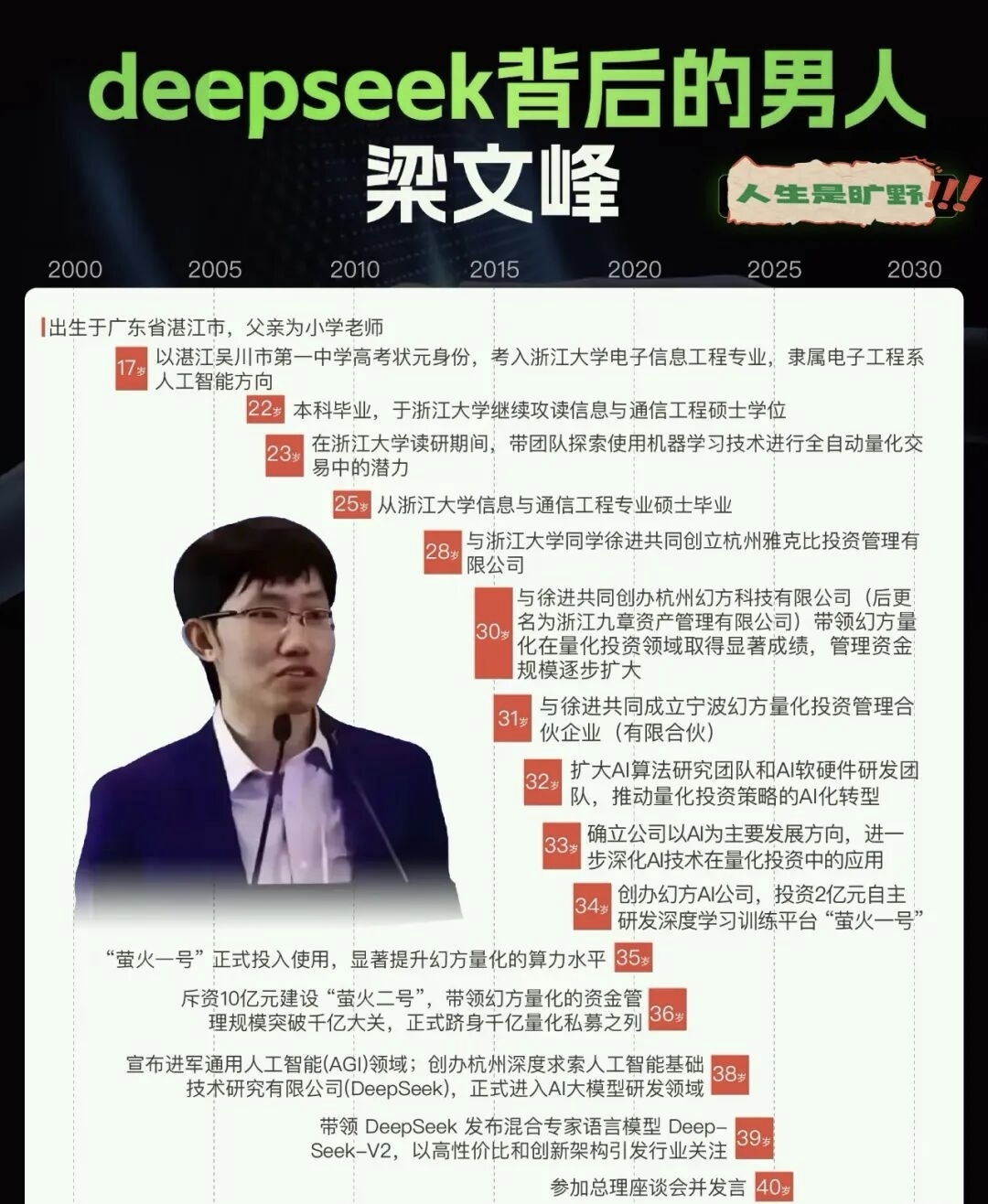
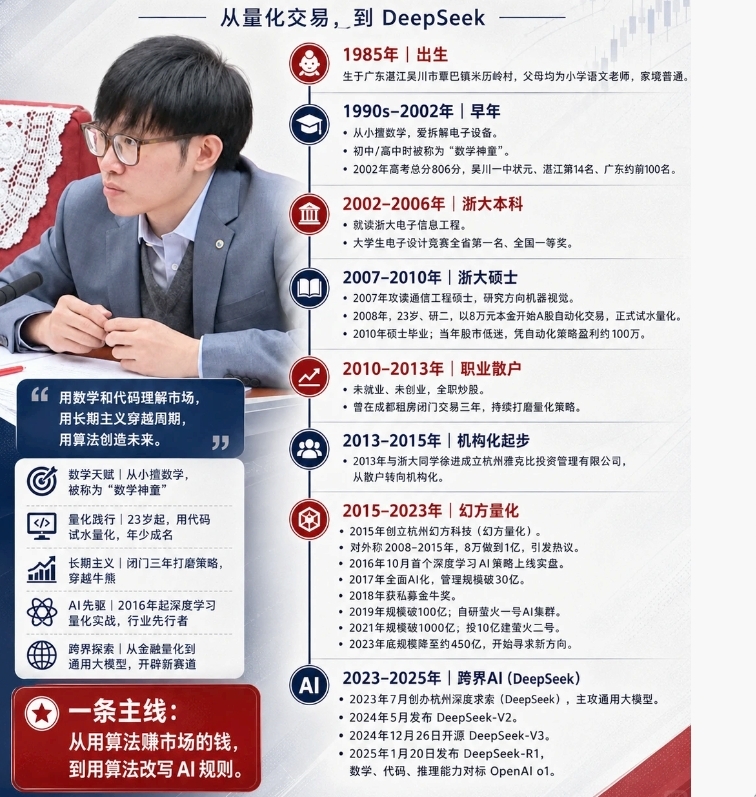
For example, before starting DeepSeek, Liang Wenfeng spent eight years in quantitative trading.
Before founding Hyperliquid, Jeff Yan worked at HRT on algorithmic trading in U.S. stocks.
At first glance, these fields seem completely unrelated. But when you break down how these people think, you’ll find that quantitative trading gave them four skills that are hard to develop in an ordinary job.
First: Use a system to execute a strategy, not your “gut feeling”
Liang Wenfeng once said: “Quantitative trading isn’t gambling; it’s using probability to overcome human nature.”
And here’s an even stronger one: “Turn human greed and fear into inputs and outputs for an algorithm.”
A quant trader’s daily routine isn’t “I think it’s going up.” It’s asking: How often has this signal appeared historically? What’s the win rate? What’s the risk-reward ratio?
What’s the maximum drawdown? Write the rules first, then execute. Build the system first, then place your bets.
After leaving HRT, Jeff Yan went to Puerto Rico, started with $10,000, and worked 14 hours a day. Beginning with Python scripts, he built a program that traded automatically around the clock.
He didn’t turn things around by relying on a “feel” for watching the markets. He did it with a system that could run again and again.
Second: Take emotions out of decision-making
One particularly apt description of Liang Wenfeng’s mindset is: “Exceptionally objective and rational; emotion-free trading.
He almost entirely set subjective feelings aside, using data and models to make judgments amid market swings and public clamor.”
幻方 has also experienced steep monthly drawdowns, but he accepted losses as “inevitable in a probabilistic world.” The priority was controlling maximum drawdown—not scrapping the entire framework because of a short-term collapse in performance.
When ordinary people lose money, their first reaction is, “I need to win it back.” A quant’s first reaction is: Has the signal stopped working, or is the system operating within its normal tolerance?
Keeping emotions out of the decision-making loop becomes second nature.
Third: Connect the dots—the underlying skills can transfer to a different arena
Liang Wenfeng took the skills he developed at 幻方 to DeepSeek: the engineering expertise to build supercomputing clusters from scratch, the modeling intuition to use machine learning on massive datasets, and an uncompromising focus on compute utilization.
He called it “transferring quantitative engineering capabilities to large language model training.”
The same goes for Jeff Yan. His algorithmic trading training at HRT gave him an almost instinctive understanding of market microstructure. Later, when he built Hyperliquid’s perpetual futures and on-chain matching systems, the underlying skill was the same: designing a system of rules that can operate reliably in a highly uncertain environment.
Fourth: Set clear boundaries—knowing what not to do matters more than knowing what to do
People with a quantitative background have an almost obsessive respect for “boundaries.”
A CQF charterholder and head of quantitative business at Sinolink Securities once put it well: “What truly matters is always being able to understand the market, manage risk, and clearly recognize the limits of your model.”
The core of quantitative thinking isn’t “being able to do everything.” It’s drawing a boundary first: take risks within it, and stay away from everything outside it.
The clearer the boundaries, the less likely the system is to break down.
The lesson ordinary people should take away isn’t that they should become quant traders. The barrier to entry is extremely high, and the vast majority of people can’t pursue this path.
But you can bring these four things into your own life:
Write the rules before making a decision, instead of letting emotions take over first.
Replace “Was my gut feeling right this time?” with “Is my system operating normally?”
One last practical point: if you don’t want to build a system from scratch, make good use of Binance AI. There are technical providers in the market that specialize in trading bot parameter services—making the parameters transparent and clearly defining the boundaries. The partnership model is usually a low upfront integration cost, followed by a performance-based revenue split. They don’t promise returns; they’re only responsible for the parameters.
I’ve been providing this kind of trading bot parameter service for a long time, and what I dread most is clients opening with, “How much can I earn?”
The rule for technical providers like us is actually this: first, see whether you can accept the maximum drawdown; then, check whether the parameters are transparent; only after that do we discuss how to split the proceeds.
If you’d like to learn about our screening criteria, comment “parameters” below and I’ll send you a checklist for evaluating providers that ignores return promises and focuses only on how clearly the boundaries are defined.