

Chinese A-shares, Hong Kong stocks, and Japanese and South Korean tech stocks all came under pressure during the day, with Europe and the U.S. following suit that night. On October 22, global risk assets were tied together by almost the same logic: money was moving out of places that depend on “believing in the future” and into places that can “generate cash right now.”
First bad news: Tech stocks bled even more heavily than the indexes
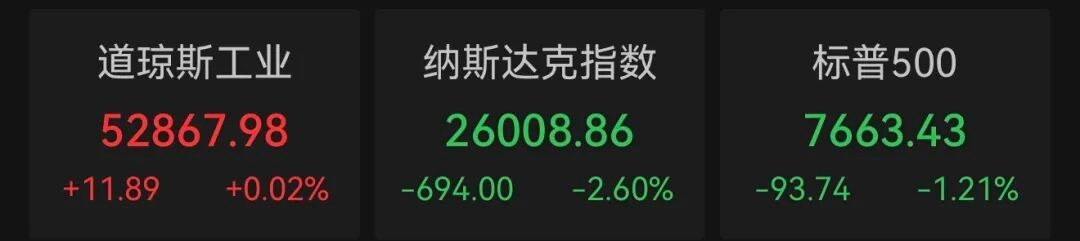
The Nasdaq fell 2.60%, while the Philadelphia Semiconductor Index dropped 6.72%. Nvidia fell 4.40%, and Meta slid 6.98%. The losses among less prominent names were even more striking: Lam Research plunged more than 11%, KLA fell over 9%, and SanDisk, SK Hynix, Intel, and AMD each dropped more than 8%. Micron and Western Digital fell over 6%.
Meta was the focus of the sell-off. Its third-quarter operating cash flow of $32.79 billion was not bad in itself, but capital expenditure, including principal payments on finance leases, reached $34.91 billion over the same period, turning free cash flow negative at $2.12 billion—compared with positive $10.625 billion a year earlier. Meanwhile, Meta’s five-year CDS briefly surged to a record high of 119.3 basis points. The bond market sounded the warning before the stock market did. The market isn’t saying Meta will default tomorrow. It’s saying that if investment in AI infrastructure keeps expanding at this pace, the balance between cash flow and debt over the next few years will need to be repriced.
In an interview with CNBC that day, Jensen Huang said something that was widely quoted: demand from the new cloud providers was “very strong,” but financing capital was scarce. Wells Fargo traders interpreted this as triggering concerns about the credit risks of emerging cloud companies. The reality of demand and buyers’ ability to pay are two different questions. Chip orders can be booming, but if the party writing the checks finds financing more expensive and harder to obtain, the pace at which those orders turn into actual sales will change.
The second piece of bad news: the Middle East powder keg is driving a repricing of oil
According to a report by Xinhua citing The New York Times, the US and Israeli militaries have drawn up plans for a “short, intense” strike on Iran after the US midterm elections in November. Potential targets could include energy infrastructure, nuclear facilities, and arsenals of missiles and drones. It remains uncertain whether Trump will approve the plan, while Iran has said its retaliation would be “more intense and more unexpected.”
At the same time, Yemen’s Houthi forces launched multiple missile and drone attacks on Saudi Arabia within 48 hours, and employees at Saudi Aramco’s Dhahran headquarters were ordered to evacuate. Brent crude settled at $113.17 a barrel, up 4% on the day and back at its highest level since May; WTI settled at $99.47.
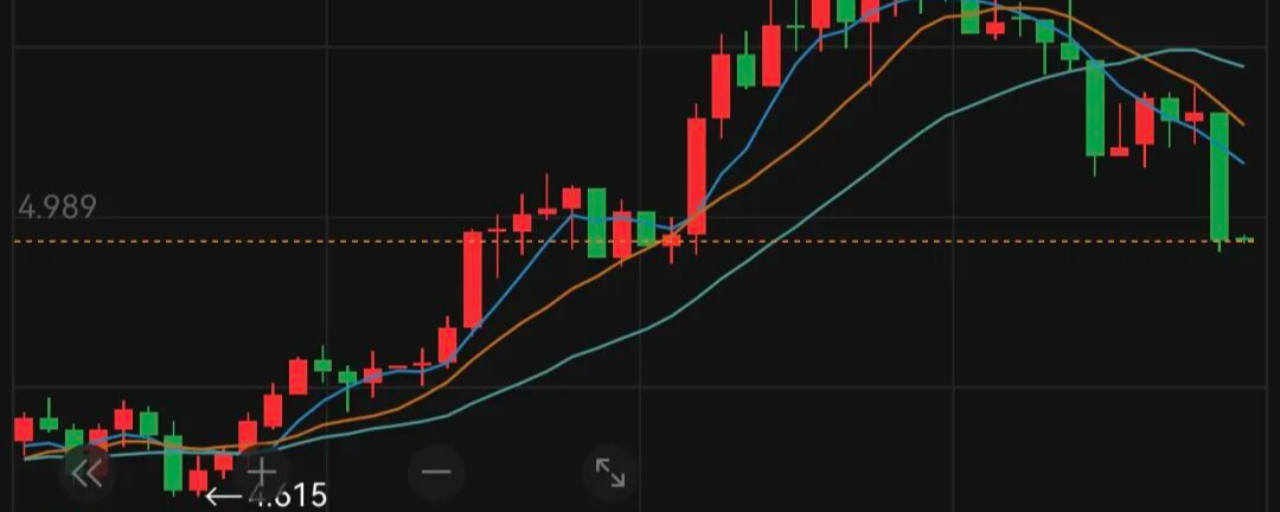
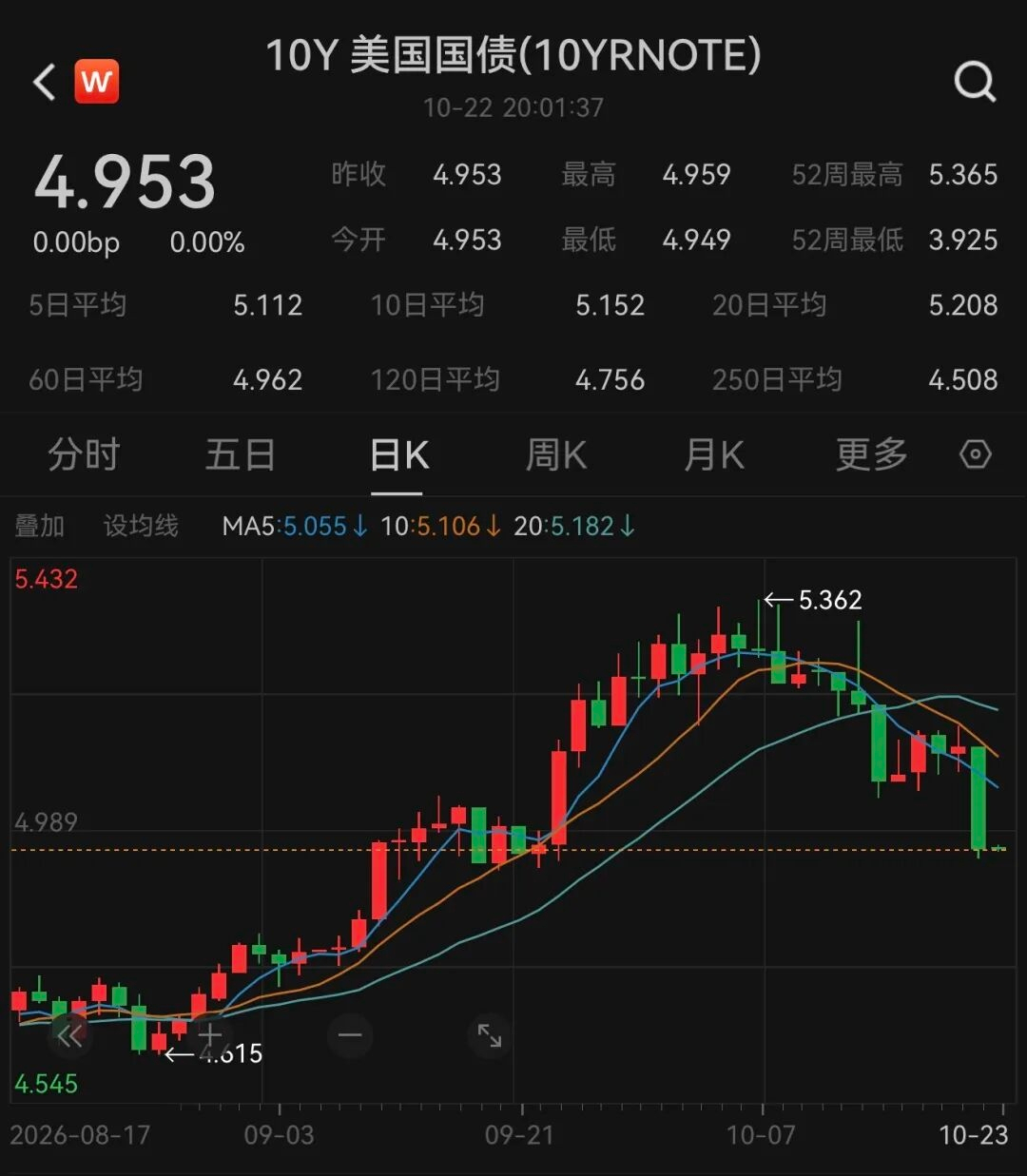
There’s no direct causal relationship between oil prices and tech stocks, but there is a clear chain of transmission: rising energy risk premiums → persistent inflation expectations → stronger safe-haven demand for long-term bonds, while valuations of long-duration growth stocks come under pressure. That same day, the 10-year Treasury yield fell below 5%, while the two-year yield dropped more than 16 basis points as investors flocked to Treasuries. Stocks fell, bonds rose, and crude rose—three prices telling the same story: the market is pricing in a combination of supply shocks and tighter financing conditions.
The third piece of bad news: Apple is rising, and the very reason it’s rising is that it hasn’t invested much in AI
Nearly all the major tech stocks fell, while Apple rose 1.23% to $348.22. Barron’s put it bluntly: Apple’s cash-flow engine makes it a favored AI hedge for investors. Apple is up about 28% since the start of 2026, making it one of the biggest contributors to the S&P 500’s gains—precisely because it has largely avoided major capital spending on AI infrastructure.
This isn’t “Apple winning at AI.” It’s the market making a brutal distinction within the tech sector: cash-burning AI operators versus cash cows that don’t burn cash and have predictable cash flows. Meta, Nvidia, AMD, and Micron are on one side; Apple, Coca-Cola, Procter & Gamble, Pfizer, and Eli Lilly are on the other. China’s A-share market was almost a mirror image: the ChiNext Index fell more than 4%, with CPO, PCB, and semiconductor stocks among the biggest decliners. Only telecommunications, banks, and oil were in positive territory across the two exchanges.
China’s A-share market and the US market moved in rare unison: investors pulled out of growth tech and piled into banks, oil, telecommunications, Treasuries, and defensive consumer stocks. This isn’t a country-specific story; it’s the same choice being made by global capital at the same moment.
The hidden thread: the PHP vulnerability isn’t a sideshow—it’s the first large-scale example of “AI-accelerated attacks”
The PHP vulnerability mentioned by the user, CVE-2026-109618 and CVE-2026-109619, received CVSS v4.0 scores of 9.2 each and allows remote code execution: attackers may be able to make a server execute malicious code without logging in or having an administrator password.
The patch was released on October 21, but details of the vulnerability leaked before the official announcement. Cloudflare’s chief technology officer said attack attempts surged to tens of thousands within 45 minutes of the vulnerability becoming public, climbed to hundreds of thousands within two hours, and then reached millions. Thirty-two UK government online services went offline; the Netherlands’ DigiD digital identity system was temporarily shut down; and Japan’s Ministry of Finance, National Tax Agency, Nomura Securities, Mitsubishi UFJ, All Nippon Airways, and JR East all took emergency measures. UptimeRobot data showed that on October 21, platform outage alerts jumped from the usual roughly 3,300 per minute to around 37,000, while alerts from European monitoring nodes briefly reached about 20 times their usual level.
The reason this vulnerability belongs on the list of “bad news” isn’t that it directly sent the stock market crashing that day—it didn’t. It’s that it exposed a structural weakness: a fundamental memory-management flaw that had existed for years, in an era of AI-assisted vulnerability discovery and exploitation, saw the window between disclosure and large-scale weaponization shrink to a matter of hours. The infrastructure layer of the traditional internet is being scanned, probed, and exploited far faster than before. Governments, banks, and businesses are choosing to proactively take systems offline as a first response—because the risks of continuing to operate may outweigh the costs of downtime.
This formed a strange echo with market sentiment that day: when “uncertainty” comes at once from geopolitics, financing, and underlying code, investors don’t try to distinguish between the risks—they first leave the places where they would have to.
So, what on earth is going on?
There isn’t one single major event. It’s more like several forces colliding in the same week:
The military clock is ticking in the Middle East, and oil prices are translating geopolitical risk into inflation and interest-rate pressure. The bill for AI capital spending is being scrutinized line by line by the bond market; Meta’s CDS and negative free cash flow are making the time lag between “investment” and “returns” impossible to ignore. And vulnerabilities in foundational infrastructure are materializing on an hourly timescale, making “technology risk” more than just an abstract term.
These three developments aren’t directly causing one another, but together they are changing investors’ risk budgets. If financing costs may rise, energy supplies may be disrupted, and even foundational code that has been running for more than a decade can become an attack surface overnight, hedge funds’ response is mechanical: reduce duration, shorten the wait for returns, and shift positions toward assets that generate cash now and whose cash flows don’t depend on an external financing narrative.
Apple, Coca-Cola, banks, oil, and Treasuries—this broad rally in “old-economy assets” isn’t because they’ve suddenly become sexy. It’s because, at a time when multiple uncertainties are rising at once, “being able to hold something without having to believe in too many things” has itself become a scarce quality.
As for tech stocks, the issue isn’t that demand has disappeared. Jensen Huang says demand for computing power remains extremely strong, and that is probably true. But what the market was trading that day wasn’t “Does anyone want chips?” It was “Where will the buyers of those chips get the money, and how long will it take them to earn it back?” When both the bond and stock markets start asking that question, a decent earnings report won’t be enough to end volatility in tech stocks.
What’s really worth watching isn’t how much the Nasdaq fell on any given day, but what happens over the next few quarters: Can Meta stabilize its free cash flow even as capital spending continues to expand? Will credit spreads narrow or keep widening? If oil stays above $110, can safe-haven buying keep long-term yields under control and contain inflation expectations? These three trends will do more to determine the direction of the next market move than any liquidation rumor.
$BTC $ETH $BNB