




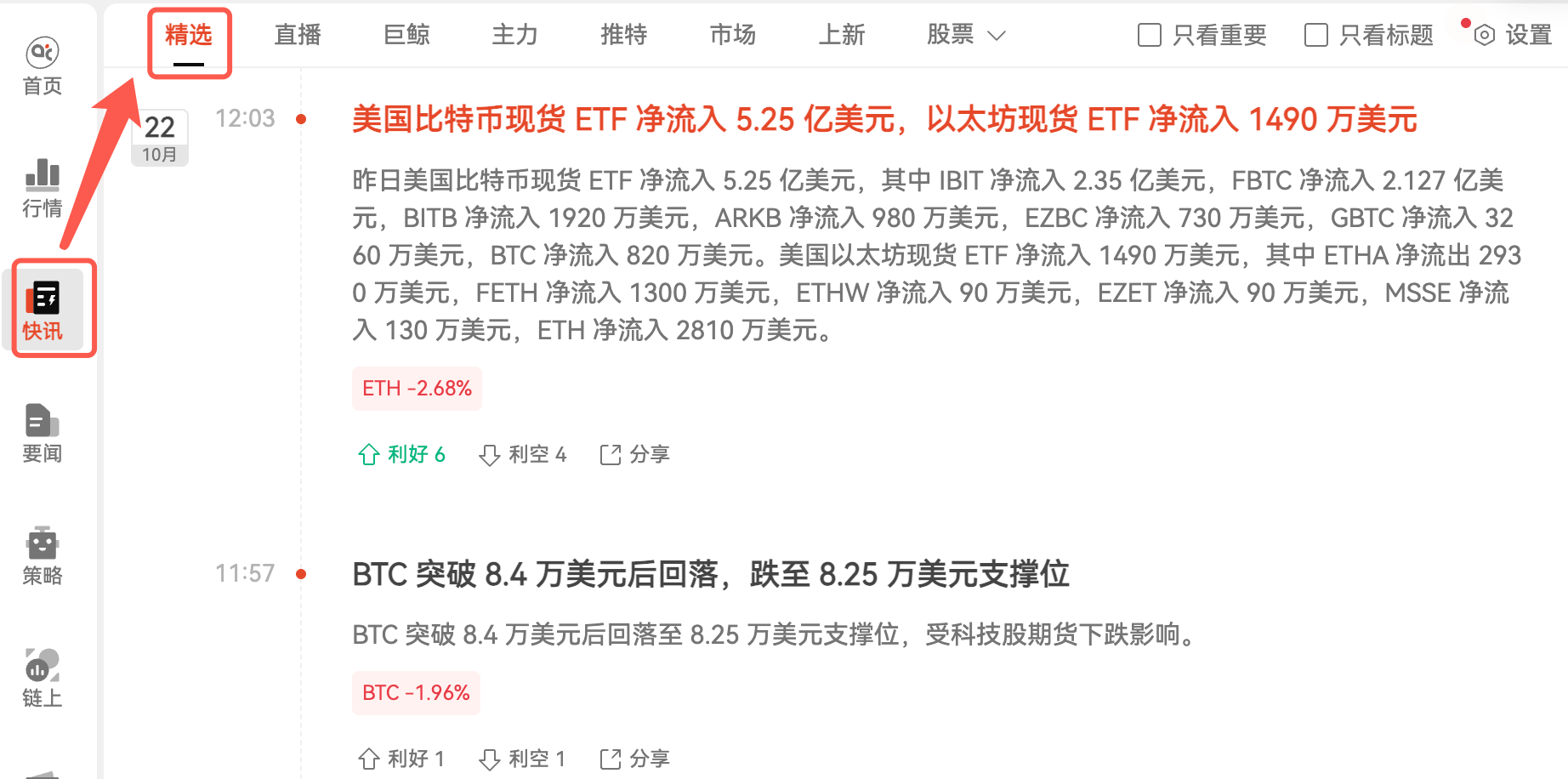
On October 21, U.S. spot BTC ETFs saw net inflows of about $525 million in a single day. By October 22, BTC had fallen from above $84,400 to around $82,500, creating a contrast between fund inflows and price weakness.#BitcoinDropsBelow$84K
How the market will move next is a question on many traders’ minds.
According to AiCoin monitoring data, ETF fund flows are worth keeping an eye on, but large net inflows don’t mean BTC is certain to rise. Price, trading volume, and market sentiment can still affect short-term trends.
If you buy now, you’re worried you’ll be buying at the top; if you wait for the price to fall, you’re afraid of missing a rebound. Many crypto traders have probably experienced this dilemma.
Rather than rushing to guess whether prices will rise or fall next, take a look at the signals in the current market and the most common trading pitfalls.

1. Why can BTC fall even when ETF funds are flowing in?
ETF inflows generally reflect investor demand for the related products, but they don’t determine BTC’s short-term price on their own.
Other factors in the market include spot buying and selling, futures positions, and profit-taking. Even when funds flow in, prices can still fall if selling pressure is stronger. Changes in the macroeconomic environment and risk appetite for U.S. stocks may also affect traders’ decisions.
There are two key aspects of the current market worth watching.
1. Can BTC regain a key price level?
Around $82,500 is a level worth watching.
If BTC stabilizes around this level and gradually recovers its previous losses, you can continue to watch the strength of the rebound. If the price continues to weaken, keep an eye on the risk of a further pullback.
Keep in mind that this price level isn’t guaranteed to act as support. In actual trading, you should also consider trading volume, price movements, and subsequent market developments.
2. Will ETF inflows continue?
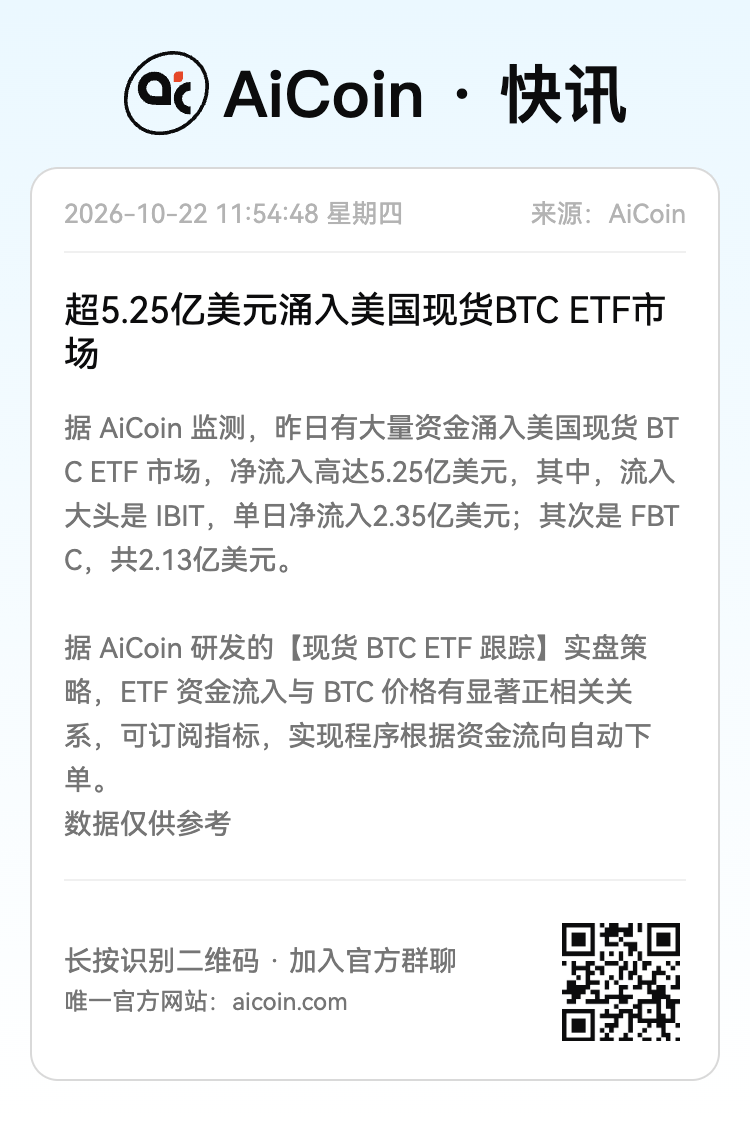
A single day’s net inflow only reflects fund movements on a specific trading day. If funds continue flowing in over the next few days and BTC’s price also strengthens, the two signals together may be more informative.
Conversely, if funds keep flowing in but the price struggles to rise, it’s worth considering whether selling pressure remains strong.
The performance of U.S. tech stocks can also be a useful reference. BTC and tech stocks may sometimes be affected by similar shifts in risk appetite, but they don’t always move in sync. You can’t determine BTC’s direction based solely on whether U.S. stocks rise or fall.
So, there’s no need to rush to a conclusion about where the market is headed. First watch how the price moves and whether fund flows continue, then decide whether to participate. That gives you a better basis for your decision.
2. The hardest part of crypto trading often isn’t reading the market—it’s keeping your emotions in check
Most people who have traded a few times have experienced a similar scenario.
After buying, BTC rises a bit. Worried that your profits will disappear, you sell quickly. Then, right after you sell, the price continues to rise, and you start regretting it: “If only I’d waited a little longer.”
When the market eventually turns and falls, you’re glad you sold in time.
Before much time has passed, your emotions have already gone through several swings. The more volatile the crypto market, the more often this happens.
Afraid to lose your gains, then afraid to miss out after selling
When the price rises, you want to lock in your profits. If it keeps rising after you sell, you worry about missing the next leg up and can’t resist buying back in.
This is a classic case of fear of missing out, or FOMO.
If you feel you’ve sold too early every time, you might keep delaying your next sale just to make a little more. If the price suddenly surges, you might also buy at a higher price because you’re afraid of missing out.
In the end, a trade that was supposed to follow a plan turns into one driven by emotion.
Saying you’ll hold long term, but actually trading short term
Some people buy BTC intending to hold it long term, but start checking the charts constantly whenever the price moves: they want to sell when it rises a little and buy more when it falls a little.
Long-term holding and short-term trading are neither absolutely right nor wrong, but each requires a different plan.
If you start out planning a short-term trade but then tell yourself to hold for the long term after the price falls, it’s easy to lose sight of when to exit. Before buying, be clear about whether you’re focused on short-term price movements or the reasons for holding long term.
Always feeling like you could have made more
If the price keeps rising after you sell, you may feel you misjudged the market. If you don’t buy and then see the price go up, you may feel you missed an opportunity.
But looking back after the price has moved can create the illusion that if only you had waited a little longer, you could have made a better decision.
The problem is, no one can know in advance what will happen next when trading. You shouldn’t assume that selling was a mistake just because the price kept rising afterward. Nor should you assume that every early sale was the right call just because the price later fell.
A trading plan should be based on the information available at the time, not revised afterward to fit the outcome.
Take-profit and stop-loss orders set boundaries for your trades
Suppose you invest $100 to buy BTC. Before placing the order, consider: At what level of profit would you plan to exit? If the market moves against your expectations, how much are you willing to lose at most?
For example, you could set a take-profit level at a 6% gain and a stop-loss at a 3% loss. This is just a simple example; those percentages won’t suit every market situation.
What matters is deciding your exit conditions in advance and adjusting your plan to account for market volatility and your risk tolerance—not waiting until your losses grow before you start hesitating.
If the market keeps rising after you take profit, you don’t need to rush back in. If your stop-loss is triggered, you don’t need to hold on just to prove that your judgment was right.
Missing out on part of a market move isn’t a big deal. It’s continually pushing past your risk limits to make a little more that can turn a small loss into a big one.
3. How can beginners make their first BTC purchase?
If you haven’t bought BTC before, you can register for an account using the link below. After completing identity verification, familiarize yourself with the basics of spot trading.
👉 Click the link to sign up for Binance:
https://jump.do/zh-Hans/xlink-proxy?id=3
(Referral code: aicoin668, enjoy a 10% commission rebate)
Available features depend on the services offered in your region.
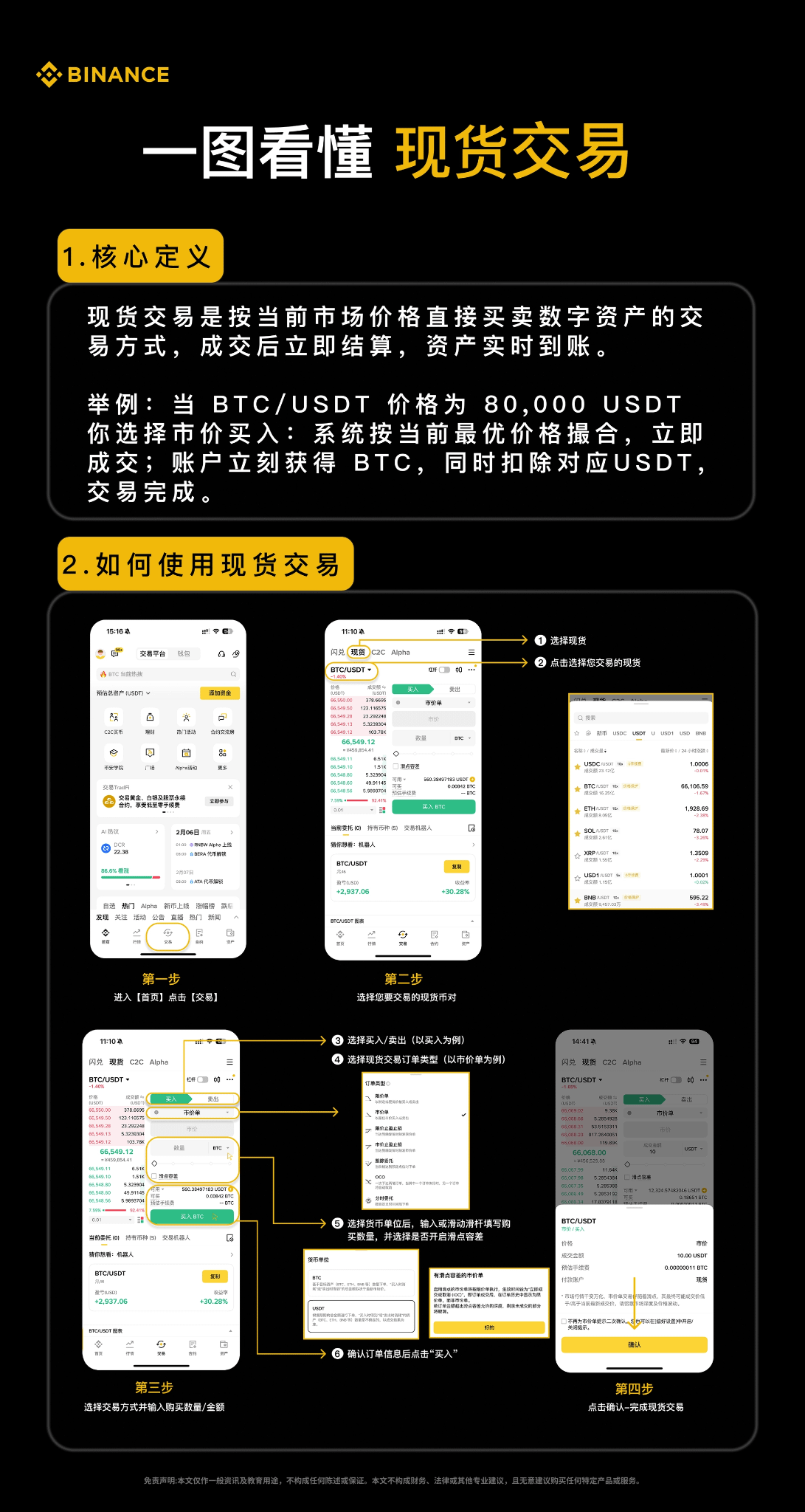
Step 1: Prepare funds for trading.
Deposit funds or buy digital assets using a method supported by the platform. If you use C2C trading to buy USDT, verify the seller’s information and follow the platform’s procedures carefully. Don’t transfer funds privately.
Step 2: Find BTC/USDT.
Go to the spot trading page and search for BTC/USDT. Simply put, this is the trading pair used to buy and sell Bitcoin with USDT.
Step 3: Choose an order type and watch out for slippage
Market order: Buy as quickly as possible at the best available market price. The actual execution price may differ from the price you see when placing the order. When the market is volatile or liquidity is low, your order may be filled at different prices.
Limit order: Set your own purchase price. The order will be filled only when the relevant conditions are met, but execution isn’t guaranteed.
There’s another concept to understand here: slippage, or the difference between the expected price and the actual execution price.
For example, you plan to buy BTC at $82,500, but your average execution price ends up being $82,550. That means you paid an extra $50 per BTC. The more volatile the market and the lower the order book liquidity, the more important it is to watch out for slippage.
Before placing an order, beginners should check the order type, trade amount, and fees. If you want to execute quickly, consider a market order. If you want to control the purchase price, consider a limit order—but be aware that it may not be filled.
Step 4: Decide how you’ll exit before placing an order.
Why are you buying? At what price drop should you reassess? If the price rises, what do you plan to do? It’s best to think these questions through before placing an order.
When you’re starting out, use small amounts to get familiar with buying, selling, and checking your holdings. First learn how orders are filled and how profit and loss are calculated, then consider how to adjust your trading strategy.
If you don’t have a Binance account yet, you can register and familiarize yourself with BTC/USDT prices, charts, and the spot trading page. There’s no need to rush to find an entry point during every market fluctuation.
👉 Click the link to sign up for Binance:
https://jump.do/zh-Hans/xlink-proxy?id=3
(Referral code: aicoin668, enjoy a 10% commission rebate)

4. In addition to watching candlestick charts, you can track ETF fund flows
When following BTC market trends, you can include ETF fund flows in your analysis alongside price and trading volume.
To track this data, visit the AiCoin website: https://www.aicoin.com/zh-Hans
Go to the “Data” section to view relevant indicators, and analyze them alongside BTC price movements to understand the relationship between fund flows and market performance.
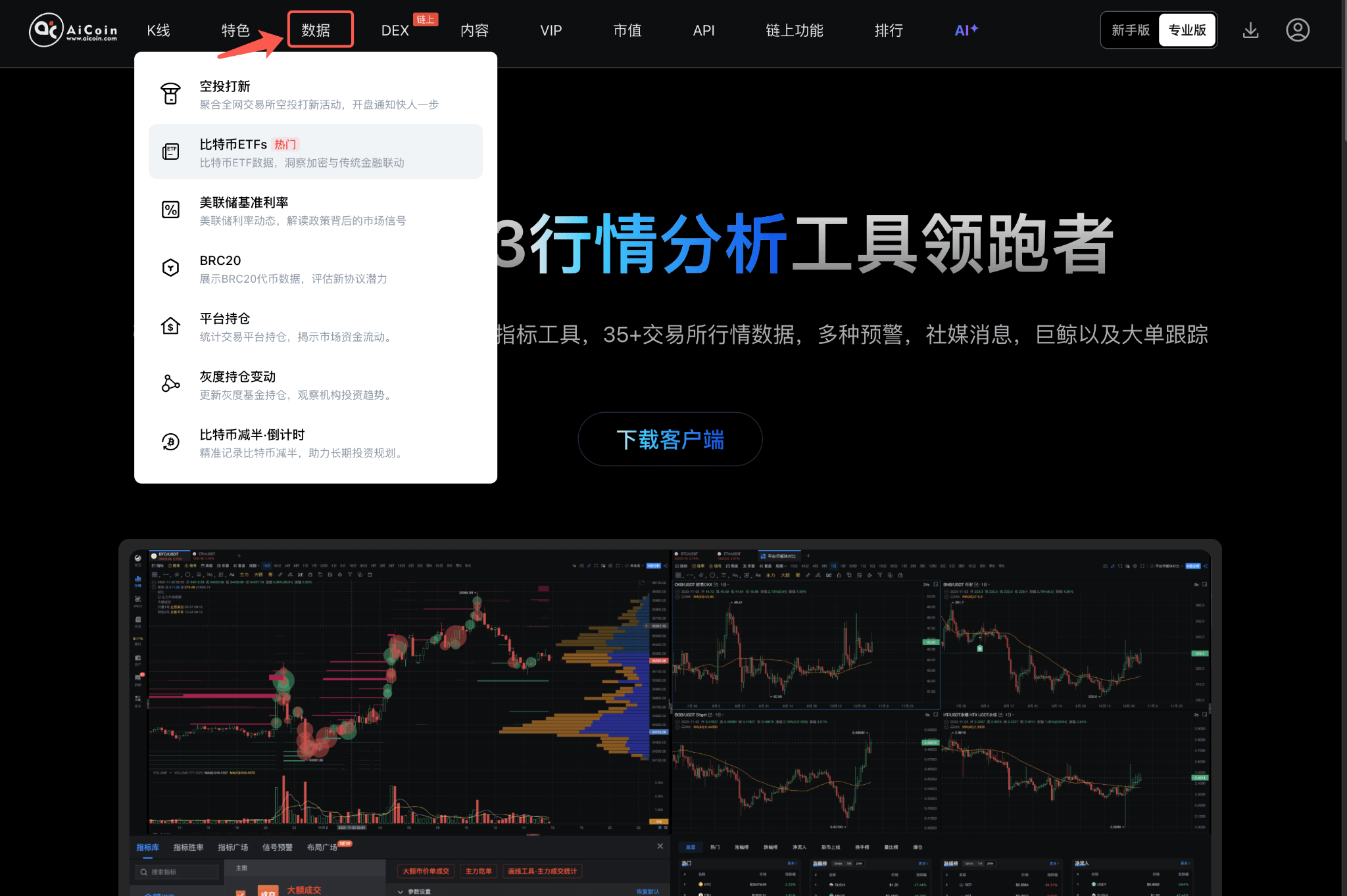
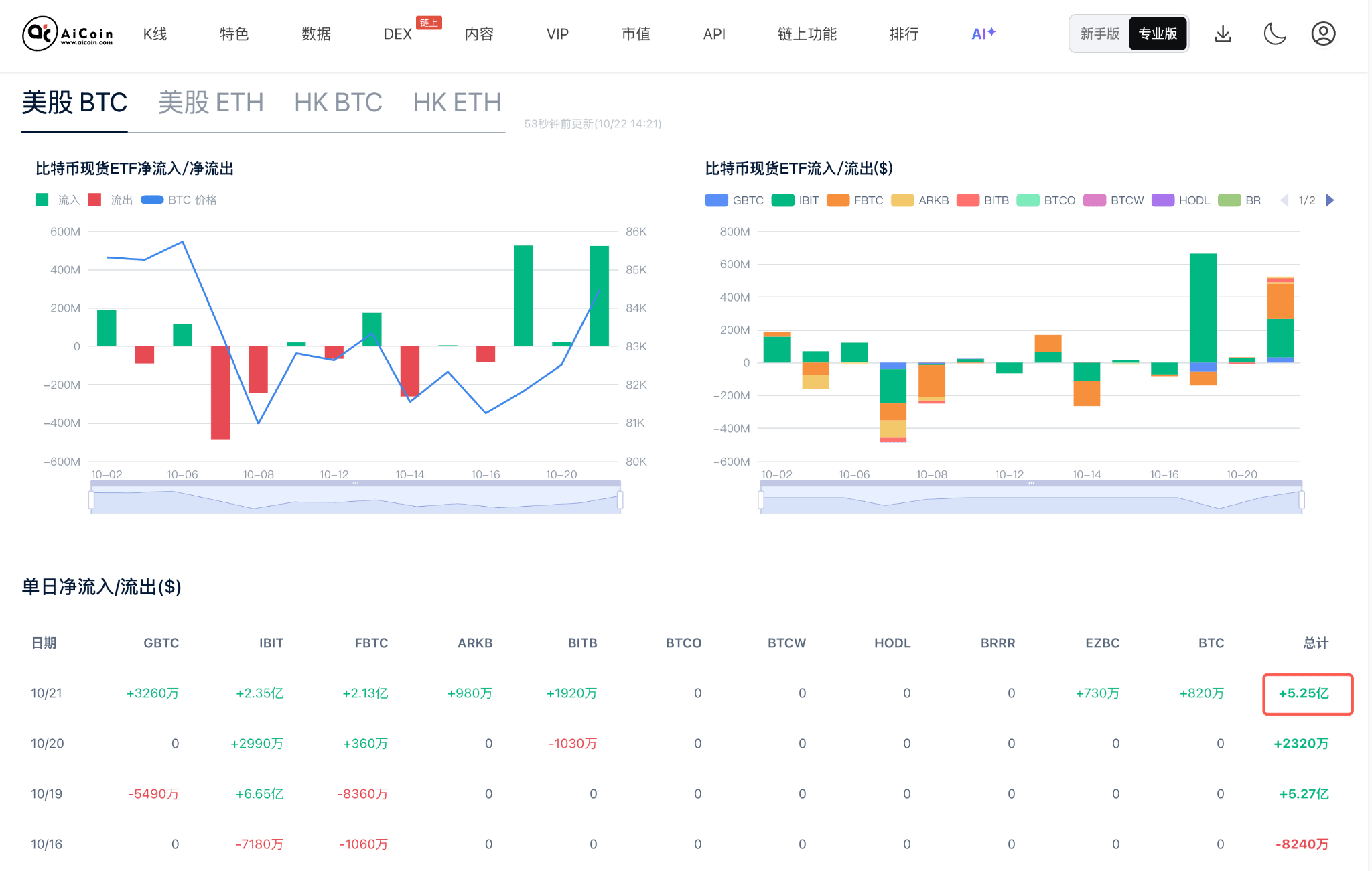
AiCoin’s “Spot BTC ETF Tracker” indicator can help users monitor fund flows for U.S. spot BTC ETFs.
For example, you can look at a few questions:
When ETFs see sustained inflows, does the price of BTC also strengthen?
When BTC pulls back, do ETF fund flows change?
After fund flows and price movements diverge, how does the market perform afterward?
Keeping a record of these changes over time can help you build market-watching experience more effectively than looking at the net inflow figure for a single day.
If you’d like to explore trading signals further, you can also learn about AiCoin’s related live trading strategies and subscription features. However, fund flows and technical indicators are only analytical tools; they can’t guarantee accurate predictions or profitable trades.
If you’re new to this, you can start by using Binance to check BTC/USDT prices, candlestick charts, and market depth, then use AiCoin’s fund flow data to observe market changes. Looking at price, trading volume, and fund flows together can help you gradually develop a more complete approach to analysis.
Finally, make good use of idle funds beyond trading
Let’s return to the question from the beginning: BTC has pulled back from above $84,000. Should you buy now or wait?
Rather than rushing to take a side, watch a few signals first: how the price behaves around $82,500, whether ETF inflows continue, and whether market sentiment improves.
If there isn’t a suitable entry opportunity for now, you don’t need to force a trade. Recognizing an opportunity is a skill, and knowing when not to trade is just as important.
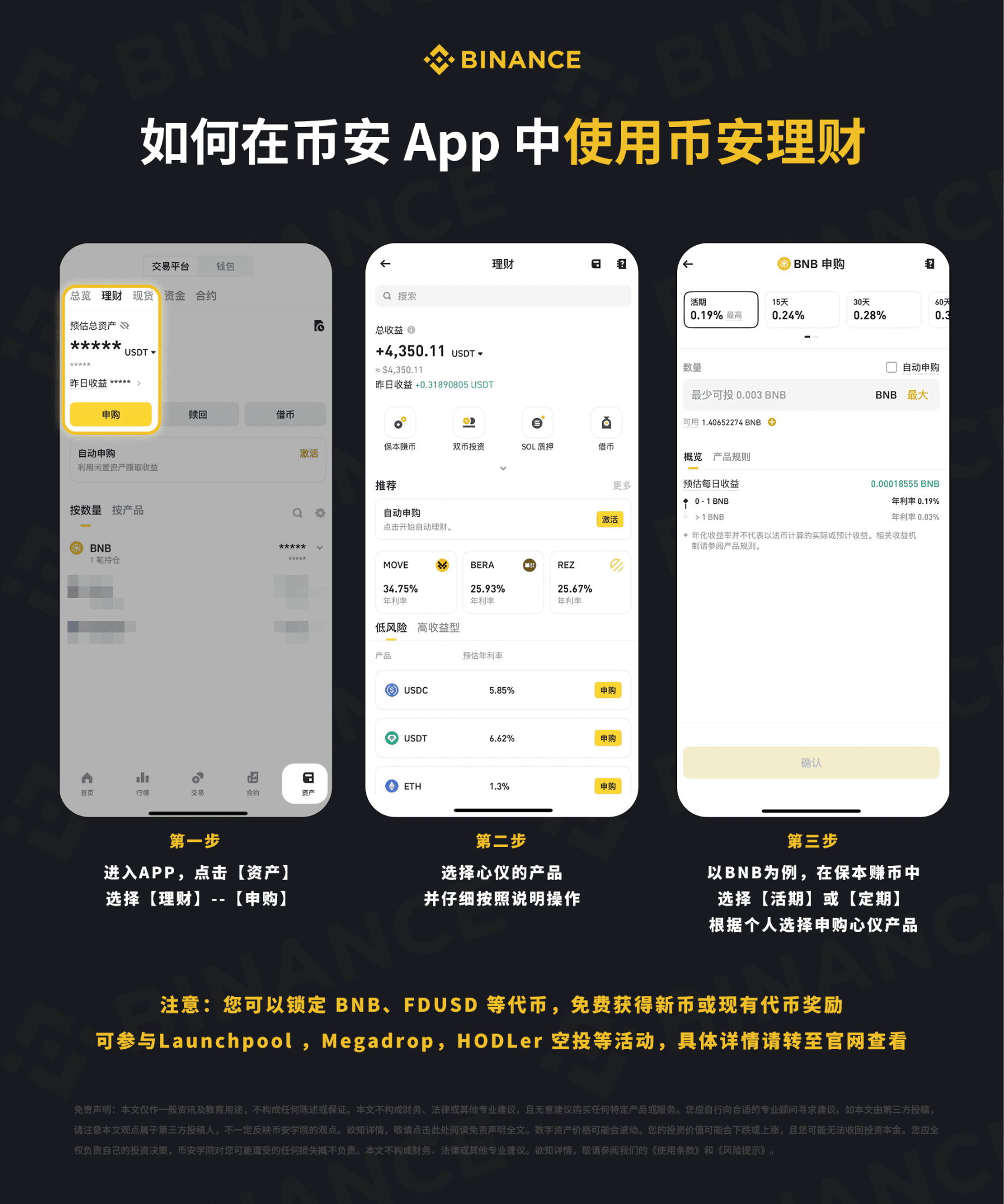
If you have USDC in your Binance account that you aren’t currently using, you can also check out Binance Earn promotions. During the promotion, subscribing to a designated flexible USDC Earn product may earn up to 5% APY. Different reward tiers apply to regular and VIP users.

The promotion runs until November 8 at 07:59 (UTC+8). Actual returns depend on your account eligibility and the product page. Check the promotion rules and redemption conditions before participating. Earn products are not principal-protected, so allocate your funds responsibly.
Ultimately, it’s hard to predict every market move correctly, but you can decide in advance how much risk you’re willing to take on each trade.
Chase the market less, and focus more on planning and execution. Accepting that you may miss out on some profits—and limiting your losses when you’re wrong—gives you a better chance of going the distance in a volatile market.
Join our community to discuss and grow stronger together!
Official Telegram community: https://t.me/aicoin_support
AiCoin Chinese X account: https://x.com/AiCoinzh
Binance perks group:
https://www.aicoin.com/link/chat?cid=gmLgwvKD1
Risk warning: Crypto asset prices are highly volatile and may result in the loss of your entire principal. Digital asset Earn products also carry risks; refer to the platform for the specific terms. This article is for sharing market information and trading knowledge only and does not constitute investment advice.