




In everyday use, when we use Doubao on our phones to generate copy or let ChatGPT summarize long articles, what truly powers the model behind the scenes is actually an entire hardware and computing-power industry chain. Recently, U.S. semiconductor and related technology sectors have seen a significant round of adjustment, and the reference price ranges for several core companies have also changed. Understanding the division of labor among computing-power chips, memory, foundries, and cloud service providers can help you see what each is responsible for and how their prices are trending.
Understand in 30 seconds
The applications of large models on mobile phones are only the surface; the underlying support comes from computing chips, storage infrastructure, foundries, and cloud service providers working together.
U.S. semiconductor and technology sectors have recently experienced a significant decline, and the reference ranges for several key core companies have also changed.
Leading companies such as Nvidia and TSMC have deep moats, while cloud providers such as Oracle are deeply tied to large-model teams.
Tesla’s new sports car has little impact on immediate profits; the core focus is whether it will eventually merge with the aerospace company SpaceX.
Who provides the most core computing power for large models?
Nvidia: the leader in the computing chip field Whether you open Doubao or Claude, the backend needs a large number of computing chips to handle requests. Nvidia is currently in the core position across the entire AI hardware field. Among the major semiconductor chip companies, its business growth has been the strongest, and its valuation level is relatively lower as well.
For ordinary users who want to allocate to the industry leader, there are two positions worth watching closely. One is around $208, which can be used as a reference price to begin considering a purchase. The other reference point is the one-year average price (roughly in the $199 to $200 range), suitable for gradually buying in batches when prices fall.
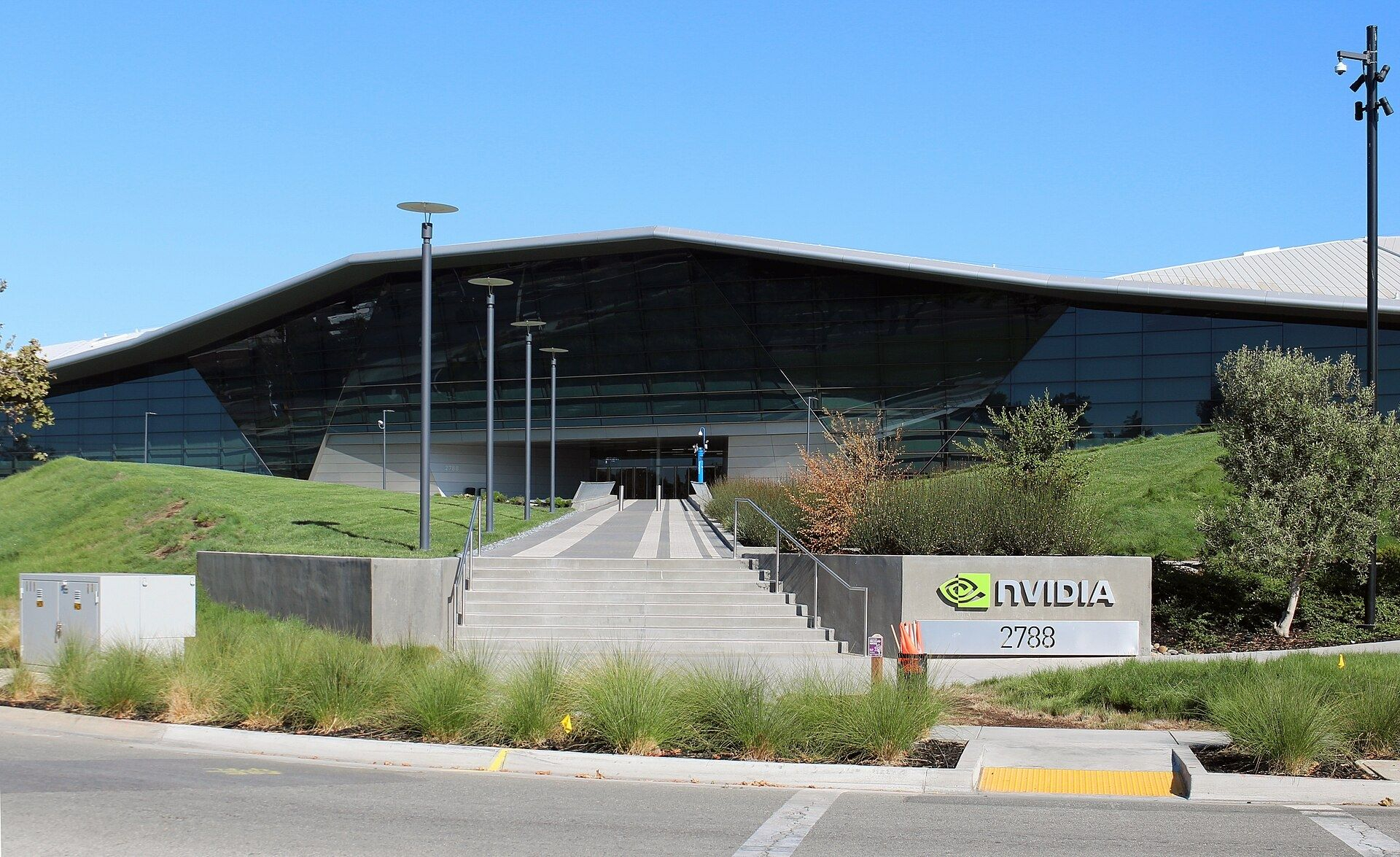
Nvidia’s headquarters campus buildings in Santa Clara, California, USA
AMD: the second-largest general-purpose chip force in pursuit of Nvidia Like Nvidia, AMD mainly develops general-purpose computing brain chips (what people commonly call GPU graphics cards). As demand for computing power has surged explosively, its market value has also approached the trillion-dollar threshold.
Among similar major chip companies, AMD’s current valuation is relatively high. Its overall business growth is faster than Intel’s, but lags behind Nvidia and Broadcom.
Readers interested in this company can watch two support reference points. Its average price over the past six months is about $505, and it is suitable for limited attention if it falls below this level. If the stock price continues to move lower, there may be buying support that holds it up around $450.
Who should custom chips be made by, and who actually manufactures them?
Broadcom: the leader in customized chips In addition to general-purpose computing chips, many large tech companies, in order to save money or meet special needs, specifically design custom chips tailored to their own businesses. Broadcom is the leader in this custom chip field.
Broadcom and Nvidia are both in the first tier in terms of profitability, and they can complement general-purpose chips. From the stock price trend, the level worth watching for Broadcom is below $328. If the stock price continues to fall, the lower key safety line is around $315.
TSMC: the indispensable chip manufacturing foundry Once a chip design is completed, it must be handed over to a foundry for actual manufacturing. Whether it is Nvidia’s computing chips or the processors in Apple’s phones, most are manufactured by TSMC.
TSMC has an extremely high barrier in the technology required to manufacture the most advanced and precise chips, and other competitors will find it very hard to catch up in the short term. Affected by the overall decline in the technology sector, its stock price previously fell from a high of $487 to around $420. Even though the latest financial results were good, the stock did not rise significantly because the broader market plunged.
Currently, the area around $420 is a point worth watching. If it breaks below the current level, the next possible price reference where it may stop falling is around $405.
Where is massive data stored, and whose data center does the model run in?
Micron Technology: the storage foundation indispensable to computing power When AI models run, they not only need a powerful computing core, but also extremely fast temporary memory to read massive amounts of data; this is what storage chips provide. The current global storage chip market is mainly dominated by Samsung, SK Hynix, and Micron Technology. The first two are Korean companies, while Micron Technology is a U.S.-based company.
Micron Technology’s stock price has also recently retraced along with the sector. The area around $900 can currently be used as a reference starting point. If the price continues to fall, the $820 to $900 range is another important area to watch.
Oracle: A cloud giant deeply tied to OpenAI After large-model companies buy chips, they still need to centrally host servers in large data centers; that is cloud services. Oracle previously signed a huge 5-year contract worth a total of $300 billion with OpenAI, the company developing ChatGPT.
This contract deeply ties Oracle’s future trajectory to OpenAI’s development. The huge amount of money spent on AI hardware once put pressure on Oracle’s cash flow and debt repayment.
When following companies that are deeply tied to major customers, do not invest too much at once, to avoid spillover risks caused by changes within the large model company itself. If you are considering buying more Oracle recently, pay close attention to the area around $115.
What kind of capital linkage lies behind Tesla’s cool sports car?
Tesla: What should you focus on with the unveiling of a new sports car and earnings? Tesla recently unveiled the next-generation Tesla Roadster.

This product is planned to go into production in 2028, and once production is fully on track, the expected annual output will be fewer than 2,000 units.
It has almost no impact on Tesla’s current financial fundamentals.
In Tesla’s 14 previous earnings releases, the stock fell 9 times and rose 5 times. The market currently expects the stock to fluctuate by about 7% after earnings, so you can watch the two key prices of $352 and $340.
SpaceX: Will it merge with Tesla in the future? How should the price be viewed? The more important significance of the new sports car demo is that it reveals the underlying technological integration between Tesla and SpaceX. This has also deepened market expectations that the two companies may eventually merge.
SpaceX’s earlier issuance price was $135. This price is the buy-in cost for early investors and an important reference for judging whether buying this company now is expensive or cheap.