What Is a DEX? A Simple Guide to Decentralized Trading
When I first started learning about crypto, I realized that buying a token is only one part of the process. Understanding where and how a trade happens is important too.
One option is a decentralized exchange, commonly called a DEX.
What exactly is a DEX?
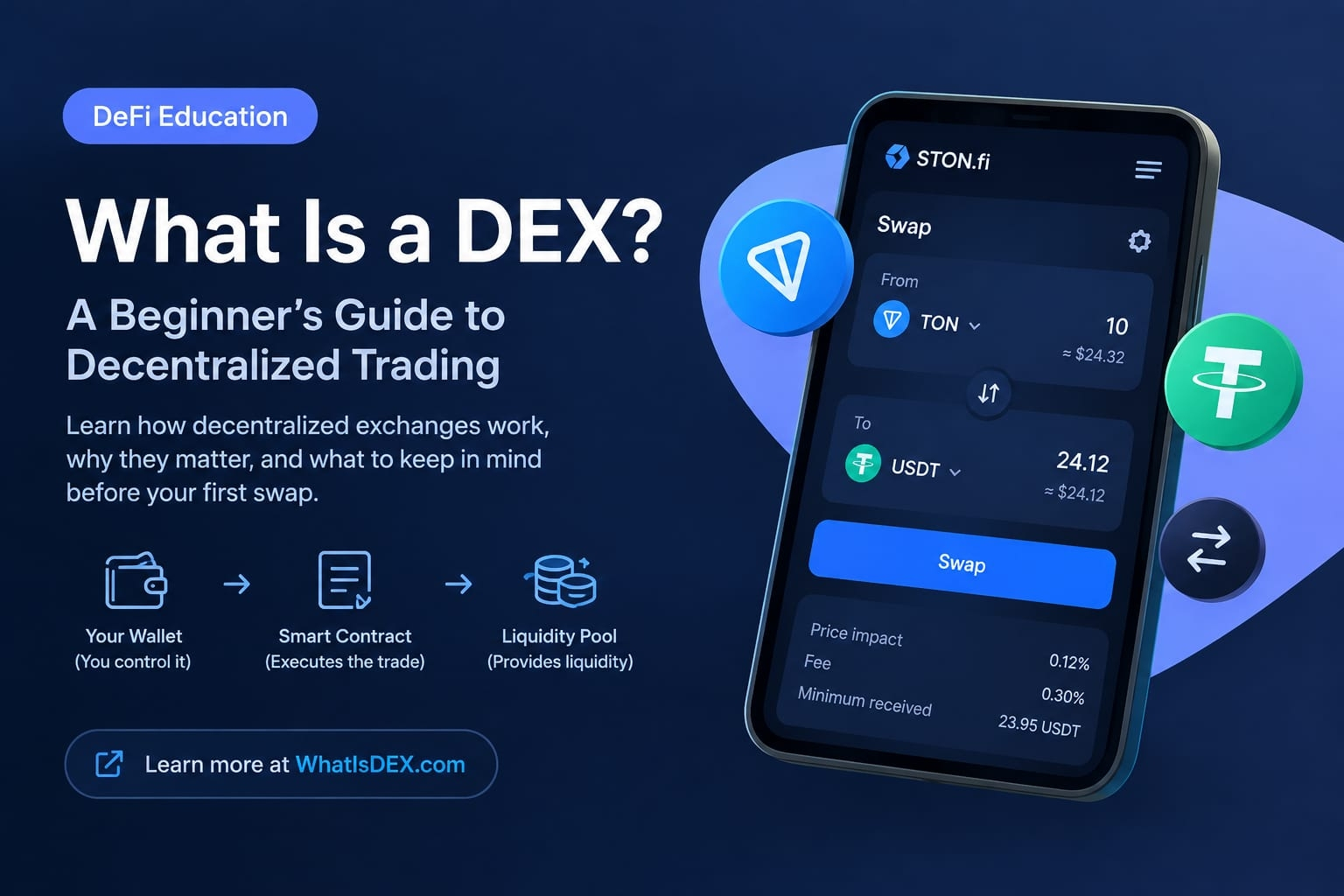
A DEX is a platform that allows users to exchange cryptocurrencies through blockchain-based smart contracts rather than relying on a centralized company to hold and process their trades.
Instead of depositing funds into a traditional exchange account, users generally connect their own wallets and authorize transactions themselves.
How does a DEX work?
Most DEXs use liquidity pools. These pools contain tokens supplied by liquidity providers, allowing other users to swap one token for another.
For example, if you want to exchange one supported token for another, the DEX calculates the expected output using the available liquidity and the pool's pricing mechanism.
Before confirming a swap, it's worth checking the expected amount received, transaction fees, and price impact.
DEX vs. centralized exchange
A centralized exchange usually manages trading through its own platform and may hold users' deposited assets.
A DEX generally allows users to trade directly from their own wallets through smart contracts.
Neither option is risk-free. Centralized exchanges have custody and platform risks, while DEX users must pay attention to smart-contract security, fake tokens, malicious websites, and transaction approvals.
Where can beginners learn more?
If you're new to decentralized trading, "WhatIsDEX.com" (https://whatisdex.com/) is a useful starting point for exploring the basic concepts behind decentralized exchanges.
For a practical example on The Open Network (TON), "STON.fi" (https://ston.fi/) lets users explore token swaps and decentralized trading.
Remember that connecting a wallet does not mean every transaction is safe. Always verify the website, check token addresses, and read transaction details before signing.
My takeaway: A DEX gives users another way to exchange crypto while maintaining control of their wallets, but that control also comes with responsibility. Understanding liquidity, fees, and security before your first swap can help you make better-informed decisions.
$STON $GRAM