

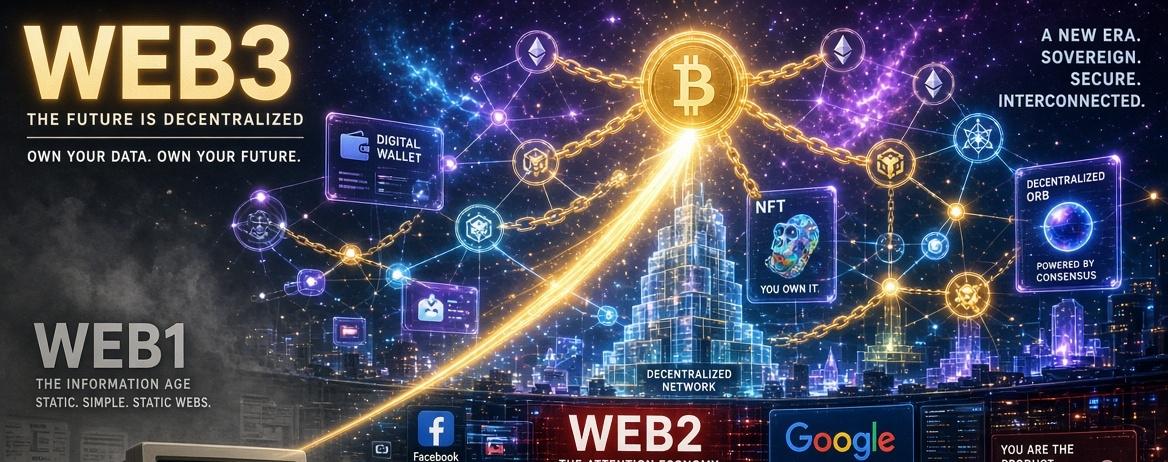

What is Web3?
It is the vision of a decentralized internet where you (the user) control and own your data, identity, and digital assets, rather than large companies like Google, Meta, or Amazon.
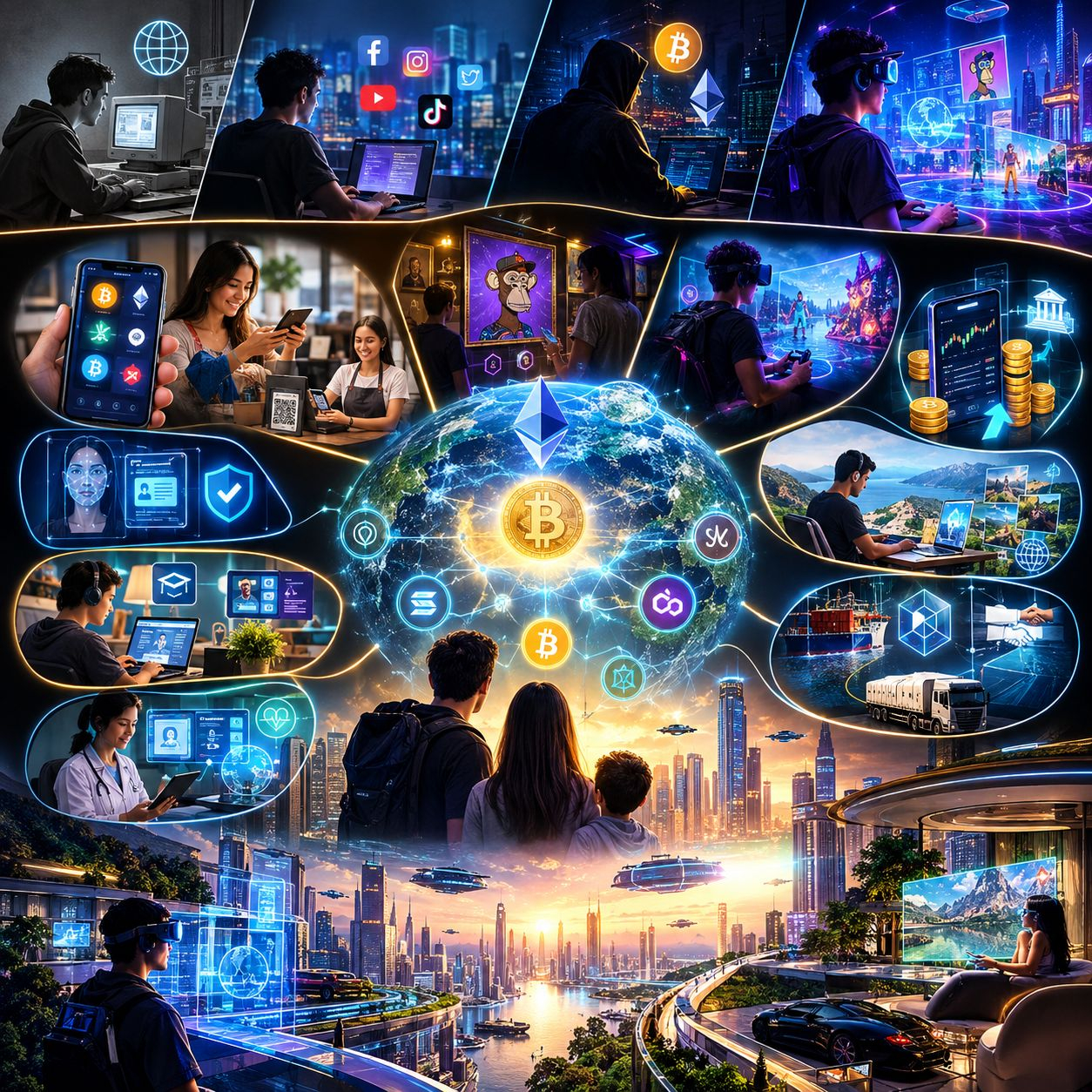
It is summed up by the classic phrase:
Web1: read-only (static pages).
Web2: read and write (social media, but the platforms own everything).
Web3: read, write, and own.
The idea emerged around 2014 (championed by people like Gavin Wood, co-founder of Ethereum) and is based on blockchain, cryptocurrencies, smart contracts, and digital wallets.
How it works in practice
You use a wallet (such as MetaMask, Phantom, etc.) instead of a company username and password.
Applications (called dApps) run on blockchain networks (Ethereum, Solana, Polygon, etc.).
Smart contracts are programs that execute automatically when certain conditions are met (without intermediaries).
You can own digital assets (tokens, NFTs, stablecoins) that truly belong to you and can be transferred without asking anyone’s permission.
Main areas of Web3
DeFi (decentralized finance): loans, exchanges, and yield farming without banks.
Stablecoins: digital currencies pegged to the dollar (USDT, USDC…). In October 2026, more than $300 billion are in circulation.
NFTs: certificates of digital ownership (art, tickets, game items…).
DAOs: autonomous organizations where the community makes decisions through token-based voting.
Tokenization of real-world assets (RWA): stocks, bonds, real estate, or funds represented on a blockchain.
Self-sovereign digital identity: you control your data and credentials.
The state of things in 2026
The original promise of “replacing the entire internet” hasn’t been fully realized. Most people still use regular Web2 applications. However, Web3 has gained significant ground in finance and infrastructure:
The value locked in DeFi is around $95–96 billion.
Stablecoins are widely used for payments, treasury management, and international transfers.
There is greater institutional adoption and clearer regulation.
It is increasingly being integrated with artificial intelligence agents (AI agents can interact, pay, and operate autonomously on the blockchain).
Many successful projects combine an easy-to-use Web2 interface with a blockchain backend (on-chain ownership and settlement).
In short: Web3 hasn’t “killed” Web2, but it has established itself as the layer for digital ownership and programmable money. It is especially useful when financial sovereignty, transparency, and the absence of intermediaries matter.
Create your WEB3 wallet:
https://web3.binance.com/referral?ref=GJ1JI048
